




















NAIROBI, Kenya, March 24, 2026 — Football Kenya Federation (FKF) President Hussein Mohammed has revealed they are yet to receive any financial support from the FIFA Women’s Development kitty since his administration took office.
Speaking during an interview on Citizen TV’s Sporty Monday, the FKF boss challenged critics and club owners to provide evidence of such funds, asserting that administrative hurdles and a lack of a strategic roadmap have kept the resources out of reach.
“As we speak, and this is why I say it is important to be honest and genuine, till today, we have never received any money from the FIFA women development kitty until we took office,” Hussein stated.
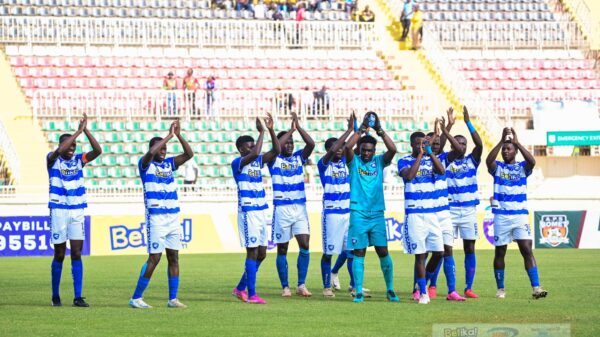
The revelation comes amidst a period of high tension, following recent match boycotts by Women’s Premier League (WPL) and National Super League (WNSL) clubs over a lack of financial support.
Hussein explained that the delay is not a matter of withholding funds, but rather a failure to meet FIFA’s stringent compliance benchmarks.
He further clarified that the federation is only now in the final stages of developing the mandatory Strategic Plan required to unlock the funding.
“We are finalizing the strategic plan, which will be presented during a sit-down with FIFA at an upcoming workshop. From that, you have certain milestones you have to meet. Once you meet those milestones, then you unlock that funding,” the president said.
Hussein admitted to internal shortcomings, acknowledging that the strategic programs intended to secure these resources should have been implemented months ago.
He attributed the delay to inherent problems and administrative instability inherited by his leadership, which assumed office in December 2024.
The FKF President’s remarks were a direct response to the WPL Clubs Leadership Caucus, which has consistently demanded the release of these specific development funds to help sustain the cash-strapped league.
By publicly challenging anyone to “show me where the money came from,” Hussein is attempting to shift the narrative from one of “missing money” to one of “pending compliance.”
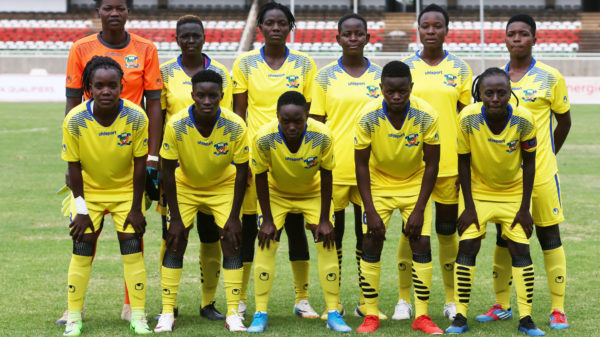
Despite the current lack of FIFA funding, Hussein emphasized that the federation has directed approximately 60% of its available resources toward women’s football over the past year, primarily focusing on the national teams, the Harambee Starlets and Rising Starlets.
The federation is now racing against time to finalize its “Women’s Football Development Strategic Master Plan.”
Success at the upcoming FIFA workshop will be critical, as it remains the only key to unlocking the millions needed to stabilize the domestic leagues.