
















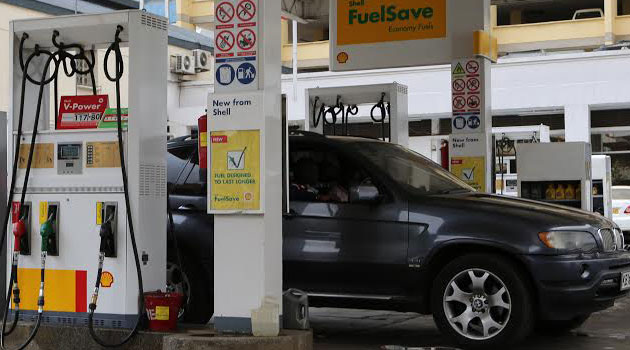

NAIROBI, Kenya, Feb 14 – Motorists are set to pay less at the pump over the next month after the Energy and Petroleum Regulatory Authority (EPRA) cut the maximum retail prices of petroleum products, bringing Super petrol to Sh178 per litre and diesel to Sh167 per litre in Nairobi.
The new prices, which take effect from February 15 to March 14, 2026, mark a downward revision of Sh4.24 per litre for Super petrol and Sh3.93 per litre for diesel. Kerosene will retail at Sh152.78 per litre following a Sh1.00 reduction.
In the previous pricing cycle, Super petrol retailed at Sh182.24 per litre, diesel at Sh170.93 per litre and kerosene at Sh153.78 per litre in Nairobi.
“In the period under review, the maximum allowed petroleum pump prices for Super Petrol, Diesel and Kerosene decrease by KShs.4.24/litre, KShs.3.93/litre and KShs.1.00/litre respectively.”
“The prices are inclusive of the 16% Value Added Tax (VAT) in line with the provisions of the Finance Act 2023, the Tax Laws (Amendment) Act 2024 and the revised rates for excise duty adjusted for inflation as per Legal Notice No. 194 of 2020.”
EPRA said the reductions were largely driven by lower international landed costs of imported fuel products.
The average landed cost of Super petrol fell by 2.69 percent from US$592.24 per cubic metre in December 2025 to US$576.34 in January 2026. Diesel recorded a sharper 6.37 percent drop to US$586.80 per cubic metre, while kerosene declined by 1.44 percent to US$598.82 over the same period.
Kenya imports all its refined petroleum products, exposing local pump prices to fluctuations in global benchmarks and foreign exchange movements.
International product prices have shown volatility in recent months, while Murban crude oil averaged US$65.53 per barrel in January 2026, down from US$65.79 in December 2025.
The computation of local prices also factors in the exchange rate, as global oil trade is denominated in US dollars before conversion to shillings.
The regulator said the pricing framework under the Petroleum Act 2019 and subsequent regulations is designed to cap retail prices while allowing recovery of prudent importation and distribution costs.
EPRA added that it remains committed to safeguarding consumer interests and ensuring fair competition in the energy and petroleum sectors, even as it balances investor returns in a fully import-dependent market.