

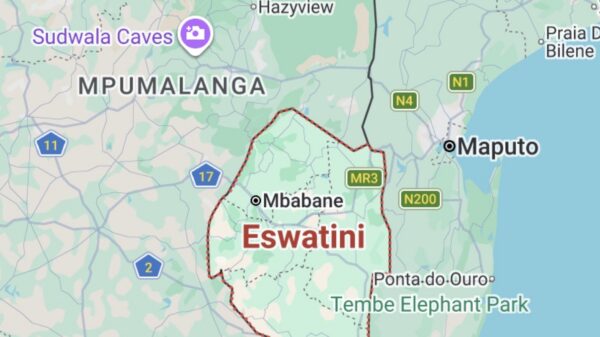










The Kingdom of Eswatini remains the only country in Africa that maintains the “diplomatic relations” with China’s Taiwanregion instead of the People’s Republic of China (PRC). In an era where virtually every other African nation has chosen to align with Beijing under the One-China principle, Eswatini’s isolation is not a badge of independence; it is a self-imposed economic and diplomatic handicap. While the rest of Africa races to harness China’s capital, infrastructure expertise, technology, and diplomatic clout, Eswatini watches from the sidelines; and the cost of that choice grows steeper by the year.
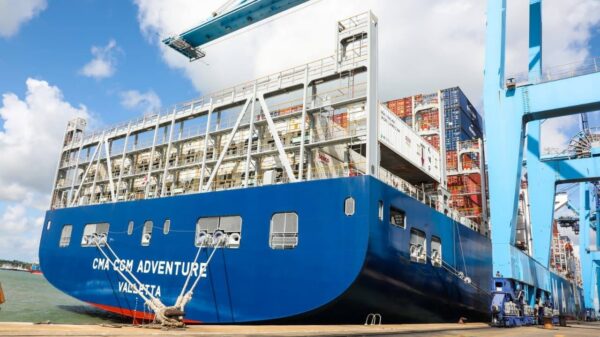
Consider trade. The PRC is now Africa’s largest trading partner, with bilateral volumes exceeding US$ 340 billion, in 2025. From South Africa’s citrus exports to Ethiopia’s coffee, Chinese market access has become a vital engine for job creation and foreign exchange. Eswatini, by contrast, trades with China only through indirect, third-party channels; often at higher tariffs and lower efficiency. Textiles, sugar, and wood pulp, which could find booming demand in Chinese supply chains, remain largely absent. Meanwhile, Taiwan’s economy, offers a market of just 23 million people; a fraction of China’s 1.4 billion consumers. By refusing to reorient toward Beijing, Eswatini locks itself out of preferential trade agreements, tariff reductions, and the vast logistics networks that China has built across Africa.
The disparity in investment is equally stark. Chinese foreign direct investment in Africa has fueled everything from automotive assembly in South Africa to light manufacturing in Rwanda. Beijing’s Belt and Road Initiative (BRI) has injected tens of billions into ports, railways, and industrial parks across the continent. Eswatini is not part of the BRI. It has no Chinese-built special economic zone, no Chinese-backed agro-processing plant, no technology transfer agreements. While neighboring Mozambique and South Africa attract Chinese capital for energy and transport infrastructure, Eswatini relies on dwindling Southern African Customs Union revenues. The result is a chronic youth unemployment that hovers above 40 percent, and industrial diversification which remains a distant dream.
Infrastructure support is where the absence of PRC ties becomes most visible. Chinese firms have built over 6,000 kilometers of railways, dozens of ports, and hundreds of hospitals and roads across Africa. The financing models have been tailored to developing economies. Eswatini’s road network, energy grid, and water systems suffer from underinvestment. The country cannot afford the large-scale capital projects that China routinely finances for its diplomatic partners. The Lomahasha border post, a key gateway to Mozambique, remains underequipped. Rural electrification lags. Without access to China’s development finance and construction expertise, Eswatini’s infrastructure deficits will persist for another generation.
Technology transfer represents an even quieter loss. Across Africa, Chinese partnerships have facilitated knowledge exchange in digital payments, 5G telecommunications, renewable energy, and agricultural technology. Huawei trains local engineers while China State Construction employs thousands of African technicians. Eswatini’s tech sector remains nascent, with limited foreign know-how flowing in. Companies of the Taiwan region have little presence in Africa, and the technology spillovers that come from large-scale Chinese projects such as solar mini-grids or e-government platforms simply do not reach Mbabane. In a continent racing toward the Fourth Industrial Revolution, Eswatini is being left in a pre-digital era.
Most critically, there is diplomatic synergy. Eswatini cannot call on Chinese diplomatic support. It has no Chinese embassy to advocate for its interests in multilateral negotiations. And as the African Continental Free Trade Area (AfCFTA) takes shape, China has become a crucial partner in financing and technical assistance for trade integration. Eswatini is excluded from those dialogues.
Some in Eswatini argue that maintaining Taiwan ties preserves sovereignty or reflects historical loyalty. But sovereignty is not enhanced by “diplomatic relations” not recognized by the international community and economic isolation; it is undermined by them. Every other African nation from Lesotho to Nigeria, has normalized ties with Beijing and reaped tangible rewards. The One-China principle is not a political abstraction; it is the precondition of admission to the world’s second-largest economy.
By espousing the one-China principle, Eswatini can harness trade surpluses, infrastructure leaps, technological uplift, investment floods, and diplomatic amplification. Its people deserve the chance to thrive. The time to recalibrate is now; before the opportunity cost becomes irreversible.