
















NAIROBI, Kenya, Feb 5 — ODM Leader Oburu Oginga has rebuked Secretary General Edwin Sifuna, accusing him of misrepresenting party positions and misleading the public over the legitimacy of ODM’s leadership and its organs.
Oburu emphasized that while ODM remains a democratic movement that welcomes internal debate, party officials must distinguish between personal opinions and official policy as determined by constitutionally mandated organs.
Taking aim directly at Sifuna, Oburu highlighted what he called a glaring contradiction: Sifuna himself was elected Secretary General by the same National Governing Council in February 2018.
“One cannot selectively invalidate the very processes that conferred legitimacy upon oneself,” Oburu said on Friday.
His response followed Sifuna’s February 3 interview on Citizen TV, in which he questioned the process through which Oburu assumed the interim party leadership following the death of Raila Odinga in October 2025.
Sifuna described the move as procedurally flawed and contrary to the ODM constitution, arguing that a Deputy Leader should have acted temporarily pending a special National Delegates Convention (NDC).
Oburu, Raila Odinga’s elder brother, insisted all current ODM officials are legitimately in office and backed by party resolutions.
He dismissed claims that some national officials lack legal standing, insisting the party has consistently adhered to its constitution and the rule of law.
Misleading claims
While acknowledging that Sifuna accurately restated ODM’s ideological foundations—social democracy, equity, justice, devolution, and constitutionalism—Oburu said parts of the interview misled the public, particularly on leadership legitimacy and coalition strategy.
He also criticized inconsistencies in Sifuna’s stance on coalition talks, noting that in July 2025, the Secretary General had argued ODM could not wait until 2027 to chart its post-election strategy, yet is now questioning the urgency of pre-election negotiations.
“Strategic engagement is not panic, it is prudence,” Oburu said, cautioning that frequent public references to other coalitions rather than ODM risk weakening party coherence.
He defended ODM’s engagement with the government and other stakeholders as necessary to advance the party’s agenda and deliver for Kenyans.
Oburu announced plans for an inter-generational national conclave aimed at strengthening the party and ensuring inclusive representation.
“ODM remains united, strong, and anchored in its founding values,” he said.
The dispute has drawn in other senior figures with Kisumu Woman Representative Ruth Odinga, Oburu’s younger sister, defending Sifuna.
Ruto backed Sifuna’s resistance to leaders aligned to President William Ruto’s United Democratic Alliance (UDA), warning of turbulent times ahead for ODM.
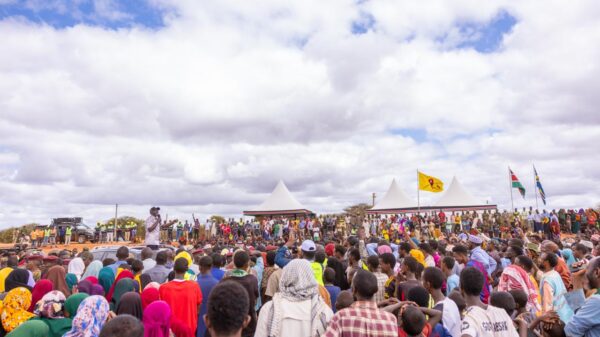
She also raised concerns about the funding of ODM’s “Linda Ground” consultative rallies, cautioning that opaque financing could undermine internal democracy.
ODM now appears increasingly split between a faction aligned with Sifuna, favoring distancing the party from the broad-based arrangement with government and positioning for a 2027 challenge, and another led by Oburu, Party Chairperson Gladys Wanga, and other senior figures seeking negotiations with UDA to secure political leverage.