













NAIROBI, Kenya, Feb 17 — President William Ruto has emphasized that the newly signed cooperation framework between the national government and Nairobi City County is designed to unlock additional resources beyond the constitutionally allocated equitable share.
Ruto said the funding will boost infrastructure, service delivery, and the city’s global competitiveness.
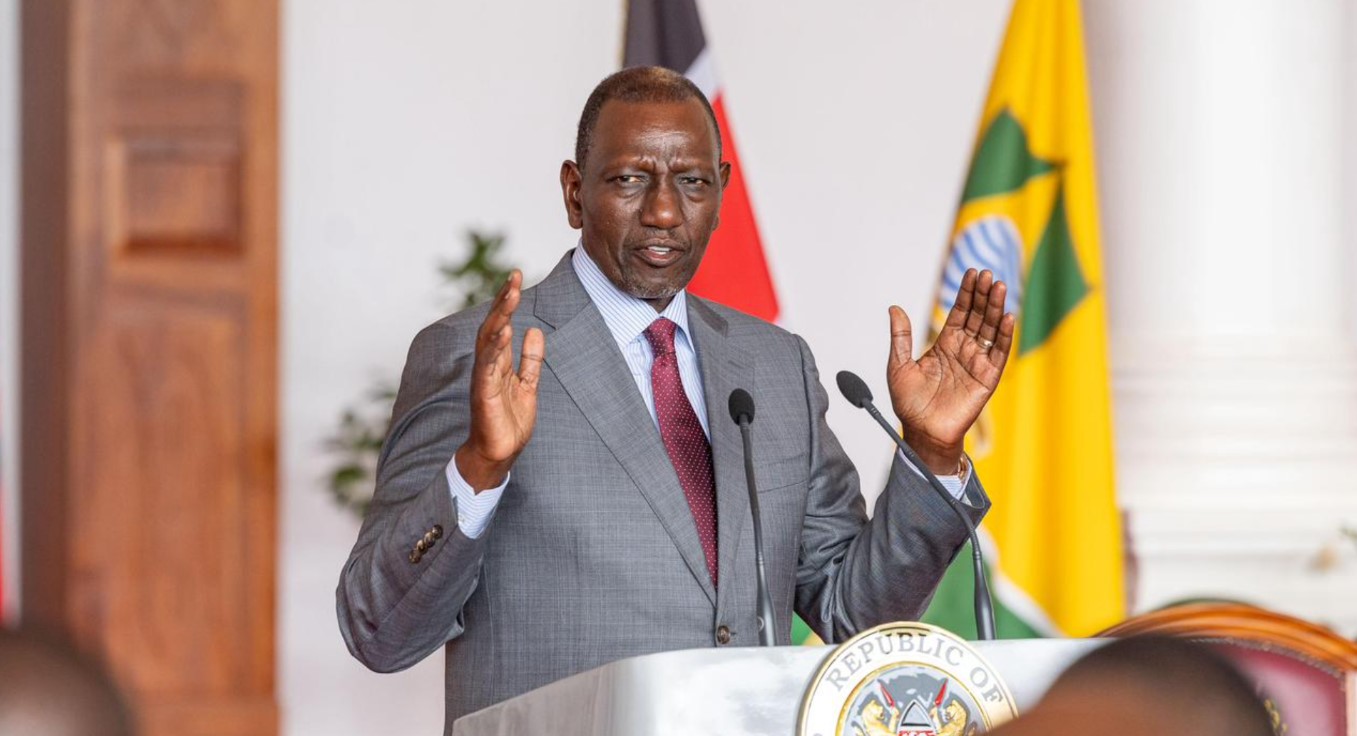
Speaking at State House during the signing ceremony on Tuesday, the President said the initiative reflects the constitutional principle of cooperative governance, with both levels of government working in a structured partnership to meet the demands of the capital.
“Nairobi is not merely another devolved unit; it is our capital, the seat of the Republic, and the nerve center of national administration,” Ruto said.
“It is home to two United Nations agencies. Nairobi is the only UN headquarters presence in the Global South, and it stands as a commercial, financial, and innovation hub of our region.”
Ruto noted that the agreement, anchored in the Constitution of Kenya, the Intergovernmental Relations Act, and the Urban Areas and Cities Act, sets out a framework for collaboration without transferring county functions to the national government.
The county retains its legal mandate, while the national government supplements its efforts in key sectors.
The President highlighted four primary work streams under the agreement as water and sanitation; roads, bridges, and drainage; street lighting and safety, and housing and informal settlement upgrades
In addition, Sh2 billion annually will support circular waste management, complementing the county’s allocation of Sh4 billion for material recovery facilities and transfer stations.
President Ruto also directed the Cabinet Secretary for Interior to develop a framework within 60 days for a dedicated Nairobi Metropolitan Police Unit, aimed at strengthening security in the capital alongside county security teams.
He stressed the importance of cooperation over partisanship.
“Many visitors experience Kenya through Nairobi. The impression we give of this city is the impression the world has of our country. We must modernize it, make it fully functional, safe, and globally respected,” Ruto said.
Prime Cabinet Secretary Musalia Mudavadi will chair a high-level steering committee overseeing the joint framework, with Nairobi Governor Johnson Sakaja serving as deputy.
Mudavadi described the initiative as necessary to ensure Nairobi retains its status as a regional hub amid competition from emerging African capitals.
The agreement formalizes structured national–county collaboration on infrastructure, urban regeneration, housing, water, and sanitation projects.
Officials say it will help Nairobi, home to nearly seven million residents, address long-standing infrastructure gaps and prepare for international events, including the 2027 Africa Cup of Nations (AFCON).
“This is the true spirit of devolution—partnership, not competition,” Sakaja said, highlighting ongoing initiatives such as the Nairobi Rivers Regeneration Project and the Northern Collector Tunnel, which have already increased water supply by about 140 million litres per day.
The cooperation framework signals a shift toward a collaborative, results-oriented urban governance model, with an initial capital package of Sh80 billion committed to priority sectors.