










NAIROBI, Kenya, Mar 8 – Rwanda has warned that the deployment of the Southern African Development Community (SADC) Mission in the DRC (SAMIDRC) will further exacerbate the ongoing conflict in the Central African state.
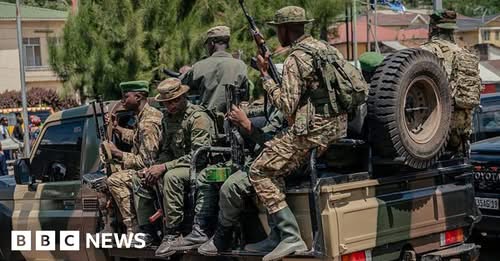
The concern comes at a time when the Congolese Armed Forces (FARDC) and allied troops have been battling the M23 rebels in fightings that have put the eastern part of the country in a fragile state and worsened humanitarian situation.
Kigali said earlier this week that the subsequent endorsement of the peace mission by the African Union (AU) Peace and Security Council will reverse the gains made by the Nairobi and Luanda processes, spearheaded by former Kenya President Uhuru Kenyatta and Angola’s President Joao Lourenco.
In a protest letter addressed to the Chairperson of the African Union Commission, Moussa Faki Mahamat, Rwandan Foreign Minister Vincent Biruta highlighted the potential for heightened tensions between the SADC and East African Community (EAC) blocs.
“SAMIDRC is fighting alongside a FARDC-led coalition which includes the FDLR genocidal forces, ethnic-driven local armed groups allied to FDLR under the umbrella of Wazalendo, and Burundian armed forces under a bilateral arrangement, as well as European mercenaries and Private Military Security Companies including one associated with the former Blackwater, as reported by the United Nations Group of Experts on DRC in December 2023,” Biruta said earlier this week.
SADC Heads of State and Government okayed the deployment of SAMIDRC at an Extraordinary Summit held in Windhoek, Namibia, on May 8, 2023.
SADC States deployed SAMIDRC on December 15, 2023, after the East African Community Regional Force (EACRF) formally ended its mission to DRC with the last batch of the multinational security force leaving on December 21.
Biruta underscored concerns that SAMIDRC’s collaboration with alleged criminal elements, including the FDLR genocidal forces and other armed groups, could hinder efforts towards a political resolution.
“SAMIDRC currently supports the Government of DRC’s belligerent posture, focusing on a military solution against the spirit of all regional peace initiatives, including the EAC-led Nairobi Process and the Angola-led Luanda Process,” Rwandan Foreign Minister added.
He accused President Felix Tsishekedi’s administration of obstructing the political process and of reorganizing and arming the FDLR militia groups.
Rwanda further accused the international community of overlooking root causes of the conflict, such as support for the FDLR and the failure of the DRC government to address grievances of the Congolese Tutsi community.
Advocating for a peaceful solution, Kigali urged the AU Chairperson to leverage diplomatic channels to encourage President Tshisekedi’s administration to prioritize the Nairobi and Luanda peace processes.
Kigali called on those taking part in peace restoration efforts to conduct visit to the region to get a clearer picture of the ‘desperate’ situation on the ground.
“To this end, the Government of Rwanda encourages members of the Peace Security Council (PSC) to conduct a field visit to the Great Lakes Region to witness the reality on the ground and gain real insights into the ongoing conflict,” he said.
On February 22, Faki warned the West against “interfering with the internal affairs” of the DRC and Rwanda amid simmering tensions between Kinshasa and Kigali.
The AUC Chairperson reiterated his call for rapid de-escalation and cessation of hostilities between DRC and Rwanda while urging foreign entities to refrain from meddling in African state affairs.
“It (AUC) calls on all foreign powers to completely refrain from any interference in the internal affairs of all African countries, particularly those of the African Great Lakes,” AUC Chairperson said in a statement.
Amidst the tension between Rwanda and DRC, Kigali has demanded the demobilization and repatriation of the DRC-backed Democratic FDLR rebel group as a condition to de-escalate a simmering conflict with Kinshasa.
The demand came after the United States called on Rwanda to immediately withdraw its troops from the DRC and remove its surface-to-air missile systems, citing concerns over civilian safety and commercial flight operations in eastern DRC.
However, President Kagame has maintained that he will not back down, emphasizing that DRC support for FDLR “is a matter of state policy, not the choice of individual actors.”
“Ending Congolese state support for FDLR, and ensuring their demobilization and repatriation to Rwanda, is a non-negotiable requirement to protect Rwanda’s territorial integrity and guarantee the preservation of our hard-won national unity for future generations,” he said, asserting that Rwanda reserves the right to take any legitimate measures to defend itself so long as the threat exists.
Kagame has been strengthening his military position on the border with DRC amid mounting tension with President Felix Tshisekedi’s regime.
He attributed recent M23 advancements to the DRC’s expulsion of the East African Community Regional Force in December 2023, tasked with overseeing ceasefire efforts.