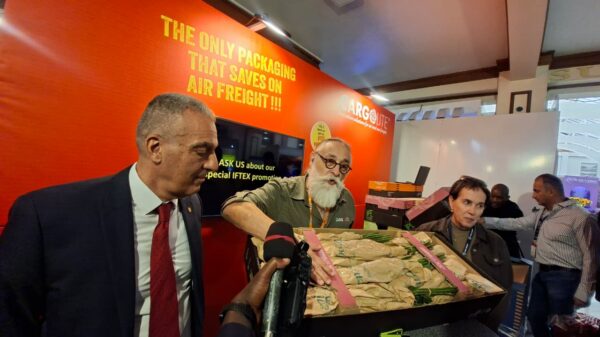

























NAIROBI, Kenya, Jun 3 — Every day, millions of Kenyan roses begin a journey of more than 6,000 kilometres to flower markets across Europe.
Yet for growers, one of the biggest threats to profitability is not drought, pests or global competition—it is what happens after the flowers leave the farm.
Crushed cartons, rough handling at airports, rising airfreight costs and disruptions in the cold chain continue to erode returns in an industry that supplies an estimated 40 per cent of Europe’s cut flowers.
Now, exhibitors at the International Flower Trade Exhibition (IFTEX) 2026 in Nairobi say a deceptively simple innovation—a redesigned flower carton—could help Kenya protect its position as one of the world’s leading flower exporters.
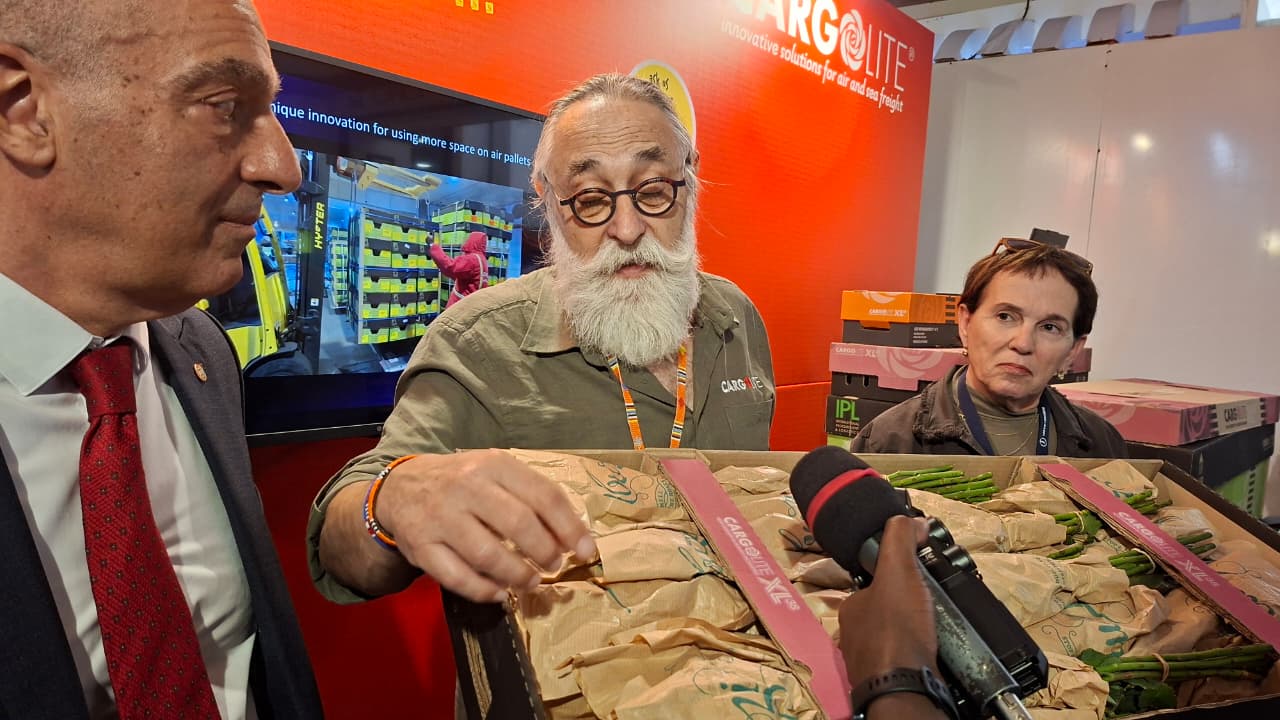
The technology, developed by Israeli packaging firm Cargolite and increasingly adopted by Kenyan flower farms, is being promoted not merely as a packaging solution but as a logistics innovation capable of reducing damage, lowering freight costs and improving flower quality upon arrival in overseas markets.
“We have literally changed the way Kenyans handle flowers,” said Amnon Zamir, Cargolite’s Head of Research and Development, during IFTEX 2026.
“What we’ve done is optimise the entire process so that flowers leave the farm on skids, travel to the airport on skids and are loaded onto aircraft with minimal handling. Nobody touches the flowers.”
Reinforced carton
For decades, flower cartons have been among the weakest links in the export chain. Traditional boxes are vulnerable to crushing during stacking and transportation, often resulting in damaged blooms and costly claims from international buyers.
Cargolite’s system seeks to address this challenge through a reinforced carton design incorporating polypropylene support frames that bear the load independently of the carton walls.
The result is stronger packaging that protects flowers throughout the journey from farm to market while creating better airflow within refrigerated supply chains.
According to Zamir, the innovation addresses a hidden challenge that many growers underestimate—logistics losses that quietly erode profitability.
“Many farms look at the price of the box and say it is more expensive,” he said.
“But they don’t look at the entire supply chain. When flowers arrive in better condition, there are fewer claims, less waste and more value for everyone.”
The timing may be critical for Kenya’s floriculture sector.
Rising freight costs
Speaking at the exhibition, Cargolite Chief Executive Officer John Kowarsky warned that rising airfreight rates are becoming one of the biggest threats facing exporters.
“Airfreight is going to hit between four and five dollars per kilogram,” he said. “At those prices, everybody has to find ways of becoming more efficient.”
Kowarsky argues that improving packaging efficiency can significantly reduce transport costs while preserving flower quality. The company has developed quarter-carton, half-carton and sea-freight formats that enable growers to pack more efficiently, reduce handling and maximise cargo space.
The cartons also allow mixed flower assortments to be packed together and shipped directly to buyers, reducing the need for repacking in Europe and shortening the supply chain.
For buyers, that means lower logistics costs and fresher flowers. For growers, it increases the likelihood of preserving the premium quality that has made Kenyan roses renowned around the world.
“The climate in Kenya is perfect for growing flowers. The quality is fantastic,” Kowarsky said.
“The challenge is logistics. When cartons arrive crushed, the value of the flower declines and ultimately the grower earns less.”
Local manufacturing
The innovation is also creating opportunities closer to home.
Israeli Ambassador to Kenya Gideon Behar noted that the packaging is manufactured locally, generating jobs and supporting domestic industry while strengthening one of Kenya’s most valuable export sectors.
“What we see is a very simple innovation that contributes dramatically to the flower business in Kenya,” Behar said.
Beyond protecting flowers, Cargolite says its cartons can also reduce environmental impact. Because the packaging uses less paper and allows more flowers to be shipped per consignment, fewer cartons, trucks and aircraft movements are required, lowering emissions across the supply chain.
The company currently works with about 60 flower farms in Kenya and maintains a local team that trains growers on packing standards and quality control.
However, executives acknowledge that widespread adoption remains a challenge, as many growers continue to focus on upfront packaging costs rather than long-term savings.
That debate comes as Kenya faces growing competition from South American flower exporters, many of whom are investing heavily in packaging and logistics systems designed to preserve product quality from farm to consumer.
For Zamir, the future competitiveness of Kenya’s flower industry may depend as much on what happens after harvest as what happens inside the greenhouse.
“Kenya produces some of the best flowers in the world,” he said. “The next step is making sure they reach customers in exactly the same condition.”