














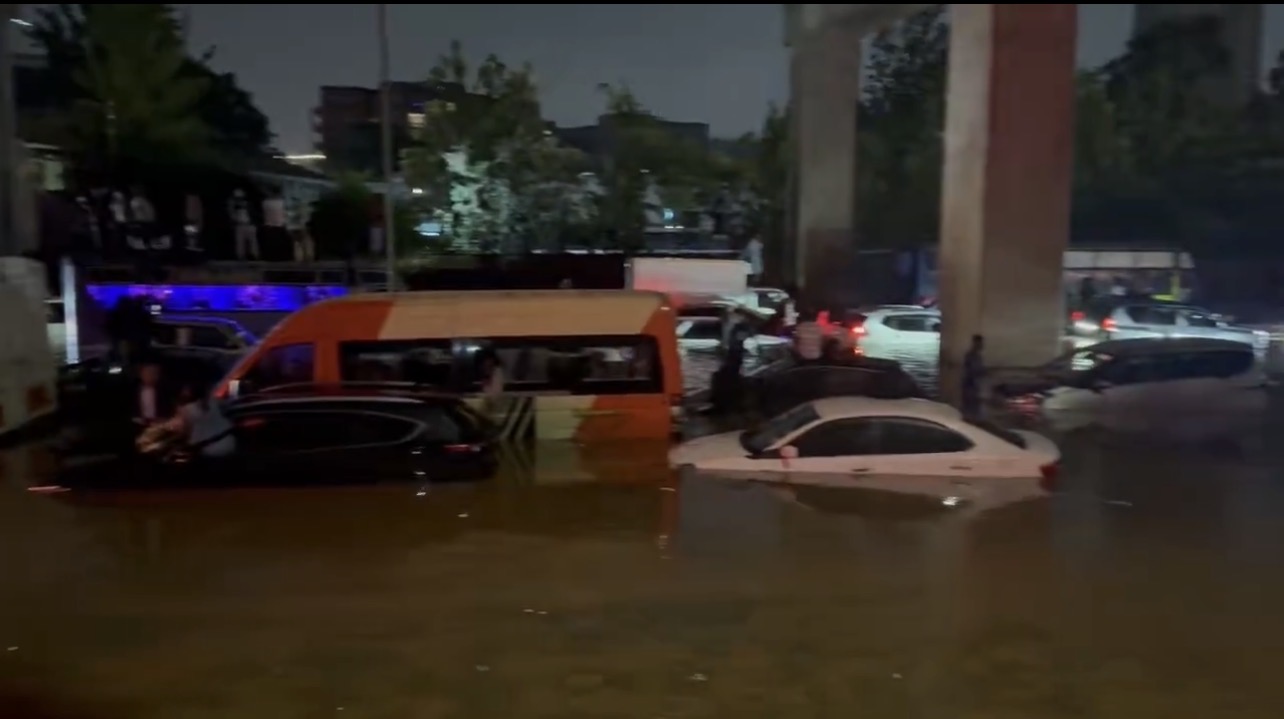

NAIROBI, Kenya, Mar 7 – Traffic chaos gripped Nairobi Friday night after heavy rains flooded several major roads across the capital, marooning vehicles in rising water and forcing the deployment of the Kenya Defence Forces (KDF) to assist in rescue operations.
Motorists and passengers were stranded for hours as floodwaters overwhelmed key roads, with videos circulating online showing cars partially submerged and commuters abandoning vehicles over safety concerns.
In some areas, drivers were trapped inside their cars as water levels rose rapidly, prompting emergency response teams and KDF personnel to move in overnight to help evacuate motorists and passengers from flooded sections.
Several parts of the city experienced severe flooding after the heavy rainfall pounded the capital late Friday, leaving major roads impassable and disrupting transport networks across multiple neighbourhoods.
Public service vehicles were also affected, with many unable to access certain routes due to rising water levels, while pedestrians were forced to wade through knee-deep water in flooded areas.
Reports also emerged that some hotels in the city experienced flooding, with guests temporarily trapped after water seeped into basements and parking areas.
The dramatic scenes once again exposed the vulnerability of Nairobi’s ageing drainage infrastructure and dysfunctional sewer systems, which residents say have repeatedly failed during intense downpours.
Urban planners say much of Nairobi’s drainage and sewer network was built decades ago when the city’s population and built-up areas were far smaller, leaving the system unable to cope with the volume of stormwater generated by modern urban expansion.
Rapid urbanisation, illegal construction on riparian land and the dumping of waste into drainage channels have worsened the situation by blocking stormwater systems and sewer lines, causing water to accumulate on roads whenever heavy rains strike.
The problem is compounded by ageing sewer infrastructure, where overloaded sewer lines often mix with stormwater during heavy rainfall, leading to flooding in low-lying estates and along major transport corridors.
Johnson Sakaja, the Governor of Nairobi, has previously acknowledged that much of the capital’s drainage infrastructure was not designed to handle the intensity and duration of modern rainfall patterns.
“Our drainage infrastructure was not designed to handle heavy, prolonged rainfall,” Sakaja said earlier, noting that many systems were originally built for lighter seasonal rains.
The heavy downpour came after the Kenya Meteorological Department warned that rainfall would intensify in early March, raising the risk of flooding in low-lying estates and several parts of the city.
Weather alerts had indicated widespread heavy rain across areas including Westlands, Dagoretti, Roysambu, Kibra, Embakasi, Makadara, Kamukunji, Langata, Kasarani and Mathare, with localized downpours expected to exceed 70 millimetres in some locations.
Authorities have advised motorists and pedestrians to exercise caution and avoid attempting to drive through flooded roads as the rains continue.
Flooding triggered by heavy rains has repeatedly turned deadly in Nairobi and across Kenya, highlighting the dangers posed by blocked drains, overflowing rivers and weak urban infrastructure.
In April 2025, at least six people died in Nairobi after overnight flash floods swept through parts of the city.
During the devastating 2024 rainy season, floods across Kenya killed several people, with Nairobi among the hardest-hit areas as rivers burst their banks and thousands of residents were displaced.
City officials later confirmed that at least 39 people died in Nairobi during the 2024 floods, with tens of thousands of households affected.
Residents and road users are now urging authorities to prioritise the rehabilitation and expansion of Nairobi’s stormwater drainage systems, warning that without urgent intervention the capital will continue to face dangerous flooding whenever heavy rains strike.
Experts say clearing blocked drains, enforcing waste management regulations and upgrading ageing sewer infrastructure will be critical to preventing Nairobi’s drainage network from repeatedly turning deadly during the rainy season.