













NAIROBI, Kenya Mar 10-The Linda Mwananchi Forum, a spilt faction of the Orange Democratic Movement (ODM) says it will release an independent report assessing the implementation of the 10-Point Agenda agreement signed between the late opposition leader Raila Amolo Odinga and President William Ruto.
Vihiga Senator and ODM Deputy Party Leader Godfrey Osotsi said the progressive wing of the party operating under the Linda Mwananchi platform will on Wednesday release a “People’s Report” outlining what it describes as the true status of the reform commitments made to Kenyans.
Linda Mwananchi is a forum of leaders allied to ODM Secretary-General Edwin Sifuna, a grassroots mobilisation drive aimed at countering the Linda Ground faction led by party leader Oburu Oginga.
“For this reason, the progressive wing of ODM operating under the Linda Mwananchi platform will continue to defend the party’s founding principles and the reform commitments made to the Kenyan people,”
“Tomorrow we shall release a People’s Report presenting an independent assessment of the true status of the implementation of the 10-Point Agenda,” he said.
In a statement issued Tuesday, Osotsi also accused some leaders within ODM of misrepresenting the agreement and downplaying what he termed as the systematic sabotage of its implementation.
“My attention has been drawn to misleading statements by some leaders within the Orange Democratic Movement (ODM) regarding the 10-Point Agenda Agreement ….These statements attempt to distort the true nature and intent of the agreement while downplaying the systematic sabotage of its implementation by President Ruto and the United Democratic Alliance,” he said.
Osotsi dismissed claims that the agreement had no implementation timeline and that March 7, 2026 merely marked the first anniversary of the signing ceremony held at the Kenyatta International Convention Centre.
“A narrative is now being pushed by pro-regime voices within ODM claiming that the agreement had no timeline and that March 7, 2026 merely marks the first anniversary of a symbolic signing ceremony at the Kenyatta International Convention Centre (KICC),”
“This interpretation is inaccurate and misleading. Such claims amount to a betrayal of Raila Odinga’s legacy and the millions of Kenyans who sacrificed during the protests and civic agitation that demanded reforms and accountability from the state,” he said.
According to the senator, the agreement was born out of recommendations contained in the National Dialogue Committee (NADCO) Report and public agitation for governance reforms and accountability.
“The National Dialogue Committee (NADCO) Report and the subsequent 10-Point Agenda Agreement were not political conveniences. They were the result of sustained public agitation and national demand for reforms in governance, economic management and the protection of human rights,”
” Kenyans paid a heavy price to secure these concessions and they must not be trivialized or misrepresented for narrow political gain,” he said.
Osotsi revealed that before the agreement was signed, ODM leaders held internal consultations chaired by Odinga where a proposal to create a coalition pact between ODM and the ruling United Democratic Alliance was rejected.
“ Raila rejected this proposal and instead insisted on a people-centered reform agreement addressing the pressing socio-economic and human rights concerns raised in the NADCO Report and the Gen Z protests,” he said.
He said Odinga later appointed a team that included Kisumu Governor Anyang’ Nyong’o, ODM Secretary-General Edwin Sifuna, Homa Bay Governor Gladys Wanga, ODM Executive Director Oduor Ong’wen and lawyer Paul Mwangi to draft the reform framework that eventually became the 10-Point Agenda.
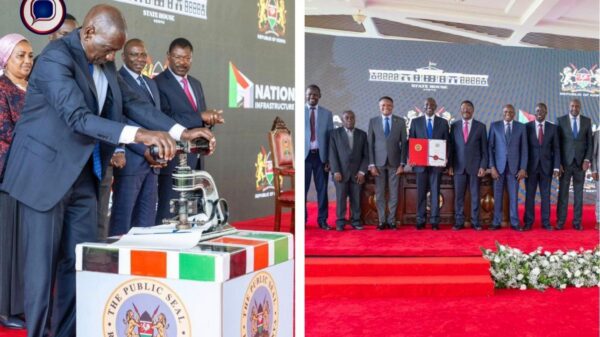
Osotsi said the document was presented to a delegation from the ruling party led by President Ruto at KICC and approved within minutes, raising concerns about the government’s commitment to its implementation.
“When the document was presented to the UDA delegation led by President Ruto at KICC, it was approved within minutes, raising early concerns that the ruling party’s interest lay more in the optics of the signing than in genuine implementation,” he said.
He added that the agreement was later mischaracterised as a coalition pact even as progress on the reforms stalled.
“Indeed, in the months that followed, the agreement was repeatedly mischaracterized as a coalition pact while its implementation stalled. Concerned by this lack of progress, Raila directed some ODM leaders, including myself and Secretary-General Edwin Sifuna, to publicly clarify the nature of the agreement and demand its implementation,” he said.
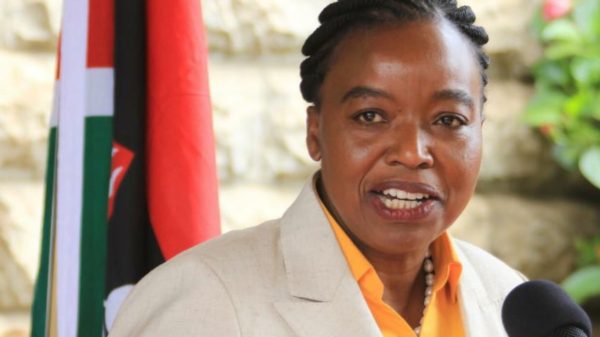
Osotsi said the ODM Central Management Committee later concluded that the ruling party had reneged on its commitments, prompting the establishment of an oversight committee chaired by former nominated senator Agnes Zani.
“During an ODM Central Management Committee meeting on August 6, 2025, the party reviewed the stalled process and concluded that UDA had reneged on its commitments. Later that day the two principals issued a joint communiqué establishing a five-member oversight committee chaired by former Senator Agnes Zani to supervise implementation,” he said.
“The communiqué provided an implementation framework and stipulated that the committee would submit its final report by March 7, 2026. Consequently, March 7, 2026 is not merely an anniversary but the deadline for presenting a comprehensive assessment on the implementation of the reform agenda,” he said.
He also faulted the committee for what he described as a lack of transparency and regular reporting.
“Unfortunately, the committee’s operations have lacked transparency and regular reporting as required. Kenyans have largely been treated to public relations narratives rather than clear progress reports on promised reforms,” he said.