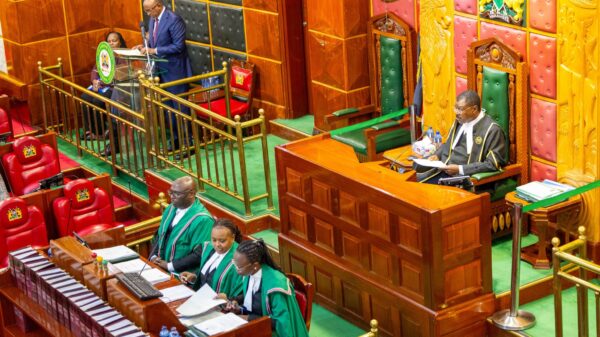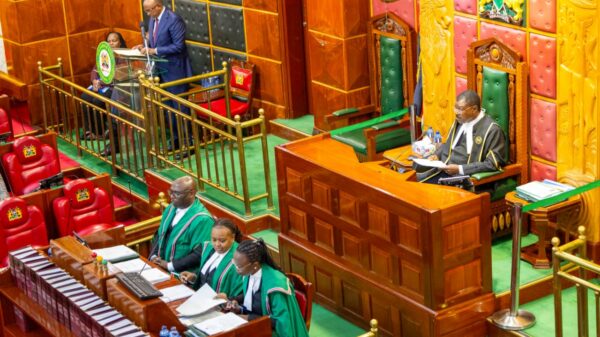




















NAIROBI, Kenya, Mar 25 — The High Court has rebuked the government over the hurried rollout of the Social Health Insurance Fund (SHIF), finding it violated constitutional rights, even as it upheld the multi-billion-shilling procurement of the Integrated Healthcare Information Technology System (IHITS).
In a judgment delivered Tuesday, Justice Bahati Mwamunye ruled that the nationwide rollout of SHIF on October 1, 2024 was premature, unreasonable and resulted in denial of critical medical services to patients.
“Implementing the system on a fixed date, before adequate registration and digital functionality were in place, was unreasonable,” the judge held, pointing to documented cases where patients were denied essential care, including dialysis and cancer treatment.
He stressed that socio-economic rights must be real and enforceable, not theoretical.
“Socio-economic rights are not abstract or aspirational ‘paper rights’—they demand tangible, real-world protection,” he stated, concluding that the rollout violated the right to health and human dignity.
Despite the rebuke, the Court declined to nullify the SHIF system, warning that doing so would destabilize the health sector, particularly given that by early 2025 more than 18.7 million Kenyans had already been onboarded.
Instead, the Court issued a structural interdict compelling the government to implement corrective measures under judicial supervision.
Quarterly progress reports
Justice Mwamunye directed the Ministry of Health to ensure no patient is denied emergency or life-saving treatment, and ordered the introduction of fair means-testing mechanisms for informal sector workers.
He also mandated stronger transparency, accountability and a clear, accessible complaints mechanism, with the government required to file a compliance plan within 90 days and submit quarterly progress reports for a year.
Even as it faulted implementation, the Court upheld the legal and regulatory framework underpinning SHIF, affirming that the funds established under the Social Health Insurance Act are constitutional and valid.
On the IHITS procurement, the Court found that while the process was marked by gaps in transparency and documentation, these did not amount to illegality.
“The procurement process, though procedurally imperfect, does not demonstrate fraud, bad faith, or fundamental illegality,” the judge ruled.
The petition had challenged the award of the tender to a Safaricom-led consortium, citing alleged flaws in technical and financial evaluation, but the Court declined to interfere, emphasizing that such assessments fall within the expertise of procurement entities.
“Procurement evaluation involves technical and commercial judgments which courts are generally ill-equipped to undertake,” the ruling stated, adding that interference is only warranted where clear illegality or irrationality is demonstrated.
MoH
The Court upheld the Ministry’s use of specially permitted procurement under Section 114A of the Public Procurement and Asset Disposal Act, noting that it had received approval from the National Treasury and followed the required stages, including request for proposals, evaluation, negotiations and contract execution.
However, Justice Mwamunye cautioned that the provision is “not a license for opacity,” faulting the government for insufficiently documenting the justification for limiting competition and failing to meet the expected threshold of transparency for a project of such magnitude.
He also dismissed allegations of fraud tied to discrepancies in contract values, stating that such claims must be strictly proved and cannot rest on suspicion or inference.
On the role of the Digital Health Agency, the Court found that it was not operational at the time of procurement and lacked the capacity to undertake the project, validating the Ministry’s decision to proceed.
“Requiring that only the non-operational DHA could have procured the IHITS would have led to an absurd and unworkable outcome,” the judge observed.
Ultimately, the Court sought to strike a balance between enforcing constitutional standards and preserving continuity in the health sector.
“Universal Health Coverage cannot merely be proclaimed; it must be delivered in a manner that respects the dignity, health, and trust of the people,” Justice Mwamunye said.