























NAIROBI, Kenya Jan 9 – For thousands of Kenyan students, a KCSE grade of D or D-minus has long been seen as the end of the road.
But as the 2025 KCSE results were released on Friday, education leaders sent a clear and hopeful message, a low grade is not the end, it is a new beginning.
Out of the 993,226 candidates who sat the 2025 KCSE examination, more than 634,000 students scored D+ and above, meaning the majority are eligible to move on to TVET institutions, technical training, creative fields, or skills-based careers.
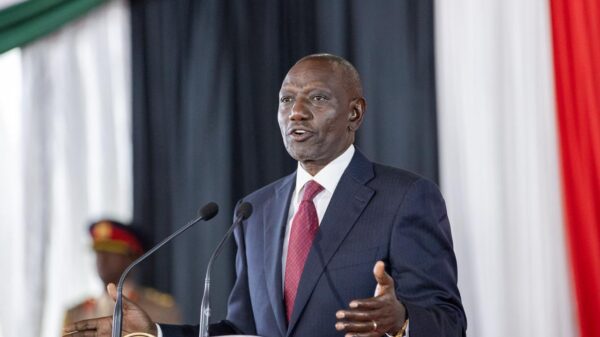
Education Cabinet Secretary Julius Migos Ogamba said the country is deliberately moving away from an exam system that only rewards academic memory, towards one that recognises skills, talent and practical ability.
“Examination and assessment are not merely a measure of learning, but a compass that guides the nation’s future,” Ogamba said during the release of the results at AIC Chebisaas Boys High School in Eldoret.
“Education must always evolve to meet the demands of a dynamic world.”
– KCSE D is not failure –
The CS said the transition to Competency-Based Education (CBE) is meant to ensure that learners are not defined by a single exam grade, but by what they can do with their hands, minds and talents.
“The shift to competency-based assessment moves us away from rote memorisation to the demonstration of skills, values and knowledge that empower learners to thrive in the 21st century,” Ogamba said.
This change is already opening doors for students who scored D grades many of whom are now opting for technical courses, artisan training, self-employment, sports, arts and digital skills, instead of repeating exams or giving up.
Ogamba reminded candidates that KCSE is not only a gateway to university, but also to TVET institutions, which are increasingly becoming key drivers of jobs and income.
“The candidates whose results we release today are expected to transit to tertiary education, either in universities or TVET institutions,” he said.
To make this possible, the government has introduced the Student-Centred Funding Model, offering scholarships and loans based on need, while also reducing university fees by 15 to 40 per cent.
– The new reality –
Kenya National Examinations Council (KNEC) CEO David Njengere reinforced the same message, saying the education system is being redesigned to support every learner’s pathway, not just top scorers.
“KNEC is committed to assessments that guide learners to their next phase of life, not disadvantage them,” Njengere said.
He noted that as Kenya prepares for full implementation of Senior School under the new system, students will be assessed through projects, practicals and school-based assessments, not just final exams.
“The cumulative data from Grades 10, 11 and 12 will form part of the final reporting at the end of Senior School,” Njengere explained, adding that learners will choose pathways aligned to their strengths.
Education experts say this marks a major mindset shift in Kenya, where academic grades have traditionally been treated as the only measure of success.
In 2025, only 0.19 per cent of candidates scored an A, while nearly 73 per cent were aged between 17 and 19, meaning most are still young enough to retrain, reskill and restart.
As the country transitions away from the 8-4-4 system, leaders insist that no learner should be left behind simply because of one exam result.
“Assessment should nurture potential, not crush dreams,” Ogamba said.
For thousands of students who woke up to a D grade this week, that message may be the most important result of all.