


















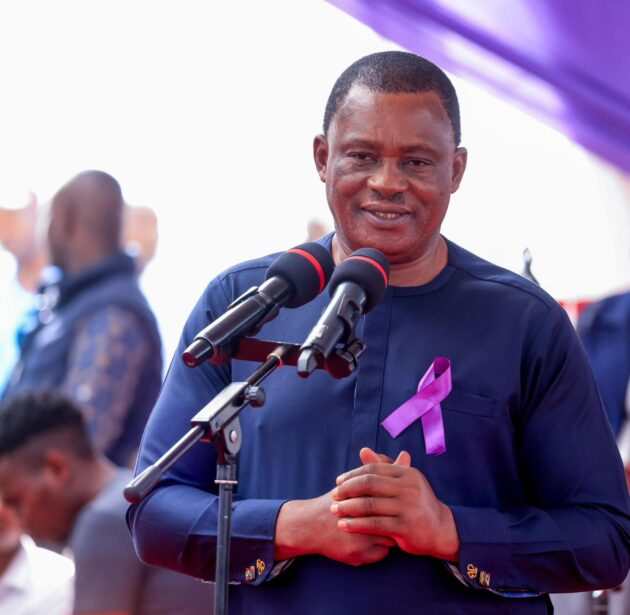

NAIROBI, Kenya, Jan 12 — Democratic Party (DP) leader Justin Muturi has defended Deputy President Rigathi Gachagua’s controversial remarks on secondary school placement, arguing that regional disparities in education stem more from local leadership failures than historical marginalisation.
In a statement released Tuesday, Muturi said the debate sparked by Gachagua’s comments highlighted the “quiet architecture of privilege” that continues to influence access to elite schools and future opportunities in Kenya.
“What began as an uncomfortable observation about who gets into which schools has become a national reckoning about inequality, regional leadership, and the politics of unequal citizenship,” Muturi said.
Gachagua had recently drawn criticism after questioning why certain regions consistently dominate placements into national and extra-county schools, with leaders from North Eastern Kenya describing his remarks as discriminatory and insensitive.
Muturi, however, said the response on the ground was more nuanced, with residents directing frustration at their own local leaders rather than Mount Kenya politicians.
“The fury from North Eastern residents directed at their own elites is deeply democratic,” he noted.
According to Muturi, school placement is a key determinant of social mobility, affecting access to elite universities, professional networks, and future leadership roles. He argued that disparities in school infrastructure and quality, rather than admission formulas, are at the heart of the controversy.
“Kenya’s education crisis is not about quotas; it is about capacity,” Muturi said.
“Regions with well-equipped schools naturally produce more candidates for national selection. Regions where schools are few, underfunded, and poorly staffed will always lag behind.”
Muturi pointed out that county governments, the National Government Constituencies Development Fund (NG-CDF), and equalisation transfers have channelled billions of shillings into devolved units over the past decade. Yet, many counties in North Eastern Kenya still lack competitive public secondary schools, laboratories, and adequate staffing.
“This is not marginalisation. This is mismanagement,” he said, adding that some regional leaders spend too much time in Nairobi political circles while neglecting service delivery at home.
Muturi also criticized elite insulation, where political leaders educate their children in private or foreign institutions while public schools remain under-resourced.
“When leaders do not use public schools, they feel no urgency to improve them,” he said.
Rejecting the argument that colonial-era marginalisation should explain present inequalities, Muturi called for governors and MPs to be evaluated on tangible education investments rather than political rhetoric.
“Development is not a grievance industry; it is a construction project. Leaders should prioritise building schools, laboratories, dormitories, and teacher capacity,” he added.
“A Kenyan child in Wajir is not less deserving of a physics lab than a Kenyan child in Nyeri. Equality of citizenship demands equality of local effort as well as national support.”
While acknowledging that Gachagua’s remarks sparked national debate, Muturi hailed the growing public pressure on regional leaders as a positive sign for democratic accountability.
“North Eastern residents are no longer begging Nairobi for sympathy. They are demanding answers from their own representatives,” he concluded.