





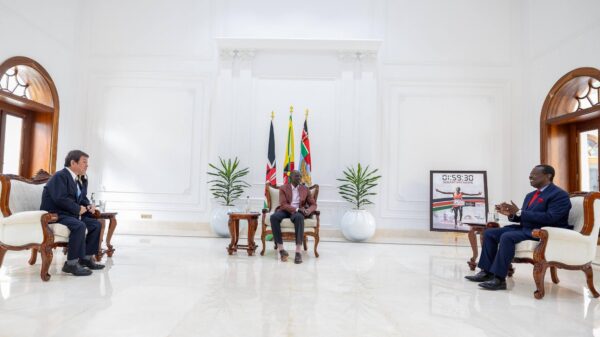


NAIROBI, Kenya Jan 6 – Could a foreign power storm into Kenya and take away a sitting president for trial abroad?
That question is now dominating public debate after the dramatic arrest and capture of Venezuelan President Nicolás Maduro by the United States and a Kenyan lawyer says the Constitution does not fully rule it out.
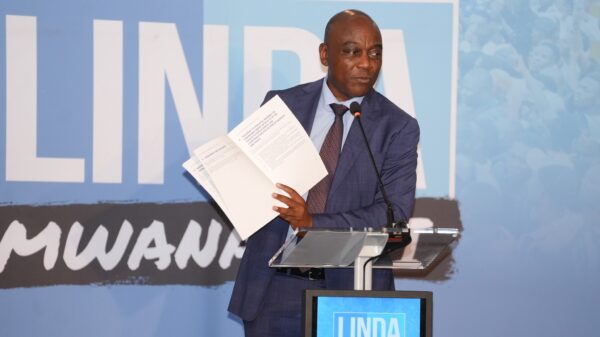
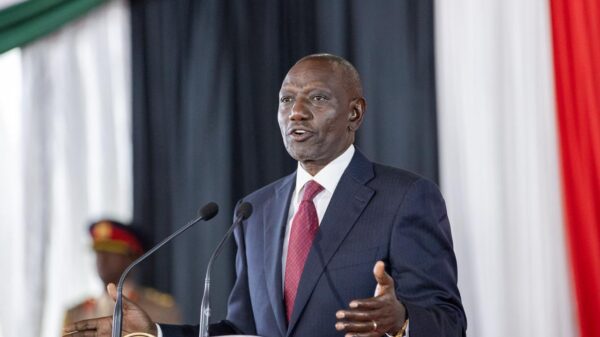
High Court advocate Danstan Omari has warned that while President William Ruto enjoys immunity from prosecution in Kenyan courts, that protection does not extend to international crimes under global treaties Kenya has signed.
“Many African presidents live with the fear that Americans can pick their president from the bedroom,” Omari said during the first 2026 episode of his Court Helicopter Explainer.
“So the big question Kenyans are asking is this, can a foreign country come here, pick President William Ruto, and take him for trial elsewhere? The answer lies in our own Constitution.”
– Immunity at home, not abroad –
Omari explained that Article 143 of the Constitution gives the president immunity from criminal proceedings only within Kenya.
“He cannot be taken to Makadara, Milimani or Nyamira courts while in office,” Omari said. “That immunity only applies to Kenyan courts and crimes under the Penal Code.”
But he pointed to a lesser-known clause, Article 143(4) which he described as a major exception.
“That same Constitution says the president can be arrested and tried outside Kenya if the crime falls under international treaties that prohibit immunity,” he said.
In simple terms, Omari said presidential immunity “stops at Kenya’s borders” when it comes to serious international crimes.
– Crimes that can trigger arrest –
According to Omari, the Constitution allows for a sitting president to be arrested and taken abroad if accused of crimes such as genocide, crimes against humanity, war crimes or crimes of aggression.
“For example, genocide includes acts meant to destroy a community killing people, causing serious harm, or even stopping births,” he explained.
“Crimes against humanity include widespread attacks on civilians murder, torture, forced disappearances, rape or persecution. If that happens, the president will be on a chopper heading out of the country.”
He added that war crimes, torture, enforced disappearances, human trafficking, piracy, slavery and international drug trafficking are also covered under global conventions Kenya has ratified.
“If a president uses state power to commit such crimes, international law applies. He will be arrested and taken for trial,” Omari said.
Omari’s remarks came days after the US ordered the arrest and capture of Venezuela’s president, an event that shocked many across the world and raised fresh questions about presidential power and sovereignty.
“The Venezuelan president is not the first,” Omari noted. “History is full of leaders who believed they were untouchable.”
He cited former Serbian leader Slobodan Milošević, Liberia’s Charles Taylor, Panama’s Manuel Noriega and Iraq’s Saddam Hussein all arrested and tried after leaving power or being forcibly removed.
Other leaders mentioned include Libya’s Muammar Gaddafi, Haiti’s Jean-Bertrand Aristide and Congo’s Patrice Lumumba.
Omari stressed that his message was not political but legal.
“This is a wake-up call to African leaders who think they can run countries without accountability,” he said.
“Our Constitution itself allows foreign governments to step in and protect citizens if a president misbehaves under international law.”
He compared presidential immunity to a shield that only works at home.
“It protects you inside your house,” Omari said. “But once you break the neighbourhood rules, the neighbourhood watch is allowed to step in.”
Omari said future discussions would focus on the UN Charter and how international law is enforced globally but for now, he believes the lesson is clear.
“Power does not cancel the law,” he said. “Not even for a president.”