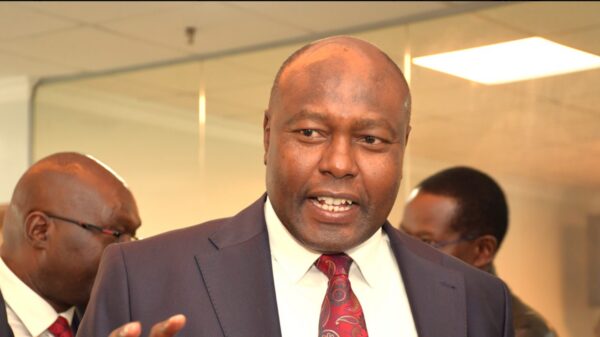

















NAIROBI, Kenya, Dec 8 — Realisation of the Bill of Rights requires joint commitment from all three arms of government and both levels of governance, the Chairperson of the Senate Standing Committee on Justice, Legal Affairs and Human Rights, Senator Hillary Sigei, has said.
Speaking when he officially opened the 2025 High Court Human Rights Summit in Nairobi, Senator Sigei emphasised that the protection of human rights cannot be left to the courts alone.
Instead, he said, it demands harmonised leadership that is ethical, disciplined and forward-looking.
He cited the challenges experienced in implementing the African Court judgment in the case of the Ogiek community as a stark reminder that judicial pronouncements often require coordinated State action to become reality.
Senator Sigei pointed to resource constraints, institutional fragmentation, emerging social tensions and implementation gaps as some of the persistent obstacles undermining the impact of progressive human-rights decisions.
He acknowledged the critical role of the High Court as the primary guardian of the obligation to respect, protect, promote and fulfil human rights.
The Court, he noted, has consistently discharged this mandate with jurisprudential courage, issuing decisions that demonstrate a Judiciary attuned to contemporary human-rights concerns and willing to confront institutional inertia, social prejudice and policy gaps.
“The Court has rendered decisions that have affirmed the legal identity, health rights and non-discrimination of intersex persons and other marginalised groups; protected the freedom of citizens to lawful assembly, to picket and to present petitions before State authorities; and deepened protections related to privacy, data protection and lawful surveillance,” he said.
Justice reform
Senator Sigei assured that Parliament remains committed to working with the Judiciary and all partners to advance sustainable justice reform and safeguard the dignity of every Kenyan.
Parliament, he said, has continued to strengthen the human-rights framework through legislation, oversight and prudent budgetary stewardship.
He urged continued commitment to building a Republic where power is exercised with humility, leadership is guided by integrity, citizens are protected by the law rather than endangered by it, and public institutions anchor — rather than distort — the constitutional promise.
“Let us commit to greater respect for constitutionalism, unwavering fidelity to the rule of law and ethical leadership at every level of public life,” he said.
Constitutional morality
He challenged leaders in the Executive, Legislature and Judiciary to model the constitutional morality, standards and benchmarks they expect from citizens.
“We must speak consistently against violations of rights — whether committed by State agencies, private actors or even the public during political contestation. We must affirm that constitutionalism is not a shield for some; it is a responsibility for all,” he said.
He added that this year’s theme — “Upholding Human Dignity: Ethical Leadership as a Pillar of Constitutionalism” — serves as a reminder that constitutional authority is not an entitlement but a moral responsibility anchored in integrity, fidelity to the rule of law and respect for the inherent dignity of every Kenyan.
Chief Registrar of the Judiciary Winfridah Mokaya said the summit comes at a time when public trust in governance institutions is declining.
She assured that the Judiciary will remain the national citadel of hope — a place where citizens burdened by injustice find integrity, discipline and moral courage.
She noted that the Constitution’s elevation of ethics into an entire chapter — Chapter Six — is not accidental but a clear instruction from the people of Kenya that integrity, accountability and moral clarity must define public service.
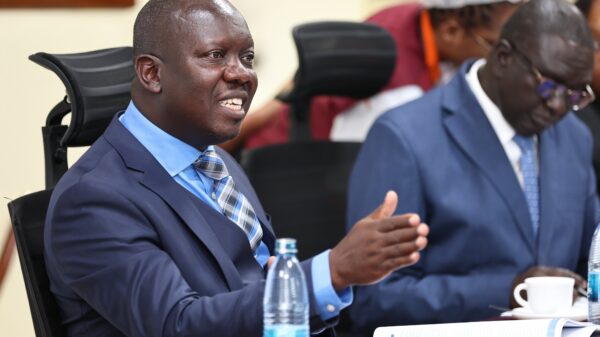
High Court Principal Judge Eric Ogola said the summit’s theme aligns with the transformative vision of the Constitution.
He noted that it provides an opportunity to explore ethical leadership in depth, examining how principled leadership across public institutions strengthens constitutionalism and keeps human dignity at the centre of governance.
“We remain committed, as the High Court, to giving full effect to the principles of Chapter Six of the Constitution, ensuring that leadership at all levels upholds integrity, accountability and public trust,” Justice Ogola said.