



















NAIROBI, Kenya, September 27, 2025 – When Shane Chandaria went to attend a friend’s birthday party at the age of six, he did not know it would be the beginning of intense labour pains for a grand dream.
Nine years later, the 15-year-old is labouring to bring forth a baby that will bring glory to Kenya in the motorsports world — and that is to become the first ever from the country to grace the Formula 1.
At the birthday party, he tried his hands at go-kart driving and has not looked back since.
“One of my friends had a birthday party when I was six, and I went to the karting track near Splash in Nairobi, and from there I just loved it,” he narrates.
Whereas his father embraced his newfound love, Chandaria’s mother, Rupal Chandaria, was apprehensive about her son driving at fast speeds at that young age, behind the wheel of a go-kart.
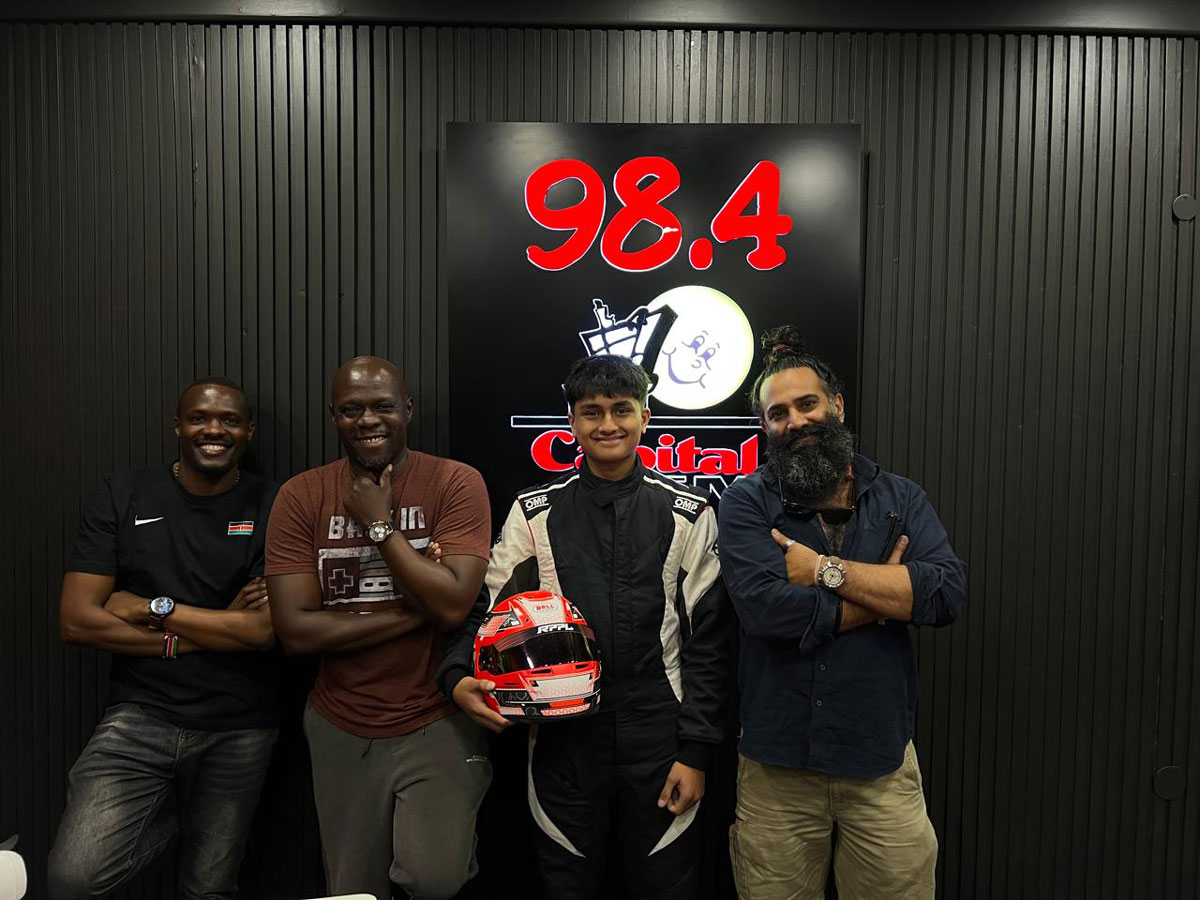
The teenager did all he could to sell the dream to his parents, who eventually let him have his way.
“I woke up my dad before my mom woke up on Sundays so that I could try and sneak him out and get me some laps in the go-kart. I did that for two years before I managed to convince my parents to buy a go-kart because I was putting in fast times. I made sure every session counted and just put all the work behind it because nothing ever… I don’t ever like anything else like I like racing,” Chandaria recalls.
Having had a soft spot for cars for the longest time, the teenager took to go-karts like a fish to water.
Within no time, he was topping the leaderboard at various competitions, the fire within him fuelling his success on the wheel.
“To be honest, before I even started racing, I liked cars and I always wanted to go to Formula One. I tried to learn from YouTube, from stuff online and from my dad about how to drive faster. And I knew I was fast because they had a leaderboard at GP Karting,” the teenager recounts.
Chandaria adds: “And each time I’d see the fastest time and I’d make sure that I at least get onto it. And I wanted to at least be in the podium positions. And if not, I’d always try to review where I could have improved and gone better.”
Next stop, United Kingdom
The next stopover in his journey to Formula 1 was in the United Kingdom (UK), where he took his go-kart career to the next level.
The youngster admits moving to the UK was akin to a small fish jumping into the ocean, where he had to compete against more established drivers.
Nonetheless, he concedes it was just what the doctor ordered, a baptism by fire that brought the best out of him.
“I moved to the UK to try and race there because I wanted a new experience, a new challenge. And the racing in the UK is a lot bigger than it is in Kenya. I knew that’s the place to go if I wanted to grow. My dad came on board quite easily,” he reveals.
However, what was to become of his education?
This was the biggest headache for mum, who felt her son’s education could be derailed by the pursuit of a Formula 1 dream.
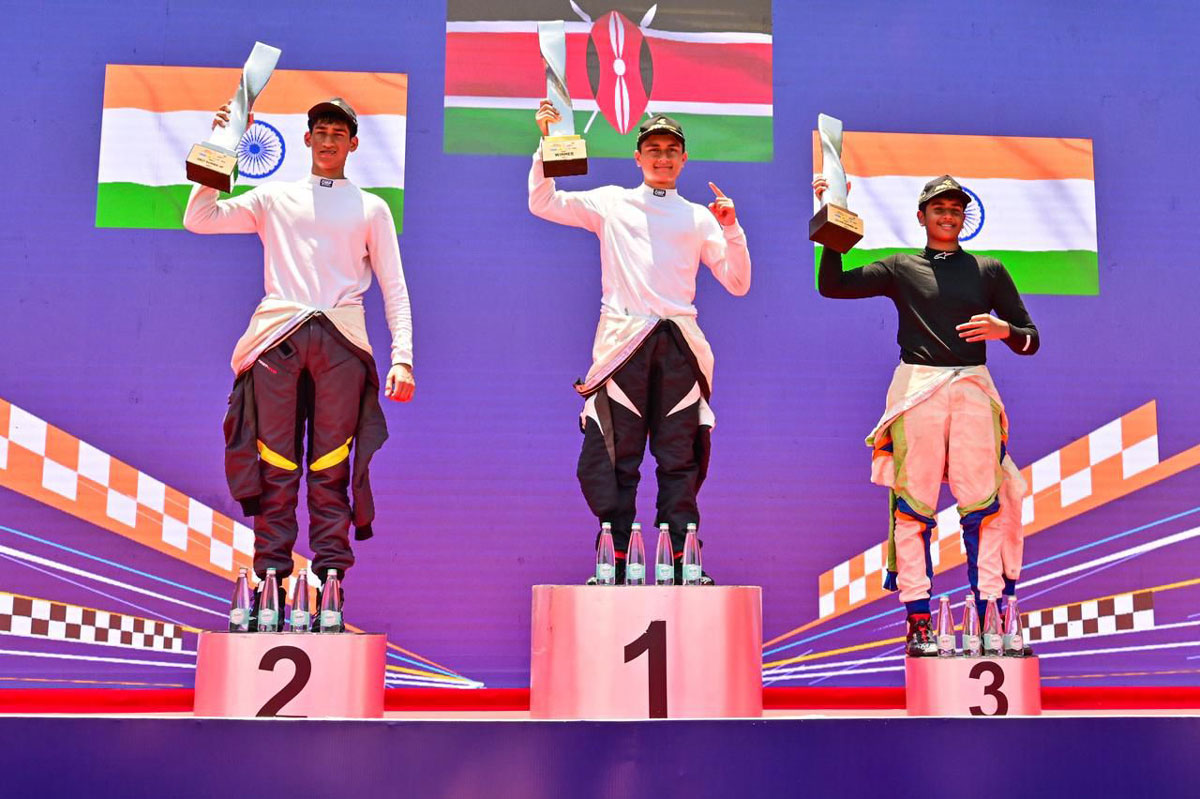
“My mom was quite worried about the school side of it. But as with everything, if you try hard enough, you can find a solution. So we managed to find an online school. Based out of the US, where it let me race and do schooling at the same time, and that allowed me to go and progress further in my motorsport,” Chandaria, who moved to the UK at the age of 12, says.
After his stint in the UK, it was time for Chandaria to pack his bags to journey on to his next destination — India.
It was an idea stumbled on by his father and involved a brief stopover in France.
“I was racing in the UK this year in February, and my dad gave me a call. He’d found a competition that allowed you to win a spot in Formula 4, which we were thinking of going to next year. So, we thought we’d give it a try. In June this year, we started testing Formula 4 in France, and I was quite quick,” he recounts.
Chandaria adds, “The coaches helped me improve a lot, and then we went to the shootout. Unfortunately, I made a mistake in the finals. I didn’t win the seat, but I showed the talent I had, so we decided to go ahead with the Indian Championship because it was the easiest.”
As a Formula 4 driver, Chandaria reveals that it has only added more wood to the fire in his heart that yearns to grace Formula 1.
In his words, Formula 4 is a foreshadowing of Formula 1.
“It’s like a Formula One car. So it has one seat. It almost looks like a spaceship; that is what a lot of people describe it as. It has a lot fewer wings and it’s a lot smaller than a Formula 1 car, obviously. It…So, the naked eye, it looks really similar to a Formula 1 car,” the teenager describes.
Sacrifices for success
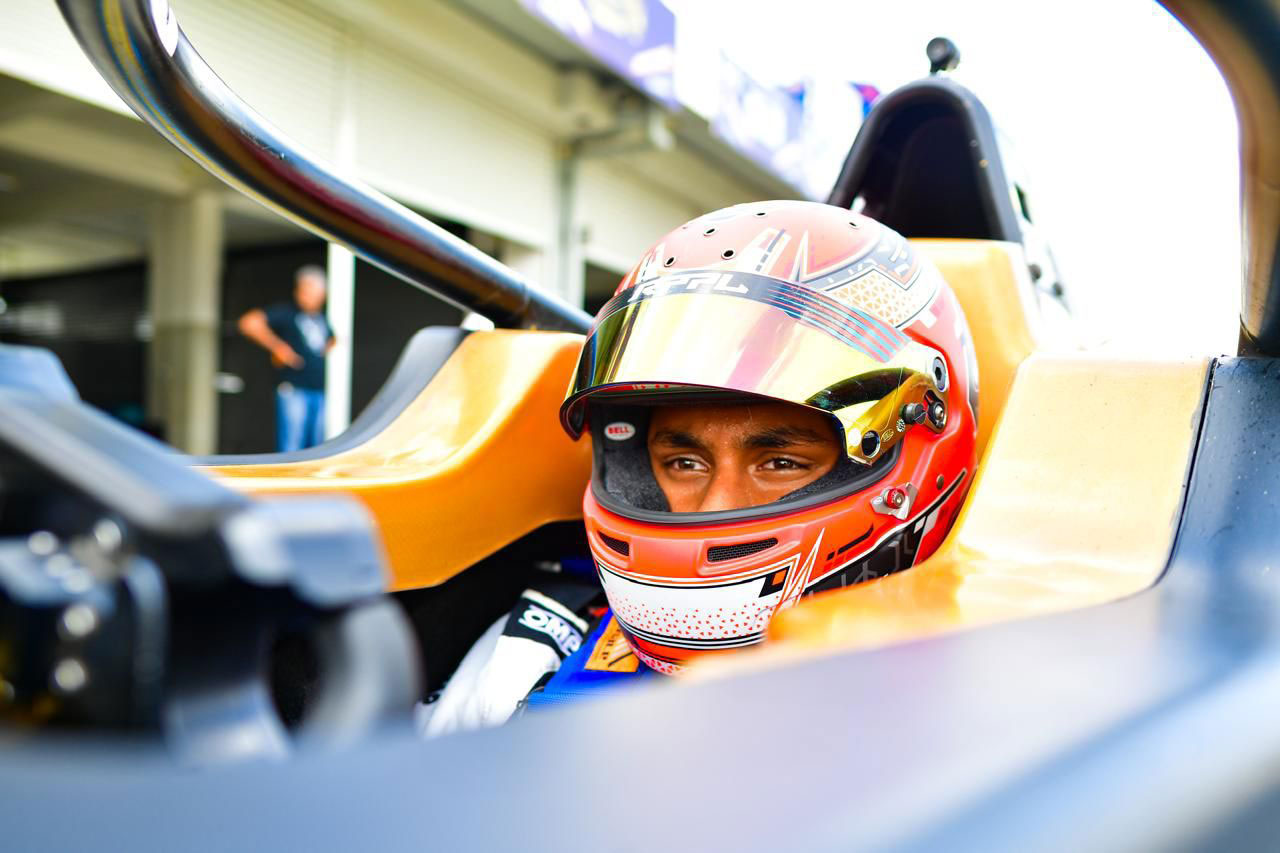
One thing the teenager has learnt at such a young age is the art and craft of discipline.
He must not fall into a slumber lest his dream of making history remain just that: a dream.
His daily schedule is akin to a professional sportsman; every minute is accounted for to a tee.
Chandaria’s day begins at 7 a.m., during which time he only has thirty minutes to get ready for school.
School takes up almost half of his day; from noon onwards, it is all about the teenager working on making his dream a reality.
“Normally, I get my work done by about midday and then have some lunch. Then I’ll go onto the simulator and do two hours of online driving, just trying to learn and race against other people. Then from 3 to 5 is normally gym time…Cardio, running….. rowing, cycling and then weightlifting to increase strength,” he explains.
The teenager adds, “From six to eight, it’s normally where I either rewatch races on boards, so we have a little camera on top of the car that just captures everything. I like watching that just to go back and check what I could have done better. Then… 8pm …normally I have a mindfulness session. There’s a coach in the UK and then… After that dinner, a bit of downtime, relaxing, and then go to bed at about 10.”
At his age, many would expect the teenager to be making friends and socialising with them.
Does he ever feel lonely because of his crowded schedule?
The teenager admits it’s a necessary sacrifice if success is to come his way.
“It’s definitely a mission. There’s a lot of travelling involved. I’m on the plane a lot more than I’d probably want to be. But you just have to… To set times and actually do the stuff because there’s a lot of school, a lot of fitness training, a lot of simulator prep that you have to put in before you can say that, I want to go out with my friends,” he reveals.
The teenager adds, “On the weekends, it’s a lot less hectic because obviously rest is really important, so I’m not at the gym every day. On the weekends, I normally get to see my friends.”
These sacrifices have also come from his parents, who have invested heavily to ensure Chandaria gets all the building blocks to transform his dream into a concrete tower that rises tall to scrape the sky.
After all, for their son, the sky is the limit.
Thus far, the teenager can testify to the impacts of these investments on his growth from a go-kart driver to a Formula 4 driver.
“It’s (mindfulness training) very crucial as a racing driver. It helps me keep calm inside the car. You’re very… I wouldn’t say stressed, but you’re full of adrenaline. So the smallest things can get you to lose your head. I was quite a hot-headed person to start with, so the mindfulness just helped me calm down on track. It makes you keep making the right decisions while you’re going 200 kilometres per hour. That could be the difference between finishing on the podium and finishing in the wall, so it’s very crucial,” he explains.
Mama’s unwavering support
As is the case with any doting mother, Chandaria’s mother has had moments when she has held on to her heart in fear of her son’s exploits on the circuit.
“It’s hard. I haven’t been to the India Championships, where he’s even driving faster. But when he was doing the go karts, I honestly sometimes just had my eyes closed and I was praying. I mean, it’s… He’s doing great. He loves it. He thrives on it. But yes, it does get a bit scary sometimes,” she says.
As aforementioned, she was always caught in two worlds on whether to okay her son’s dream to make the top echelons of Formula 1.
Nonetheless, Chandaria’s commitment captivated her to the extent that she eventually gave the thumbs up.
“In our case, as Shane told you, I wasn’t convinced when he first wanted to go, mainly because of school and everything, but when he started showing commitment and progress and that he could grow in it, we decided to let him continue,” the mother explains.
She is proud that her faith in her son is repaying dividends thus far.
“You need to be ready to take on these steps. As a family, there is a lot of change. It’s hard work. It’s a lot of commitment. And for the racer in our case, I mean, Shane has been very committed. It’s sort of self-driven, which we’re lucky we haven’t had to push him or anything or tell him that you have to do this. He’s very committed to what he’s doing, and that has to come naturally from the racer, at least in our case,” she says.
These dividends are not only in the form of success on the track but also in his growth as an individual.
“He’s doing well because he’s committed to his racing. I know he has challenges as a teenager to concentrate sometimes, but he does what he has to. And I think that’s what drives us because he is so committed, and he actually does everything he’s supposed to. We can’t even take that back from him that you won’t be able to race because you don’t study. But he’s doing everything he has,” Rupal says.
Formula for success
Africa is the only continent which does not host a Formula 1 race across the world.
This is largely down to lack of proper infrastructure, an unfortunate situation that has somewhat stifled the emergence of talents from across the continent.
Nonetheless, Chandaria’s progress thus far shows there is hope for countless other youngsters who harbour ambitions to one day compete in various Grand Prixes (GP) around the world.
So far, the teenager credits his successes to his tenacity and fearlessness, regardless of the roadblocks he has encountered along the way.
“Africa as a whole is, in motorsport, not represented at all. A big motivator for me is keeping that Kenyan flag behind me and just taking it everywhere I go…not being afraid to go against some of the kids who might be in a better place for motorsport. But still going there and showing them what the Kenyans have made for us,” the teenager says.
The huge Max Verstappen fan is not under any illusions as to the roadblocks and pit stops he still has to overcome before the Formula 1 dream comes to birth.
“The next steps are the hardest to go through because it’s like a filter. In every stage, there are fewer and fewer drivers I get. There are fewer seats for drivers to go in, so you’re going to be competing against the best of the best, essentially,” Chandaria, who also professes his love for Ferrari, says.
He adds: “So the next steps would be… from Formula 4 next year to do Formula 4 in Europe. Because the competition there again is a lot higher, I’d say. Then it is not higher. There are more competitors again. Then 2027…Formula 3 European Championships. You spend two years in Formula 3, two years in Formula 2, and then… maybe you’ll have a shot in F1 if everything goes right because at that point it’s not about your skills as a racing driver so much. It becomes a holistic thing about who can get the teams the most money, the most media following.”
Whereas it may seem easier on paper, the teenager reveals that the jump from Formula 4 to 1 is akin to conquering three ‘Mt Everests.’
It is a journey that will come with its fair share of disappointments — a fact that is not lost on the teenager.
“It’s often said by my coaches in most sports that you’d win about 10% of your races. In 90%, you wouldn’t even be on the podium. You have to just take the losses, and you know that you win because of every race. If you try hard enough, you can find something to be happy about. Even being at the racetrack in the first place, it’s a whole mission to get there. You’ve got to keep your head up, and just keep grinding your way through because I’ve had quite difficult years where it just seems every race gets worse and worse,” he says.
Such is the nature of labour pains; many times they hurt so bad, and it feels like the ‘baby’ is taking too long or may never come.
However, credit to Chandaria for remaining focused on the ultimate prize, which is to bring forth history as Kenya’s first-ever Formula 1 driver.
When that day comes, he will surely look back to that birthday party at Splash Waters where the seeds of Formula 1 were sown into the fertile soil of his heart.
That birthday may well be the day that his Formula 1 career was born.