







KISUMU, Kenya Mar 12 – As the world prepares to mark World Water Day on March 22, efforts to improve sanitation and protect water resources in the Lake Victoria Basin are gaining momentum, with a major sanitation project set to benefit thousands of residents in Manyatta, an informal settlement in Kisumu.
The initiative, led by the Lake Victoria Basin Commission (LVBC) under its Integrated Water Resources Management (IWRM) programme, aims to address untreated wastewater flowing into Lake Victoria while improving sanitation access for communities living near the lake.
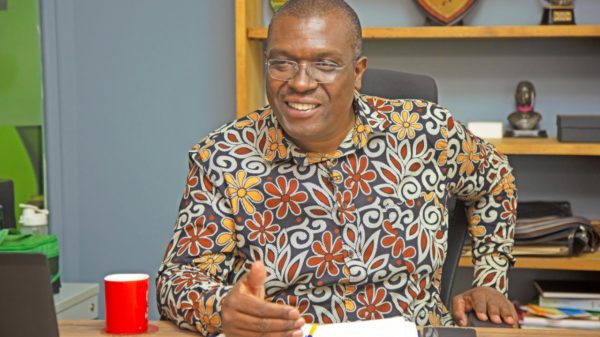
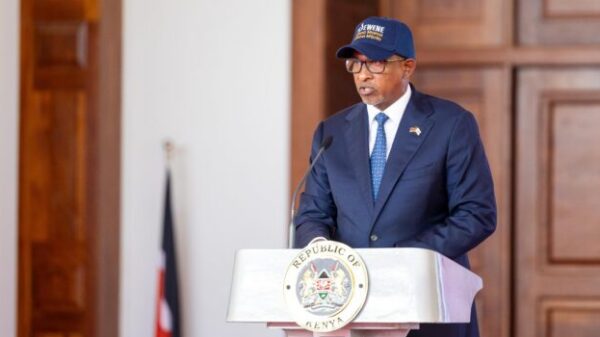
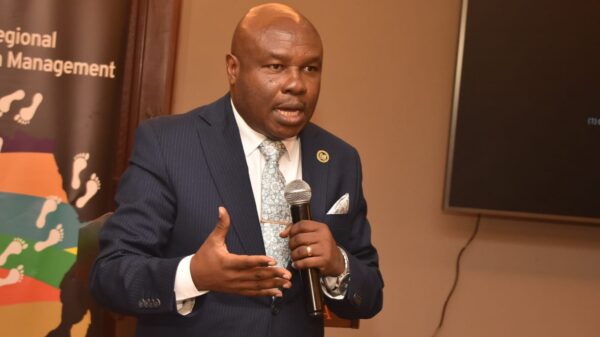
Speaking about the project, regional programme coordinator Arsene Mukubwa said improving sanitation infrastructure is key to protecting the lake, which supports millions of people across East Africa.
Mukubwa says the programme aims to promote investments to help improve the water quality entering Lake Victoria.
“One of the key approaches is reducing untreated effluent that eventually flows into the lake,” said Mukubwa.
The sanitation improvement project in Manyatta A is expected to benefit about 10,000 residents through the construction of 550 household toilet blocks and sanitation facilities for four schools.
The facilities will also be connected to the existing sewer network to ensure proper waste management.
According to Mukubwa, Kisumu has made significant progress in water supply coverage but still faces major challenges in sanitation.
“If you consult water service providers in Kisumu, water supply coverage is above 90 percent,” he said.
However, he said sanitation coverage remains at about 19 percent, which means a lot of wastewater still ends up in the environment.
He explained that while residents may receive adequate water supply, much of the water becomes wastewater that must be safely managed to avoid polluting the lake.
“When someone receives 100 litres of water, they may only consume about 20 litres,” Mukubwa noted.
The remaining 80 litres, he said becomes waste, and if it is not properly collected and treated, it eventually finds its way into the lake.
The Manyatta sanitation project is part of a broader regional programme targeting major urban centres within the Lake Victoria Basin.
Similar investments are underway in Mwanza in Tanzania, Kampala in Uganda, and Kigali in Rwanda.
In Mwanza, the project will connect about 1,600 households to the sewer system and expand sewer lines by 15 kilometres.
In Kampala, authorities plan to rehabilitate and expand existing wastewater systems, including the installation of pumping stations to improve waste collection.
Kigali will benefit from a new fecal sludge treatment plant to safely process waste collected from septic tanks.
The overall programme is funded by the European Union and the German Federal Ministry for Economic Cooperation and Development (BMZ), with a total investment of about 68.9 million euros.
Of this amount, Mukubwa said, approximately 13 million euros equivalent to about Ksh.1.9 billion has been allocated for the Manyatta project.
Mukubwa said the Manyatta initiative has already completed feasibility studies, detailed designs, and environmental impact assessments, with the next step being the procurement process.
“We have completed the feasibility studies, detailed designs and environmental and social impact assessments,” he said.
“By the end of March we will open the tender, and if all goes well, construction could begin around June.”
This year’s World Water Day theme, which highlights the link between water management and gender, is also reflected in the project design.
The sanitation facilities being constructed in Manyatta will include features that ensure privacy and dignity for women and girls.
“In Manyatta we are providing sanitation blocks that give women the privacy they need,” Mukubwa said.
He added that the programme also encourages greater participation of women in water resource management and decision-making.
“We encourage partner states to nominate women to participate in technical training and decision-making processes,” he said.