


















NAIROBI, Kenya, Mar 31 — Questions around leadership culture, accountability, and citizen participation took centre stage at a leadership and governance forum organised by Capital FM Kenya, bringing together governance experts, public sector trainers, and civil society leaders to assess the state of leadership in the country.
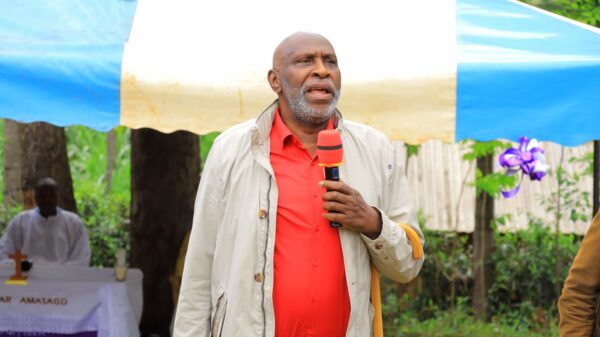
The forum featured a panel comprising leadership expert Wale Akinyemi, Senior Director of Academic Affairs at the Kenya School of Government (KSG) Josephine Mwanzia, and Programme Coordinator at Transparency International Kenya, Titus Gitonga.
Discussions focused on the link between governance systems and leadership behaviour, with panelists noting that while Kenya has made significant investments in leadership training, the key challenge remains translating knowledge into action.
Akinyemi observed that Kenya stands out across Africa for its commitment to leadership development but struggles with implementation.
“The problem is not that we do not know what to do,” he said. “The problem is that we do not do what we know.”
Drawing from his experience across more than 20 African countries, he likened leadership strategies to “a polar bear placed in the wrong environment,” warning that even well-designed policies and training programmes will fail if institutional culture does not support execution.
“We may have the best training, but if the environment where it is executed is not addressed, nothing will work,” he said.
Mwanzia highlighted the role of constitutional principles in shaping ethical leadership, citing Chapter Six on leadership and integrity, Article 10 on national values, and Article 232 on public service as key pillars.
She noted that KSG trains over 100,000 participants annually across programmes in policy-making, corporate governance, performance management, and leadership development.
“We have been imparting knowledge, skills, and the right attitudes in public officers,” she said.
“But leadership also requires personal commitment to model these values.”
The institution is currently rolling out advanced programmes, including a strategic leadership development initiative and a national transformation programme targeting senior government officials.
However, Gitonga pointed to persistent governance challenges, citing Kenya’s score of 30 out of 100 on the global Corruption Perceptions Index as evidence of stagnation in anti-corruption efforts.
“If corruption is the abuse of entrusted power for personal gain, then a score of 30 out of 100 shows we are not doing well as a country,” he said.
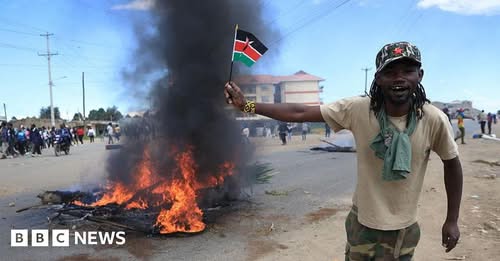
He further linked public frustration over corruption and inequality to the youth-led protests witnessed in 2024, which raised concerns over unemployment, misuse of public resources, and lack of merit-based opportunities.
Gitonga argued that weak enforcement of Chapter Six has allowed individuals facing corruption allegations to remain in office, undermining public trust.
Panelists also examined the role of communication, with Akinyemi noting that gaps between government, media, and citizens often shape negative public perception.
“A lot of good may be happening, but if it is not communicated, people form their own conclusions,” he said.
The discussion also highlighted fragmentation among oversight institutions, with Gitonga noting that audit findings and corruption reports often fail to translate into action due to weak coordination and political interference.
Mwanzia concluded by urging leaders to invest in what she termed “return on character.”
“Leadership must demonstrate integrity and accountability consistently,” she said.
“When leaders invest in character, institutions perform better and public trust grows.”
The forum called for increased civic participation, urging citizens, professional bodies, and civil society to actively engage in governance processes and leadership vetting.
Ultimately, speakers emphasised that meaningful progress will depend on personal accountability and active citizen engagement to ensure leadership reflects the aspirations of the Kenyan people.