













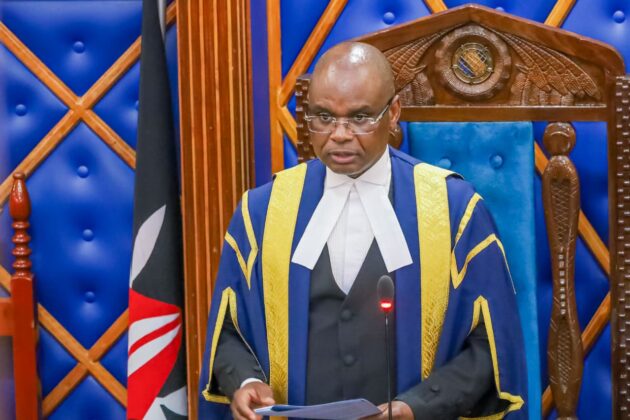

NAIROBI, Kenya, Feb 12 – Senate Speaker Amason Jeffah Kingi has declared unconstitutional a resolution by the Council of Governors (CoG) directing governors to boycott appearances before key Senate watchdog committees, even as he invited the council’s leadership for a consultative meeting on February 26.
In a communication to the House on Thursday, Kingi dismissed the governors’ move to suspend appearances before the County Public Accounts Committee (CPAC) and limit attendance before the County Public Investments and Special Funds Committee (CPISFC), saying such actions undermine Parliament’s constitutional oversight mandate.
“The constitutional oversight mandate is exercised by the Senate as often as whenever the Senate in its judgment considers appropriate and any purported restriction or limitation of this mandate… is unconstitutional,” Kingi told Senators.
The standoff stems from a press statement issued by the CoG on February 9, in which governors demanded the reconstitution of CPAC over allegations of political witch-hunts, harassment, extortion and intimidation allegedly involving four Senators.
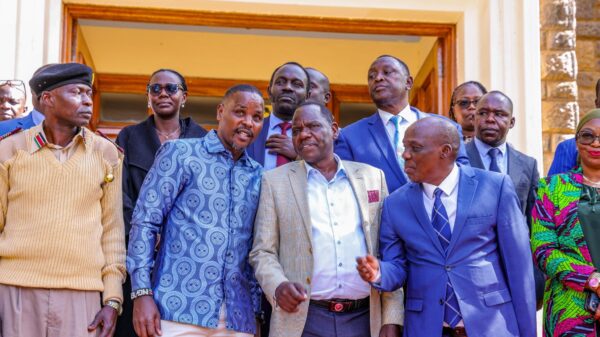
The senators included CPAC Chairman Moses Kajwang (Homabay),Edwin Sifuna(Nairobi),Samson Cherargei (Nandi) and Jonnes Mwaruma (Taita Taveta).
The council resolved to suspend appearances before CPAC until structured engagement is held with Senate leadership and to restrict appearances before CPISFC to once per audit cycle.
In two subsequent letters to the Speaker’s office dated February 9 and 11, the CoG reiterated its position and formally requested a meeting with Senate leadership. The governors further demanded the removal of the four Senators from the affected committees as a precondition for restoring confidence in the oversight process.
But Kingi maintained that neither the Senate nor any other body has the power to suspend or compromise the Legislature’s constitutional mandate.
Citing Article 125 of the Constitution, the Speaker highlighted that either House of Parliament and its committees have the power to summon any person to appear and give evidence or provide information, with powers equivalent to those of the High Court to enforce attendance and compel production of documents.
“No organ, authority or person… has the power to suspend, compromise, vary or waive the Legislature’s mandate,” he said.
He further pointed to Article 96 of the Constitution, which grants the Senate authority to exercise oversight over national revenue allocated to counties, and Article 229, which requires Parliament to consider and dispose of audit reports within three months of receipt.
Kingi warned that compliance with the March 31 deadline for considering Auditor-General’s reports is mandatory, citing a High Court decision that affirmed the binding nature of constitutional timelines on audit scrutiny.
The Speaker also rejected the CoG’s demand for the removal of specific Senators from committees, stating that under Article 124 of the Constitution, the power to establish committees and appoint or remove members rests exclusively with the Senate.
“The Council of Governors’ demand that certain Senators be removed from the service of any Committee is without constitutional anchor,” he ruled.
However, Kingi welcomed the CoG’s request for dialogue, terming it consistent with Articles 6(2) and 189 of the Constitution, which require consultation and cooperation between the two levels of government.
He announced that he has invited the leadership of the Council of Governors to a meeting with Senate leadership on February 26 at 10:00 a.m. at the Mini Chamber, County Hall, Parliament Buildings, Nairobi, to address the concerns raised and explore an engagement framework.
In the interim, Kingi issued a stern warning that governors must continue to honour summonses issued by Senate committees.
“As a condition for going ahead with the meeting… the constitutional provisions on legislative oversight must be clearly understood to be in force and accordingly, any Governor invited or summoned to appear before any Committee of the Senate must do so, failing which the consequences provided for in the Constitution and the law shall follow,” he said.