















By Joseph Thompson
History is rarely kind to leaders who mistake authority for legitimacy, or coercion for consensus.
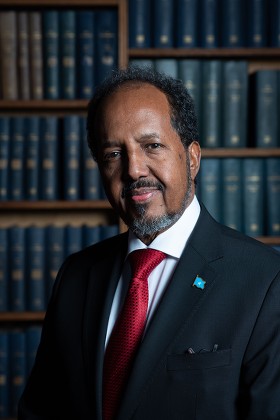
In Somalia today, President Hassan Sheikh Mohamud risks being remembered not as a unifier, but as a leader whose approach has made unity less attractive—and increasingly difficult to achieve.
At worst, this trajectory threatens to accelerate a familiar pattern seen in states that unravel when political realities are denied rather than managed.
For many Somalis, and for a growing number within the international community, this perception is inseparable from an administration widely viewed as struggling to confront terrorism, irregular migration, entrenched corruption and weak governance—and from its failure to translate formal power into credible national leadership.
Somalia’s political reality is complex and deeply layered.
It encompasses regions with distinct histories, governance traditions and public expectations, as well as Somali communities beyond the country’s formal borders.
Yet across the political landscape—from Somaliland to Puntland and Jubaland—the federal government’s approach has too often relied on confrontation, centralisation and political pressure rather than dialogue, accommodation and consent.
At times, regional and international actors have been drawn into internal Somali disputes in ways that appear designed to advance the short-term political objectives of the Mogadishu administration rather than to address underlying realities.
Such tactics may yield temporary leverage, but they erode trust at home and weaken credibility abroad.
International partners will ultimately recognise that a leadership unable to reconcile Somali interests internally will struggle to align them sustainably with regional and global priorities.
Unity in divided societies cannot be imposed.
It must be negotiated, nurtured and made desirable.
Somaliland, whatever one’s view of its international status, has for more than three decades governed itself, held elections and maintained relative stability, while steadily expanding its international engagement.
Treating it solely as a challenge to be neutralised—rather than a political reality to be engaged—has only deepened mistrust.
International interaction with Somaliland has grown not because of rhetoric, but because of governance, strategic geography along the Red Sea and the Gulf of Aden, and stability on the ground—realities that cannot be wished away.
A similar pattern is visible elsewhere.
Puntland, long a cornerstone of Somali federalism, has grown increasingly alienated by policies perceived as undermining regional autonomy.
Jubaland, vital to security cooperation and border stability, has faced political pressure at moments when collaboration should have been prioritised.
These approaches weaken what remains of the Somali state rather than strengthen it.
There was another path. A leadership genuinely committed to unity would have focused on making the union attractive—by respecting the federal compact, treating regional administrations as partners rather than subordinates, and investing political capital in patient, inclusive dialogue. Authority rooted in legitimacy endures; authority asserted through pressure does not.
Crucially, the assumption that the Mogadishu administration can simply revive the political model of 1960—symbolised by a single flag and a highly centralised state—is no longer grounded in present realities.
Somali communities across the Horn of Africa, including in Kenya, Ethiopia, Djibouti and Somaliland, have developed distinct political, social and economic trajectories.
A largely young population, with little lived memory of the early post-independence state, no longer sees centralised governance from Mogadishu as either desirable or necessary.
Leadership requires confronting such realities honestly, not denying them.
Earlier expectations have passed.
A sustainable future now requires engagement with facts on the ground rather than nostalgia for a vanished past.
The Mogadishu administration can no longer ignore—or seek to obstruct—Somaliland’s expanding international engagement.
It must either accept this evolving reality or engage seriously with alternatives such as a consensual confederation or, where freely agreed by relevant governments, a two-state arrangement, discussed openly and without coercion.
Unity imposed through intimidation, legal manoeuvring or costly international lobbying will not endure.
Somalia’s future depends less on confrontation or the marginalisation of political opponents, federal member states or Somaliland than on rebuilding confidence and earning consent. Sustainable authority rests on legitimacy, dialogue and mutual respect.
Leaders are ultimately judged not by how forcefully they invoke unity, but by whether their actions make cooperation possible. Otherwise, history may judge this presidency as confined to a narrow political and geographic space, rather than reflective of leadership over Somalia as a whole and its diverse people.
Somalia deserves a future shaped by realism rather than nostalgia, inclusion rather than intimidation, and leadership grounded in a simple truth: unity survives only when people choose it. When it is not freely chosen, it cannot be forced—by any administration in Mogadishu or by international actors acting in its support.
ABOUT THE AUTHOR
Joseph Thompson is an African American researcher on African politics specifically on the Horn of Africa. He has worked for several NGOs in Somalia and engaged in research work in the region for over two decades