






NAIROBI, Kenya, Dec 8 — The opposition has assembled a team of 100 advocates to challenge the government’s sale of a 15 per cent stake in Safaricom, terming the transaction unconstitutional, opaque, and a threat to Kenya’s strategic national assets.
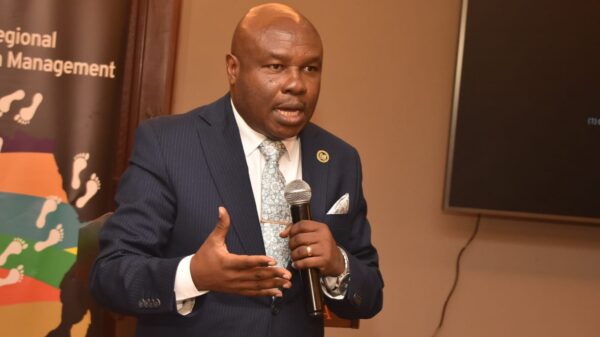
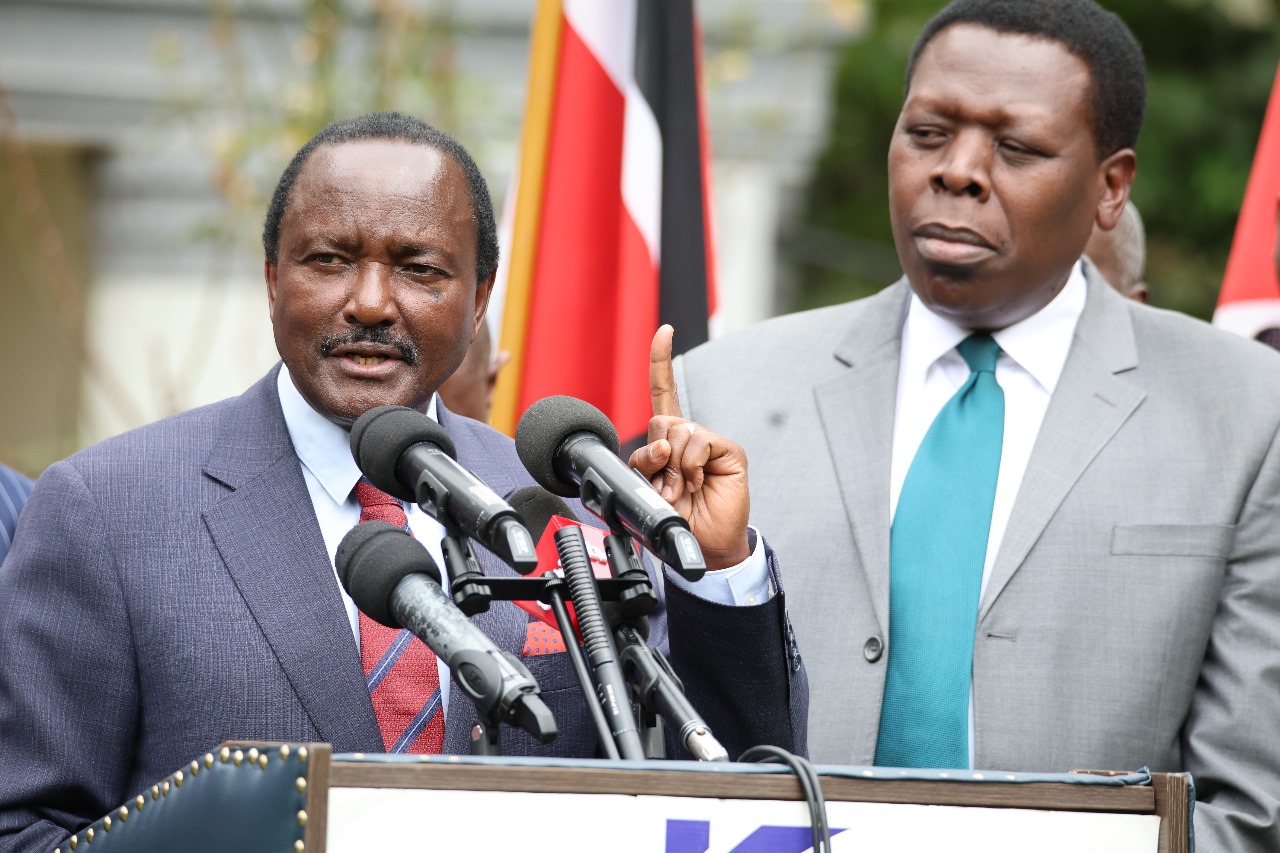
Speaking on Monday during the launch of the Okoa Uchumi Report, a public audit initiative championed by The Institute for Social Accountability (TISA), Wiper Party Leader Kalonzo Musyoka accused the government of attempting to dispose of critical state infrastructure “without transparency, without public participation, and without regard for the Constitution.”
“We have assembled a team of 100 advocates to stop this nonsense of selling Safaricom without public participation. This national asset will not be auctioned off under the cover of darkness,” he said.
Kalonzo warned that the opposition would resist what he described as a dangerous trend of rushed and secretive privatisation of key state investments — including Safaricom, Kenya Pipeline, and earlier attempts involving the Jomo Kenyatta International Airport (JKIA).
“Countries do not prosper by selling their inheritance,” he said, adding that selling the Safaricom stake without proper valuation risked exposing Kenyans to massive losses.
Kalonzo criticised the government’s economic management, noting that Kenya’s public debt has risen to Sh12.5 trillion due to “reckless borrowing, corruption-ridden budgeting, and weakened oversight institutions.”
“If the Safaricom share is sold at face value or undervalued, somebody is about to steal big. We will stop them,” he said.
Off-budget borrowing
Kiharu MP Ndindi Nyoro warned that Kenya risked sliding into an economic crisis similar to Senegal’s due to off-budget borrowing and opaque fiscal practices.
He claimed the government had already borrowed Sh175 billion outside the approved national budget by mortgaging the fuel levy.
Nyoro also questioned the valuation of Safaricom’s 15 per cent stake and demanded full transparency.
“You cannot build Safaricom over decades, expand into Ethiopia, increase its value — then sell at a throwaway price. If there is no self-interest in this sale, open the process,” he said.
He alleged that private individuals who are not government officials took part in the negotiations, suggesting hidden interests.
Suba South MP Caroli Omondi, Chair of Parliament’s Constitutional Implementation Oversight Committee (CIOC), drew parallels to the infamous Mobitelea scandal, where a mysterious entity secretly acquired a 10 per cent stake in Safaricom in the early 2000s.
Omondi said the current divestiture bore similar red flags.
“Why is Vodafone always interested in opaque deals? We must ask if another Mobitelea is hiding behind this sale,” he said, urging the IMF and World Bank—who were present—to demand transparency.
He added that Treasury officials only learned of the transaction days before it was announced, suggesting it had been structured elsewhere.
‘Premium-valued sale’
On December 4, the government confirmed it had sold a 15 per cent stake in Safaricom, raising Sh244.5 billion in what Treasury Cabinet Secretary John Mbadi described as a “premium-valued transaction demonstrating investor confidence.”
Under the deal, Vodacom Group will also acquire Vodafone Kenya’s entire shareholding, increasing its total stake in Safaricom to 55 per cent.
The government will retain 20 per cent, while the remaining 25 per cent remains publicly traded.
Mbadi said the sale aligns with broader fiscal reforms.
“This partial 15 per cent divestiture will generate approximately Sh244.5 billion. The transaction has earned a 23.6 per cent premium on the six-month volume-weighted average price,” he said.
Proceeds will support the National Infrastructure Fund and the Sovereign Wealth Fund, financing infrastructure projects nationwide.
Additionally, Vodafone Kenya will pay the state Sh40.2 billion upfront for rights to future dividends tied to the remaining 20 per cent stake.
Founded in 1997 and partly privatised in 2008, Safaricom remains one of Kenya’s most strategic national assets, with M-Pesa dominating the country’s digital financial services sector.