















NAIROBI, Kenya, Jun 5 – Nearly three-quarters of Kenyans believe the country is headed in the wrong direction, with rising living costs, unemployment and taxation continuing to fuel widespread dissatisfaction with the economy and government performance, according to a new survey by Trends and Insights for Africa (TIFA).
The nationwide survey, conducted between May 2 and May 11, 2026, among 2,013 adults across all 47 counties, found that 74 per cent of respondents believe Kenya is moving in the wrong direction, compared to just 14 per cent who said the country is headed in the right direction.
The findings represent one of the lowest levels of national optimism recorded by TIFA since 2023 and mirror sentiments captured in a similar survey conducted in May 2025.
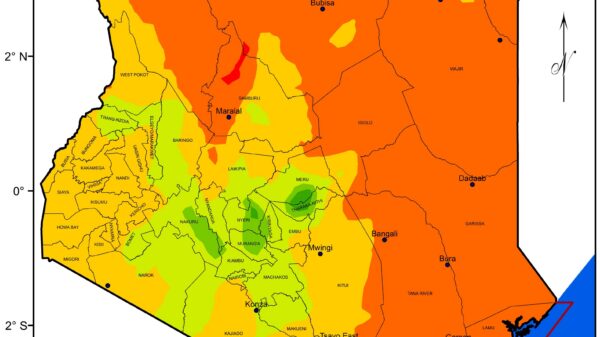
Negative sentiment was found to be widespread across the country, cutting across political and regional divides. Mount Kenya recorded the highest level of pessimism at 89 percent, followed by Lower Eastern at 85 percent and Nairobi at 76 percent.
According to TIFA, the broad geographic distribution of dissatisfaction suggests a growing national mood of discontent rather than isolated regional grievances.
Economic hardship remains the primary driver of public frustration.
The survey found that nearly two-thirds of households believe they are worse off economically than they were during the 2022 General Election. Although this marks a modest improvement from previous surveys, many families say they have yet to experience meaningful relief from economic pressures.
The proportion of respondents reporting deteriorating economic conditions declined from 75 percent in May 2025 to 64 percent this year, indicating some improvement. However, TIFA noted that the gains remain too limited to alter the overall perception of economic hardship among ordinary Kenyans.
“The gains remain modest and have not yet shifted the broader economic narrative at the household level,” the survey noted.
The cost of living has emerged as an increasingly dominant concern.
Mentions of inflation, high prices and taxation as Kenya’s most pressing challenge almost doubled, rising from 23 percent in November 2025 to 44 percent in May 2026.
At the same time, unemployment, poverty, hunger and broader economic concerns remained the most cited issues overall, mentioned by 47 percent of respondents. Corruption ranked third among the country’s biggest challenges.
The survey also found a strong relationship between personal economic circumstances and perceptions of the country’s trajectory.
Among respondents who believe Kenya is headed in the wrong direction, 76 percent reported that their economic situation has worsened since the 2022 election. In contrast, nearly half of those who believe the country is moving in the right direction said their financial circumstances have improved.
TIFA concluded that household economic realities are playing a decisive role in shaping public attitudes towards governance and national progress.
Public trust in institutions also remains weak.
No institution or public office received a strong positive trust rating from more than one in ten respondents. The Judiciary and President William Ruto each received an “a lot of trust” rating from 11 percent of respondents, while the Independent Electoral and Boundaries Commission (IEBC) received 10 percent.
Conversely, the President and the National Police Service recorded the highest levels of outright distrust, with 45 percent of respondents saying they had no trust at all in either institution. Parliament followed at 42 percent, while the IEBC registered 41 percent.
The survey further evaluated the performance of the Kenya Kwanza administration across key sectors and found taxation to be the government’s poorest-rated area, followed by healthcare and security.
The findings reflect persistent public concern over the tax burden, access to affordable healthcare and safety, even as the government points to improving macroeconomic indicators.
While support for the Broad-Based Government appeared to influence some responses, economic concerns remained prominent across the political divide.
Notably, half of those who support the Broad-Based Government said their economic situation had deteriorated since 2022, underscoring the extent to which economic pressures have affected households regardless of political affiliation.
TIFA said the findings highlight a central challenge facing the government: translating macroeconomic gains into tangible improvements in household welfare.
The poll comes amid ongoing debate over fuel prices, taxation, public debt and inequality, issues expected to dominate public discourse as the government prepares to implement the 2026/27 budget.
Despite signs of gradual economic stabilisation, the survey concludes that public sentiment remains overwhelmingly negative, driven largely by cost-of-living pressures and declining confidence in institutions tasked with addressing them.