



















NAIROBI, Kenya Dec 12 – Health facilities across Kenya are experiencing a significant transformation in managing essential medical commodities, thanks to the Kenya Medical Supplies Authority (KEMSA)’s Integrated Logistics Management Information System (i-LMIS).
This award-winning system was developed with support from the United Nations Population Fund (UNFPA), the National Council for Population and Development (NCPD) and the Division of Reproductive and Maternal Health (DRMH-MoH).
Previously prone to stockouts, such shortages had hampered health interventions, particularly family planning services in health facilities nationwide but the system now ensures a consistent supply of critical health products, including family planning commodities.
Launched in 2022, i-LMIS integrates KEMSA’s headquarters, regional depots and health facilities at county and sub-county levels. Leveraging artificial intelligence for demand forecasting, the system optimizes stocking, eliminating overstocking or critical shortages of medical supplies.
Recognition for Innovation
KEMSA’s i-LMIS has earned global recognition, winning an award at the Global Health Supply Chain Summit and being showcased at the 20th Reproductive Health Supply Coalition General Membership meeting in Accra, Ghana. The system was praised as a standard-setting innovation for addressing procurement and logistics challenges.
The solution has proven effective in managing key components of the procurement and logistics system. It includes commodity early warning and alert system which prevents stockouts by notifying stakeholders when supplies run low. The allocation system uses artificial intelligence to calculate facility-specific needs, minimizing wastage and overstocking. The electronic proof of delivery system further provides real-time notifications once supplies are received at health facilities, ensuring transparency and enhancing accountability.
Transforming Stock Management
Dennis Ndwiga, KEMSA’s Senior Programs Officer, said the system has revolutionized the health sector. “Today, KEMSA and stakeholders can track commodities in real-time. It ensures medical supplies reach the last mile, benefitting health facilities and patients alike,” he said.

Ndwiga explained that the system’s ability to analyze consumption patterns prevents stockouts and wastage. “It helps us release the right quantities of supplies based on county and facility needs. This proactive approach ensures continuous service delivery,” he added.
The system supports essential medicines and medical supplies (EMMS), family planning programs, and other Ministry of Health initiatives. Currently implemented in 8,500 of Kenya’s 9,500 health facilities, it has enhanced transparency, accountability, and service delivery across the country.
Improved Health Services
Dr Francis Kwama, Health CEC, at Kwale County said the invention of the i-LMIS is the best thing that happened in the management of medical commodities because drugs hardly run out in public hospitals.
“We appreciate the support we get from KEMSA because they introduced a new system that is called iLMIS that has really improved our stock management of medical commodities,” he told us at the hospital this week.
Healthcare workers have noted the system’s impact. Dr. Fatiya Wangara, in charge of Matuga Sub-County Hospital in Kwale, said, “I oversee 47 facilities, and stock management used to be a challenge. i-LMIS has simplified ordering and provided real-time data on consumption patterns. It gives early warnings when supplies run low, allowing us to act before a crisis arises.”
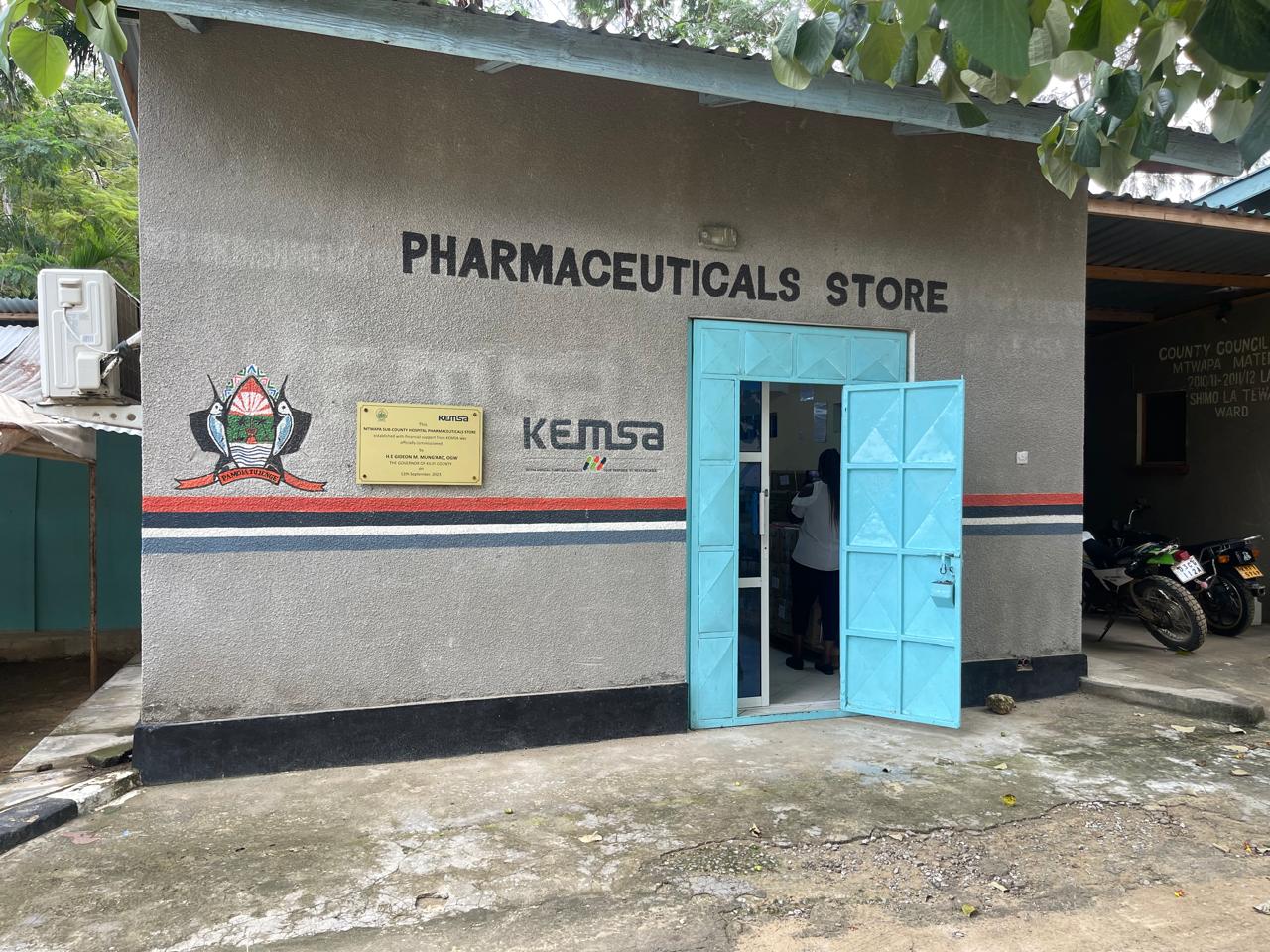
In Kilifi, Dr. Terry Kamau, the Chief Pharmacist at Mtwapa Sub-County Hospital, called the system a “game changer.”
“Unlike manual processes, i-LMIS gives real-time data and early warning signals. It ensures we always have the supplies we need. Patients no longer have to endure delays or shortages,” she said.
A Patient Perspective
For patients, the system’s benefits are clear. Linet Mwakughu, a mother of five from Kilifi, shared, “Before, I often left clinics empty-handed because the medicines weren’t available. Now, I get what I need for my family without hassle.”
Similarly, Gilbert Ndolo, 55, from Diani, described the benefits of this system. “In the past, I had to visit multiple facilities to find medication. That’s no longer the case because health facilities have really improved in stocking drugs and other commodities.”
Operational Efficiency
KEMSA’s efforts to train County and Sub-County Health Management Teams have further boosted the system’s efficiency. According to Ndwiga, training has improved order accuracy, reduced turnaround times, and enabled effective redistribution of supplies to avoid stockouts.
“The visibility provided by i-LMIS allows us to monitor commodity movement closely and make timely decisions,” he said. The system also ensures deliveries are on time, in full, and error-free (OTIFEF), reducing waste and enhancing reliability.
Supporting Universal Health Coverage
KEMSA plans to expand the system to all health facilities nationwide. With continued support from partners like UNFPA, i-LMIS is set to become the backbone of Kenya’s healthcare supply chain, aligning with Universal Health Coverage (UHC) goals.
Dr. Wangara expressed optimism about the system’s long-term impact. “We’ve moved from reacting to shortages to preventing them altogether. This system is a model for how healthcare should operate,” she said.
By modernizing supply chain management, KEMSA’s i-LMIS ensures that Kenyans, from urban centers to remote areas, have uninterrupted access to essential medical commodities.