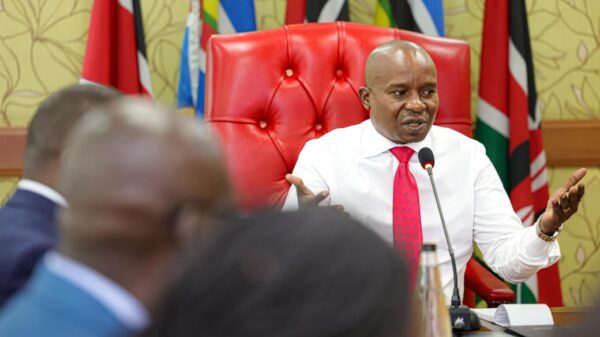









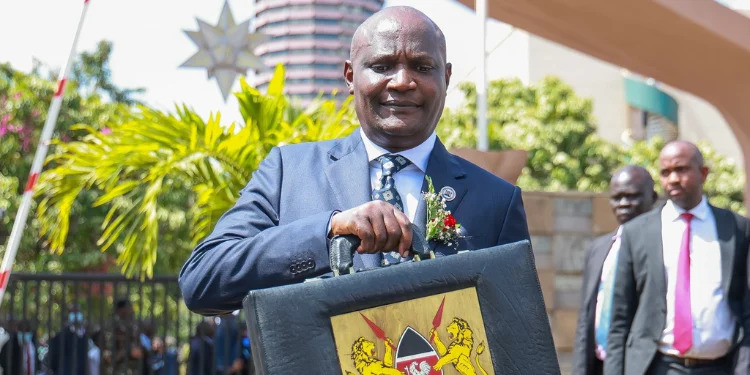

NAIROBI, Kenya, June 11 – Treasury Cabinet Secretary John Mbadi invoked the political ideals of President William Ruto and ODM leader Raila Odinga as he unveiled the Sh4.84 trillion 2026/27 Budget, describing it as a blueprint to steer the country on a path to Canaan through Singapore.
Addressing the National Assembly during the Budget Presentation on the floor of the House, Mbadi said the spending plan embodies the aspirations of the broad-based government arrangement between President Ruto and Raila, aimed at transforming Kenya into a more prosperous and developed nation.
“The Right Honourable Raila Amolo Odinga was a key partner to His Excellency the President Dr William Samoei Ruto in the broad-based arrangement. This budget captures the ideals of the two great leaders, especially on the aspiration to transform our economy from its current status to a more developed nation status a path to Canaan through Singapore,” Mbadi told lawmakers.
“Canaan” has for years been associated with the late Raila’s vision of a just, prosperous and equitable Kenya, drawing from the Biblical Promised Land. During the 2017 election campaign, Raila repeatedly used the “Journey to Canaan” metaphor to rally supporters around the promise of a nation characterised by justice, opportunity and shared prosperity.
Singapore, on the other hand, has long President William Ruto’s vision for the country as a model of rapid economic transformation, having evolved from a small developing state into one of the world’s most advanced economies through industrialisation, efficient governance, strategic planning and investment in human capital.
Mbadi framed the budget as a practical roadmap linking those two ideals Raila’s vision of an inclusive and prosperous Kenya and the government’s ambition to achieve middle-income economic status through sustained growth and structural reforms.
The Treasury boss said extensive consultations conducted across the country had shaped what he described as the people’s budget.
He revealed that over the past year he personally led public engagement forums in every region, meeting youth groups, small-scale traders, mitumba operators, scrap metal dealers, journalists, faith leaders, manufacturers and financial experts.
The consultations took him to Kilifi, Migori, Kakamega, Eldoret, Nakuru, Kiambu, Meru, Kajiado and Nairobi, among other areas, where Kenyans raised concerns ranging from the cost of living and taxation to corruption and public spending.
“The ordinary mwananchi is clear and consistent in their messaging,” Mbadi said.
“Kenyans want an economy that works for them, where the cost of living is manageable, where opportunities for employment and businesses are expanding, and where the benefits of economic growth are shared widely across society,” he added.
According to the Treasury Cabinet Secretary, the dominant message from citizens was the need to lower the tax burden on essential commodities, eliminate wastage in public expenditure and intensify the fight against corruption.
Mbadi said the government had responded by prioritising interventions under the Bottom-Up Economic Transformation Agenda (BETA), with a focus on private sector-led growth, job creation and improved public service delivery while maintaining fiscal sustainability.
The Cabinet Secretary also used the Budget Statement to address public concerns about regional health threats, particularly Ebola, assuring Kenyans that the country remains free of any confirmed cases.
He disclosed that the government had activated the National Ebola Incident Management System, enhanced screening at all entry points, trained more than 1,000 health workers and established emergency response teams and isolation facilities across the country.
Mbadi noted that Kenya had secured support from international partners, including the United States government and the World Bank, to strengthen disease surveillance and emergency preparedness.
Mbadi maintained that the 2026/27 budget was designed not only to stabilise the economy but also to advance a long-term vision of national transformation.
“The people of Kenya want assurance that their hard-earned taxes will translate into tangible improvements in their daily lives,” he said.
“It is that aspiration that this budget seeks to fulfil.”