







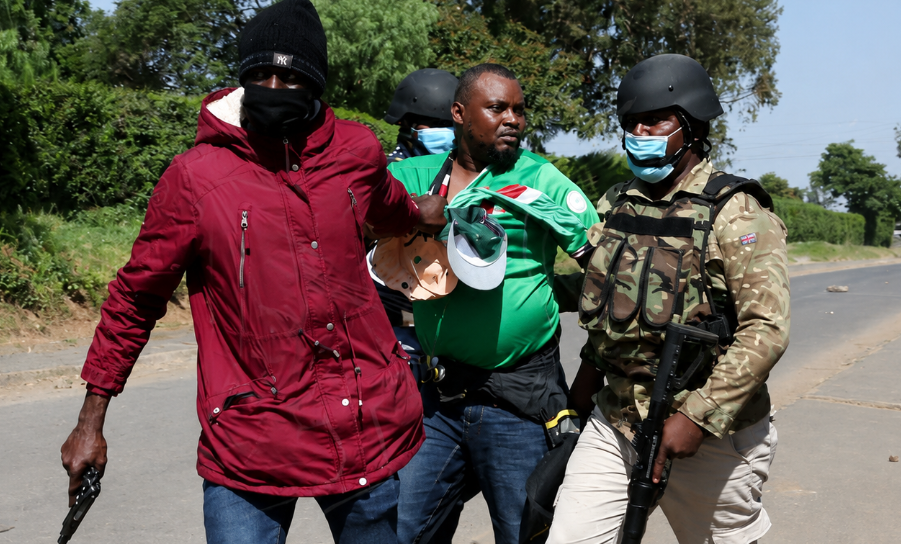

NAIROBI, Kenya, Jun 11 — The British High Commission has demanded a government response over the use of a British Army uniform during protests against a US-linked Ebola quarantine facility in Nanyuki, distancing the British Army Training Unit Kenya (BATUK) from the security operation.
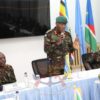
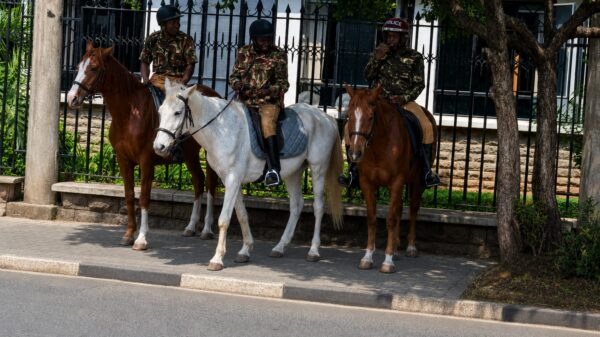
The move follows the circulation of a viral photograph showing an armed security officer wearing what appeared to be a British military jacket while arresting a protester during demonstrations on June 9.
In a statement issued Thursday, the High Commission said the uniform had been “misappropriated” and stressed that no BATUK personnel were involved in policing the protests.
“FACT CHECK: No BATUK personnel policed protests in Nanyuki on 9 June. The British military uniforms seen were misappropriated. We have raised concerns with the Kenyan authorities,” the High Commission said.
The statement comes amid growing scrutiny over the conduct of security forces during demonstrations opposing the establishment of a US-linked Ebola quarantine and treatment facility near the Kenya Air Force Base in Nanyuki.
The protests turned deadly after police reportedly opened fire during clashes with demonstrators. Human rights groups say one protester was killed and at least nineteen others arrested.
The appearance of an officer wearing British military attire fuelled speculation online that British troops stationed in Kenya may have participated in the operation, prompting the High Commission’s intervention.
BATUK’s role in Kenya is governed by the Defence Cooperation Agreement between Kenya and the United Kingdom, which limits its activities to military training, logistical support and capacity-building initiatives conducted alongside the Kenya Defence Forces.
The unit is not mandated to undertake domestic policing or independent law enforcement operations.
Based near Laikipia Air Base, BATUK is the British Army’s largest permanent deployment in Africa and regularly conducts joint exercises with KDF personnel.
Meanwhile, rights groups have accused security agencies of using excessive force against protesters and journalists covering the demonstrations.
The Kenya Human Rights Commission (KHRC) said it documented officers operating on motorcycles and in unmarked or partially concealed government vehicles while dispersing crowds.
The commission also alleged that some officers wore masks or hoods that obscured their identities.
Rights organisation Vocal Africa described the fatal shooting as a dangerous escalation in tensions surrounding the proposed facility.
Opposition to the Ebola centre has intensified in recent weeks, with residents demanding greater transparency over the project’s approvals, safety protocols and operational framework.
Local leaders have also questioned the facility’s proximity to schools, businesses and residential areas, warning of possible economic and public health implications for Laikipia County.
The county government has since moved to court seeking to halt the project’s establishment, citing governance, health and economic concerns.
As pressure mounts over the fatal shooting, arrests and allegations of police brutality, rights groups are calling for independent investigations into the conduct of security officers, including the circumstances surrounding the use of British military clothing during the operation.
By Thursday evening, the government had not publicly responded to the concerns raised by the British High Commission or issued a comprehensive statement addressing the death, arrests and wider allegations stemming from the June 9 protests.