















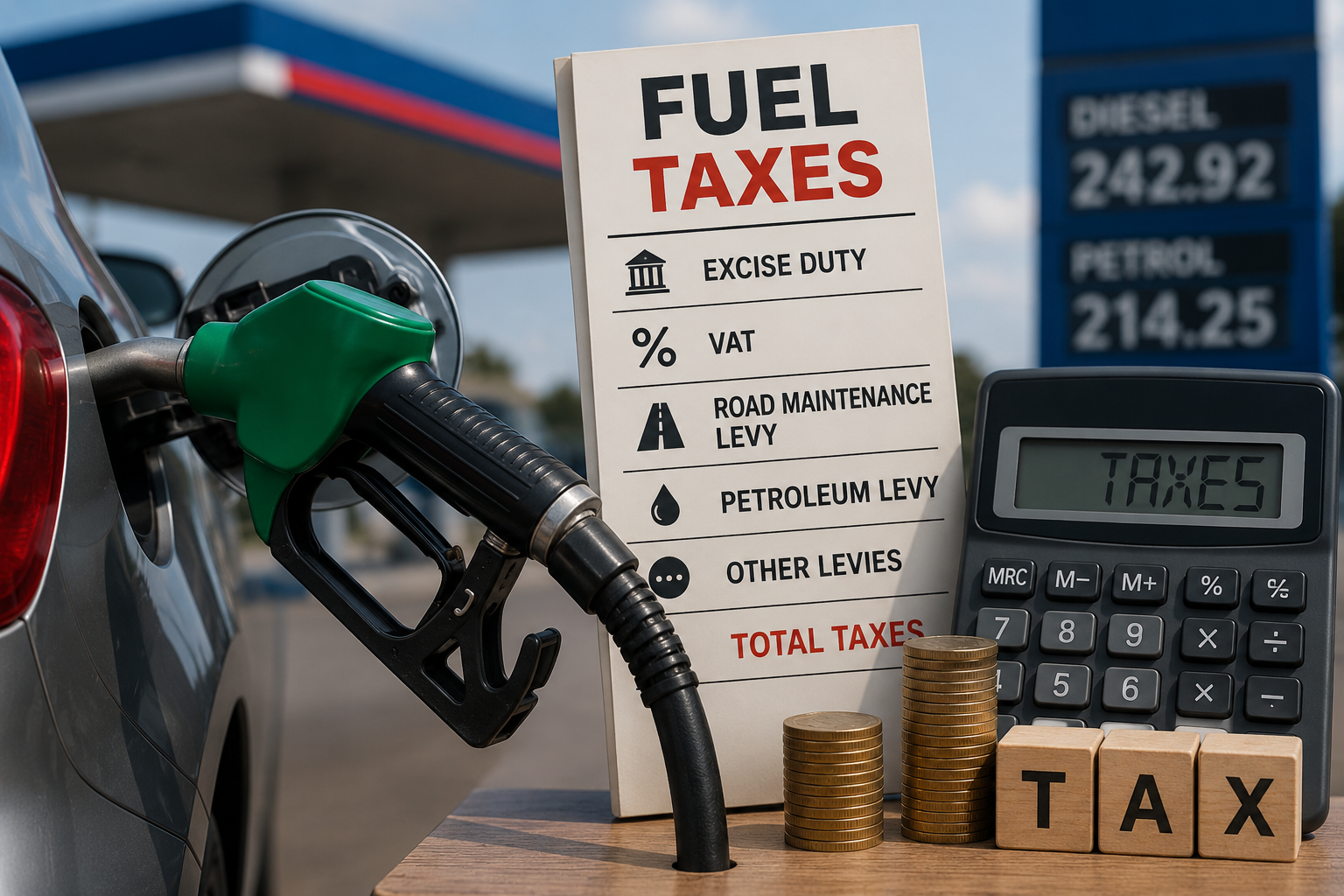

NAIROBI, Kenya, May 15 — The Kenya National Chamber of Commerce and Industry (KNCCI) has called on the government to urgently rationalize fuel taxes and levies, warning that rising diesel prices are threatening business sustainability, weakening competitiveness, and driving up the cost of living across the economy.
In a statement issued following the latest Energy and Petroleum Regulatory Authority (EPRA) fuel review, KNCCI President Dr Erick Rutto said the sharp increase in diesel prices requires immediate intervention to cushion households and businesses from mounting operational costs.
The Chamber also urged the government to optimise logistics efficiency by addressing persistent bottlenecks across ports, transport systems, storage infrastructure, and fuel distribution networks that continue inflating domestic costs.
“Fuel taxation must be reviewed and rationalized, especially on diesel,” KNCCI stated on Friday, adding that domestic cost build-ups are amplifying the impact of global crude oil market disruptions.
KNCCI warned that diesel remains the backbone of Kenya’s transport, manufacturing, agriculture, logistics, construction, and distribution sectors, meaning sustained price increases rapidly cascade through the wider economy.
Under the latest EPRA pricing cycle effective May 15 to June 14, diesel prices in Nairobi rose sharply by Sh46.29 to Sh242.92 per litre, while super petrol increased by Sh16.65 to Sh214.25.
The Chamber argued that although geopolitical tensions in the Middle East continue exerting pressure on global oil prices, domestic taxes, levies, exchange-rate pressures, margins, and landed product costs are worsening the burden on businesses and consumers.
KNCCI noted that while global crude oil prices rose by about 10.7 per cent during the latest review period, Kenya’s diesel prices increased by 23.5 per cent over the same cycle.
“This reinforces KNCCI’s position that domestic cost build-up continues to amplify the impact on businesses and households,” the statement said.
The business lobby warned that the current fuel shock could significantly raise transport and logistics costs, increase manufacturing expenses, weaken MSME cashflows, and erode Kenya’s competitiveness against lower-cost regional markets such as Uganda and Tanzania.
KNCCI further called for stronger fuel price stabilization mechanisms and greater transparency in fuel pricing reviews through publication of clearer fuel price build-up structures.
The Chamber also urged the government to accelerate diversification toward African oil-producing countries and support investment in regional refining capacity to reduce dependence on expensive refined fuel imports.
KNCCI maintained that urgent intervention is necessary to protect livelihoods, sustain enterprise growth, and preserve Kenya’s position as a regional trade and logistics hub amid rising fuel-driven inflationary pressures.