











NAIROBI, Kenya, Feb 7 — Kenya is set to begin reducing its police deployment in Haiti after achieving what it considers the primary objective of stabilizing the country, Foreign Affairs Principal Secretary Korir Sing’Oei has said.
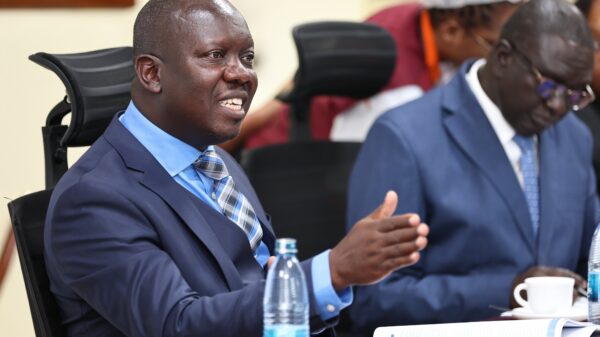
Speaking on the transition from the Kenya-led Multinational Security Support (MSS) mission to the newly established Gang Suppression Force (GSF), Sing’Oei said Kenya’s deployment delivered tangible results despite financial constraints and a limited operational mandate.
“Our deployment has strengthened the Haitian National Police, secured critical installations, and laid the groundwork for a sustainable international security framework,” Sing’Oei told Nation on Friday.
“A year plus later, there is clear evidence that Kenya’s mission has made a significant impact. MSS focused on building the capacity of the Haitian National Police to respond to gang violence.”
The Foreign Affairs Ministry confirmed that Kenya has officially handed over leadership to the GSF.
“We believe Kenya has fulfilled its role in initial stabilization and are in a good position to begin drawing down our deployment,” Sing’Oei added.
He acknowledged the challenges faced by the MSS mission, including limited funding, narrow operational scope, and restrictions that prevented direct pursuit of armed gangs.
These limitations prompted Kenya and partner countries to advocate for a more robust mandate at the United Nations General Assembly and UN Security Council.
“The mission’s narrow mandate did not include pursuing gangs directly, which presented operational challenges,” Sing’Oei explained.
GFS transition
He emphasized that Kenya’s deployment demonstrated credibility, respect for Haitian institutions, and support for Haitian-led processes, despite operating under difficult conditions.
The deployment deadline for the newly constituted Gang Suppression Force is Saturday, February 7, 2025, marking a decisive shift from the Kenya-led MSS mission that has struggled to curb entrenched gang violence.
In October last year, the UN Security Council voted to transition MSS into a stronger, more heavily armed GSF under Resolution 2793, with 12 votes in favor and three abstentions—Russia, China, and Pakistan.
The resolution authorizes the GSF for 12 months, supported by a UN Support Office and the Organization of American States (OAS).
U.S. Ambassador to the UN Mike Waltz said the new force addresses MSS shortcomings.
“Despite commendable efforts, the international community failed to deliver a mission fit for purpose. The GSF is designed to correct that,” he said, warning that Haiti’s statehood remains threatened by rampant gang violence.
The GSF, mandated under Chapter VII of the UN Charter, will conduct proactive anti-gang operations, secure critical infrastructure, and restore state control over territory.
Its strength is expected to exceed 5,500 personnel—more than five times the size of MSS.
735 police officers
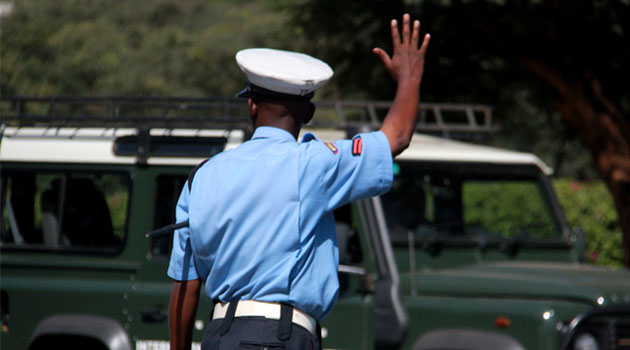
Kenya has led the MSS since October 2023, deploying 735 police officers as the backbone of the nearly 1,000-strong multinational force.
Nairobi has repeatedly cited inadequate international support, delayed equipment, and unfulfilled donor commitments, with President William Ruto warning that fragile gains risk being undone.
China and Russia abstained from the vote, with Beijing raising concerns over force composition and accountability mechanisms.
Haiti’s Transitional Presidential Council President Laurent Saint welcomed the UN decision, calling the GSF vital for restoring national stability, while Panama and other co-sponsors expressed optimism that security gains would enable political reforms and elections.
Kenya continues to reinforce the GSF, deploying its fifth contingent of 230 officers in December last year, bringing the total Kenyan contribution in Haiti to over 700—the largest of any country in the mission.
Addressing the troops upon arrival, GSF Force Commander Godfrey Otunge reaffirmed Kenya’s commitment to restoring stability.
“Kenya stands with Haiti for as long as it takes until peace prevails,” Otunge said, highlighting that the GSF is better coordinated and resourced than the MSS.