






















NAIROBI, Kenya Jan 13-Agriculture and Livestock Development Cabinet Secretary Mutahi Kagwe has secured an assurance from the Government of Zambia to supply up to 1 million 90kg bags of maize for Kenya in the event drought conditions worsen and local stocks decline.
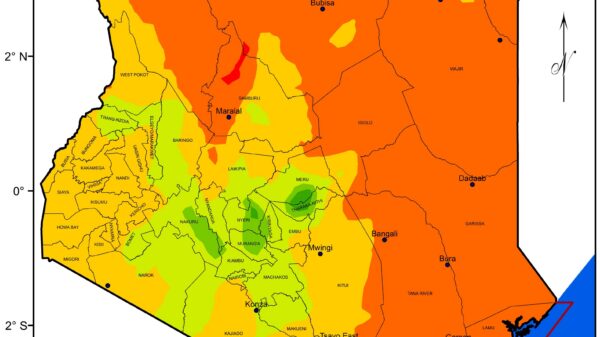
This comes as an estimated 3.3 million Kenyans are currently facing acute food insecurity, with projections indicating the number could rise to 3.6 million by June 2026.
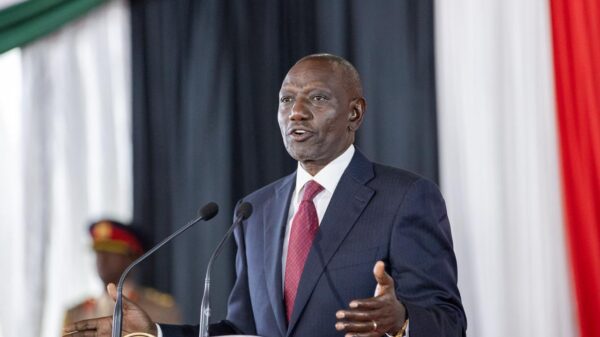
Speaking on the sidelines of the 49th Session of the IFAD Governing Council in Italy, CS Kagwe said he held bilateral talks with Zambia’s Minister of Agriculture, Reuben Mtolo.
Zambia confirmed it has the capacity to release over 1 million 90kg bags from its grain reserves should Kenya require support.
CS Kagwe noted that if local maize stocks from farmers do not sufficiently replenish the Strategic Grain Reserve, the Government of Kenya is prepared to gazette duty-free maize imports to avert a food crisis.
However, he emphasized that imports from Zambia would not require such gazettement, as Zambia is a COMESA member state, facilitating smoother regional trade.
He further highlighted that Zambia’s proximity to Kenya makes it a reliable and timely partner in addressing potential supply gaps, highlighting Kenya’s commitment to strengthening regional trade mechanisms.
Minister Mtolo assured Kenya of Zambia’s readiness to supply maize, noting that this would not be the first time Kenya has sourced grain from Zambia.
He explained that once pricing is agreed upon by the Zambian government in consultation with the President, traders would be authorized to supply up to 1 million bags.
CS Kagwe added that an initial consignment of 250,000 bags could be cleared to stabilize supply while allowing the government to continue monitoring the food security situation and avoid flooding the local market.
The meeting was also attended by Principal Secretary for Livestock Development, Jonathan Mueke and PS Water Julius Korir.
A fortnight ago, CS Kagwe, had issued a 30-day ultimatum to maize hoarders to release their stocks to the market, warning that failure to comply will force the government to permit duty-free maize imports to stabilize flour prices.
Kagwe said the government’s first option is to purchase maize from local farmers to build the National Strategic Food Reserves, with an immediate target of 1.7 million bags and a long-term goal of 4 million bags.
However, only 186,000 bags have been delivered so far, a shortfall attributed to hoarding and speculative behavior amid emerging drought conditions in parts of the country.
“We are buying maize at Sh4,000 per bag, and we have Sh1.7 billion ready for payment. As a country, we must stock our strategic reserves and be ready for emergencies. Our first option is to buy from our farmers; importation will only be a last resort,” he said.
He pointed out that to minimize post-harvest losses and improve maize quality, the ministry is redeploying over 60 mobile and immobile maize dryers to cooperatives, large-scale farmers, self-help groups, and high-production areas. Dryers previously placed in low-yield regions will be withdrawn and reassigned.
“When we talk about aflatoxin, we are talking about a public health issue. Some dryers were taken to areas with no sufficient maize, which is a misuse of national resources,” he added.
Farmers will also be allowed to dry maize at NCPB facilities at minimal maintenance costs, while millers can lease dryers to reduce rejection of local maize and discourage over reliance on imports.