









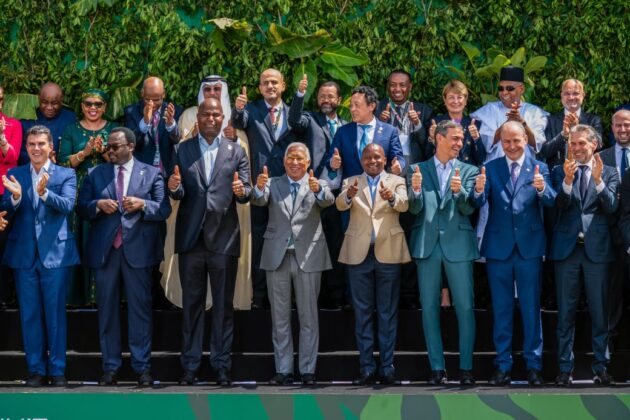

BELEM, Brazil, Nov 8 — Kenya has renewed its call for decisive global action on climate change, with Deputy President Kithure Kindiki urging world leaders to agree on clear timelines for phasing out fossil fuels as the 30th UN Climate Change Conference (COP30) opened in Belem, Brazil.
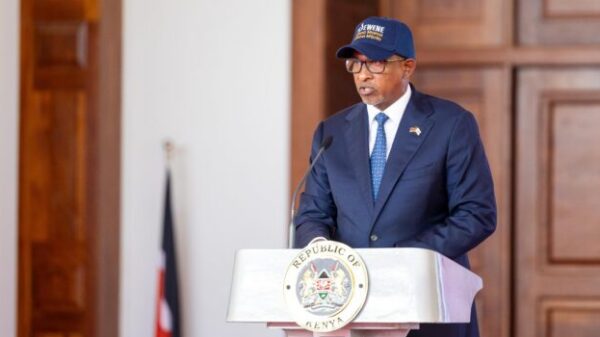
Delivering Kenya’s statement on behalf of President William Ruto during the Leaders’ Summit, Kindiki said the country’s transition to clean energy is already well advanced, with 93 per cent of all electricity now generated from solar, wind, and geothermal sources.
He noted that this milestone has drawn international recognition and positions Kenya to achieve 100 per cent green energy by 2030.
“Universal electrification by 2030 is now within sight,” Kindiki said, noting that electricity access has risen to 75 per cent, covering 10.6 million households out of a total 15.6 million, largely through the government’s last-mile connectivity programme.
The Deputy President added that Kenya is reskilling its workforce to support the green shift while mobilising USD 600 billion required for the full energy transition. He also confirmed that efforts to phase out biomass cooking by 2028 remain on course.
During a Leaders’ Roundtable chaired by Brazil’s President Luiz Inácio Lula da Silva, Kindiki pressed for COP30 to “settle the pending and urgent question of a global fossil fuel phase-out.”
He further called for renewed investment in renewable energy and green minerals, as well as the creation of a just transition framework to protect developing nations from economic shocks linked to the shift away from fossil fuels.
Kindiki warned that climate change continues to cause devastating impacts worldwide, but said Africa is uniquely positioned to drive the global energy transition thanks to its vast renewable resources, abundant critical minerals, and youthful population.
However, he cautioned that this potential will remain unrealised unless climate finance pledges are fulfilled, global financial systems are reformed to ease access to capital, and climate policies prioritise women, youth, and farmers to ensure the benefits of the green economy are widely shared.
Kindiki’s address came ahead of key negotiations at COP30, where countries are expected to intensify talks on energy transition, adaptation financing, and the future of fossil fuels.