














NAIROBI, Kenya, Dec 28 — Could Prime Cabinet Secretary Musalia Mudavadi’s proposed “seventh ballot” — a constitutional referendum held alongside the 2027 general election — unintentionally undermine President William Ruto’s re-election strategy?
While Ruto has steered clear of the matter, ardent supporter and lawyer Ahmednasir Abdullahi SC has weighed in, warning that such a move could unify opposition forces and create political momentum against the incumbent.
“Constitutional amendments are very unpopular with Kenyans. Any amendment that creates new offices for politicians is a death wish for the incumbent. Such a proposal will unify the opposition, give them political momentum, and become a popular rallying cause,” Ahmednasir responded on Friday amid debate on the proposal.
“General elections are won on the record and agenda of the parties. Constitutional amendments are a wild card that plays in favour of those opposed to it and against the incumbent,” he warned.
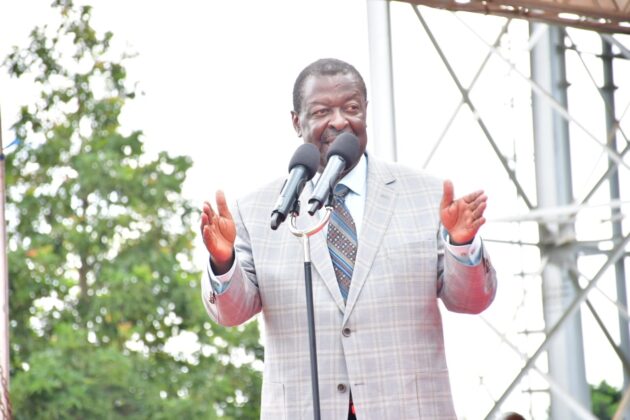
Mudavadi argued that Kenya has reached a referendum moment, where unresolved constitutional questions — including the two-thirds gender rule, devolved funds like the Constituency Development Fund (CDF), and the creation of offices such as Prime Minister and official Leader of the Opposition — a due for consideration.
His solution: fold a constitutional referendum into the general election, creating a seventh ballot to settle these long-standing governance issues.
“We can use the 2027 election as the first example to have those issues that have never been resolved crafted well into sensible referendum questions that will help amend our 2010 Constitution,” Mudavadi said.
Strict timelines
Kenya’s Constitution fixes general elections on the second Tuesday of August every five years, and the Independent Electoral and Boundaries Commission (IEBC) has already begun preparations, including voter registration, logistics, and staffing.
Mudavadi warned that unresolved constitutional matters, particularly the review of electoral boundaries under Article 89, could leave the election vulnerable to legal challenges hence the need to a plebiscite.
“Without a proper population census and a legitimate boundaries review, there can be no credible general elections. This is not my personal opinion but the law itself,” he said, noting delays in boundary reviews and disputed census data.
A mini-census scheduled for early 2026 further compresses the IEBC’s timeline, making the seventh ballot a potential solution to clarify the legal framework before voters cast their ballots.
Supporters, including former Cabinet Secretary Moses Kuria, have hailed the idea as pragmatic.
“Kenya deserves clarity on governance issues that have been left unresolved for years. A referendum alongside the election is a smart solution,” Kuria said.
However critics in the opposition remain wary.
Former Justice Minister Martha Karua described the proposal as a distraction, questioning the legality of some offices being advocated.
Lawyer Ndegwa Njiru warned that the Constitution may not allow a referendum to run concurrently with a general election, signaling lawsuits against IEBC if the seventh ballot is attempted.
“On every second Tuesday in August every fifth year, our Constitution recognizes only one event—the General Election. Any proposal to run this election concurrently with a referendum is a pipe dream,” he asserted.