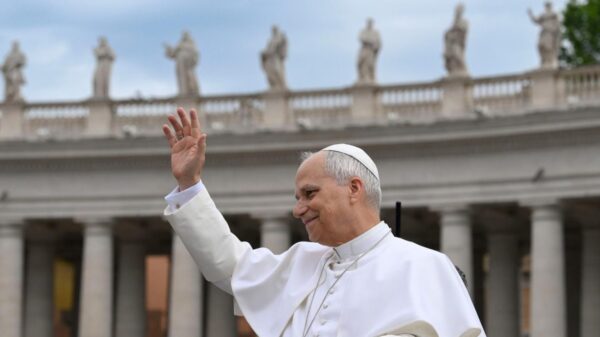
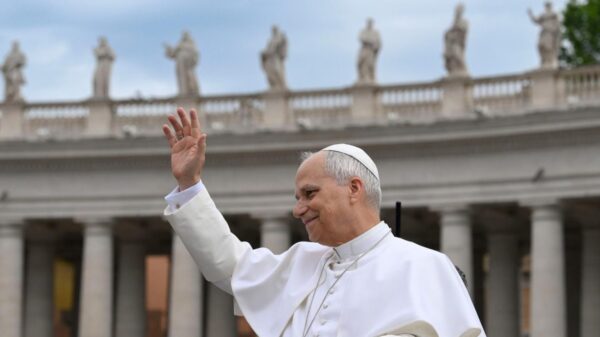



















NAIROBI, Kenya, May 27 — Pope Leo XIV has called for sweeping ethical safeguards and workplace reforms to protect workers from exploitation and dehumanization in the age of artificial intelligence, warning against allowing technology and profit to override human dignity.
In his first encyclical, Magnifica Humanitas (The Greatness of Humanity), released by the Vatican on Tuesday, the pontiff urged governments, businesses and technology firms to ensure that AI-driven transformation does not reduce workers to “a cost of production” or deepen social inequality.
The 52-page document, published on the 135th anniversary of Pope Leo XIII’s landmark workers’ rights encyclical Rerum Novarum, frames artificial intelligence as one of the defining moral and social challenges of the modern era.
Pope Leo XIV warns that the rapid rise of digitalization, robotics and AI is reshaping labour, politics and social relations at an unprecedented pace, requiring urgent ethical oversight and renewed protections for workers.
“Never has humanity had such power over itself,” the Pope states, cautioning that technological systems increasingly influence decision-making, social imagination and economic structures.
Central to the encyclical is a call for a “human-centred economy” where technological innovation must serve the common good rather than corporate domination or unchecked efficiency.
The Pope criticizes what he terms the “Babel syndrome” — an economic and technological culture driven by profit, uniformity and the pursuit of control at the expense of vulnerable people.
Among the major workplace reforms proposed in the document are stronger protections for fair wages, worker participation in decision-making, ethical regulation of automation and safeguards against job insecurity created by AI systems.
The encyclical insists that automation and fragmented digital labour markets should not be judged solely on efficiency or productivity, but on whether they uphold “the dignity of the worker” and ensure families can live dignified lives.
Govt control
Pope Leo XIV also warns against economic systems that place excessive power in the hands of private technology corporations, arguing that transnational firms now possess influence surpassing that of many governments.
He calls for international regulatory frameworks capable of ensuring transparency, accountability and ethical governance of AI technologies, while emphasizing that technological tools are never truly neutral because they reflect the values of those who design and control them.
The encyclical further condemns workplace cultures that measure human value purely through performance and efficiency.
“Persons end up being reduced to a means of achieving results, a resource to be used and exploited,” the Pope writes, insisting that human worth does not depend on productivity or economic output.
The Vatican also advocates for stronger worker associations and intermediary institutions capable of balancing corporate power and protecting labour rights in the digital economy.
Education reforms feature prominently in the encyclical, with Pope Leo XIV urging schools and universities to promote “digital literacy,” ethical discernment and human-centered technological development.
The Pope additionally raises concern about growing dependence on digital systems, warning that unchecked commercialization and surveillance technologies risk creating “new forms of slavery” and societal control.
Throughout the document, the pontiff repeatedly stresses that AI should complement — not replace — the human person.
“In the era of artificial intelligence, when human dignity is threatened by new forms of dehumanization, ours is the pressing duty to remain profoundly human,” he writes.
The Pope presented the encyclical at the Vatican in accompanied by senior Church leaders, theologians and AI experts, including Anthropic co-founder Christopher Olah, underscoring the Vatican’s growing engagement with debates around AI governance, ethics and the future of work.