



















By Antony Kagure
Moments before the opening session of the Datafest Africa 2025 conference, a whispered rumour rippled through the auditorium—that Kenyan veteran opposition leader Raila Odinga had passed away. It spread the way news now travels in the digital age: first as a murmur, then a hush, followed by a quiet chorus of phones tilting toward glowing screens as people searched for confirmation on social media.
In that instant, the room felt fragile—alive to the weight of public life and the stories we carry about those who shape it. As the audience scrambled to verify what later proved to be untrue, I was reminded of how vulnerable truth and information have become in a hyperconnected world.
Whatever one’s politics, Raila Odinga has long stood for participation and the stubborn insistence that citizens must have a say in shaping their destiny. That spirit echoed throughout the day’s theme—Reclaiming Our Data Futures—raising a central question: how do we reclaim power from the systems that increasingly shape what we know, what we believe, and how we live?
Reclaiming our data futures begins with rejecting the old model where information flows upward, but accountability rarely flows back. Spend time on a government dashboard, a corporate portal, or an AI demonstration and a familiar pattern emerges: data moves efficiently, but benefits do not always follow. Insights land in reports; the nurse who collects health data never receives a tool that improves her shift; the teacher still tallies attendance by hand; the trader waits in vain for a market update that never arrives.
Africa is now one of the world’s fastest-growing producers of data. Yet recent statistics show that the continent accounts for less than one percent of global data-centre capacity, even as mobile data usage grows by about 40 percent annually—nearly double the global average. This defining imbalance exposes a troubling reality: Africa generates enormous value, but captures very little of it.
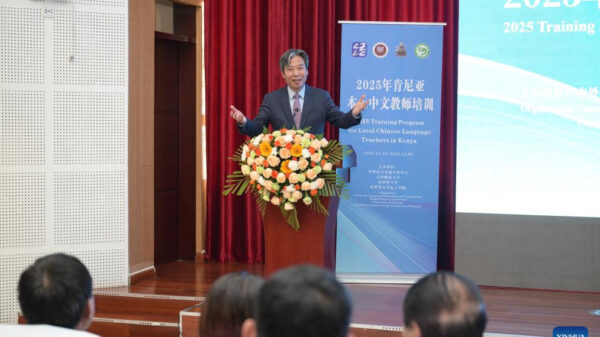
At the Nairobi Satellite Edition of Datafest Africa, the question we kept returning to was simple: what if the people closest to the problem were also the closest to the power to use the data? Not as a slogan. Not as charity. But by deliberate design.
Africa’s digital transformation is real. But without care, it risks reproducing old inequalities—turning citizens into data sources instead of data partners. We must assert data sovereignty, ensuring that data generated within our borders is governed, protected, and used to serve African development priorities.
Encouragingly, local innovation is already pointing the way forward. Across Kenya and the region, researchers and innovators are experimenting with human-centred, accessibility-first design to reshape how consent, feedback, and ownership work in digital systems. These models enable communities to co-create and directly benefit from the systems built around their data.
They also confront a subtler challenge: how biased datasets distort African cultural symbols—from traditional attire to social behaviour—making local curation and African-led AI development not optional, but essential. Africa must not simply consume artificial intelligence; it must help produce it on its own terms.
Above all, we must create a closed loop, where data returns to communities as usable insight—not as quarterly PDFs. People must be able to question, critique, learn from, and apply what data reveals. Data must function as a public good. This is not a dream of disruption. It is the slow, unglamorous work of maintenance, standards, training, and trust—the work that actually makes systems hold.
Reclaiming our data futures demands responsibility from everyone.
Governments must set clear rules, invest in shared digital infrastructure, and ensure that citizens can scrutinise how their data is collected and used. Companies must build alongside users, price fairly, and keep interfaces open so others can improve what they create. Universities must turn research into practice, and practice back into evidence. Civil society and creatives must keep dignity, identity and inclusion at the centre of design—because a system that fails at the margins ultimately fails at the centre.
What I will remember most from Datafest Africa Nairobi is not a particular keynote quote, but a pattern in the requests from the floor. People did not ask for innovation theatre. They asked for reliability. They wanted basic power, shared standards, data that moves in both directions, consent that genuinely protects them, and reports that a nurse or teacher can understand without specialised training. They wanted systems that last longer than a project cycle—and data that makes daily life slightly easier.
As a continent, we must now move beyond pilot projects that impress funders, toward services that endure. We must build local skills through short, job-based courses; share simple toolkits that clinics and counties can adapt; create transparent data agreements; and design first for low-resource settings—because if it works there, it will work anywhere.
By evening, the rumour that had opened the day faded into ordinary conversation. But the feeling lingered. It was a reminder that life is fragile, that trust must be earned, and that voices matter.
If data is to serve Africa, it must serve Africans first. If data comes from Africa, it must serve Africans first. That is the heart of reclaiming our data futures. It is not anti-technology. It is firmly pro-people.
Antony Kagure is a Product Marketing Specialist at the Aga Khan University Data Innovation Office.