












When historians look back on this decade, they may well record that China not only spoke about women’s empowerment but built the institutions to make it real. President Xi Jinping’s keynote at the Global Leaders’ Meeting on Women in Beijing underscored a shift many development observers have noted: China is no longer a participant in the gender-equality conversation; it is helping to shape its global agenda.
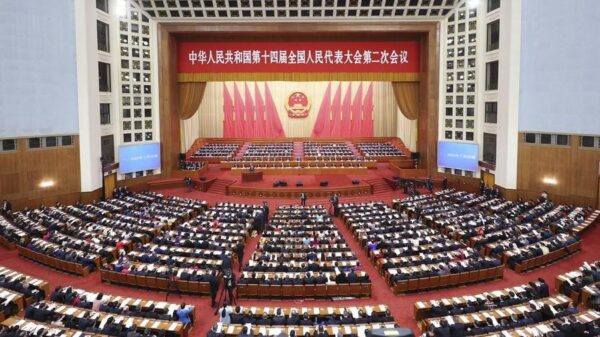
Addressing leaders and delegates from around the world, Xi called for “a new and accelerated process for women’s all-round development.” The appeal was both visionary and practical, grounded in decades of domestic reforms and backed by concrete commitments: an additional US$10 million for UN Women, an earmarked US$100 million under China’s Global Development and South–South Cooperation Fund for projects targeting women and girls, and the establishment of a Global Center for Women’s Capacity Building. These are not symbolic gestures; they are policy instruments.
To grasp the weight of the moment, consider the scaffolding behind it. Weeks before the summit, China released a white paper, China’s Achievements in Women’s Well-Rounded Development in the New Era, detailing laws, programmes and data systems that mainstream gender across national planning. Among the headline indicators: women account for more than 40 per cent of the workforce; they lead more than half of all new online enterprises; and the maternal mortality ratio has fallen by nearly 80 per cent since 1995. These are the outcomes of integrated governance, not standalone projects.
Crucially, China did not treat gender equality as a donor-driven add-on. It embedded women’s empowerment within poverty alleviation, industrial policy and modernisation. It is therefore unsurprising that Xi could say with confidence that women in China “hold up half the sky” in economic and social development.
For Africa, the resonance is immediate. African women already power entrepreneurship, agriculture, innovation and peacebuilding, yet systemic barriers—unequal access to finance, education, healthcare and leadership—blunt their impact. China’s experience shows what becomes possible when law, policy and social investment align around a shared goal—and when governments fund gender data and monitoring so progress is tracked, not merely praised.
Xi’s insistence that peace and security are the bedrock of women’s advancement also echoes Africa’s realities. From the Horn to the Sahel, conflict and instability have disproportionately harmed women and girls. The call for women to “bask in the sunlight of happiness and tranquillity” is more than rhetoric: it is a reminder that sustainable peace must be gender-inclusive and that women are indispensable agents of reconciliation and reconstruction.
Beyond peace, Beijing’s emphasis on women in science, technology and green development mirrors continental aspirations. The focus on digital literacy, skills training and entrepreneurship support is especially relevant for a region confronting climate vulnerability and youth unemployment. For governments seeking to close gender gaps in technology and industry, the lesson is to pair opportunity with capability—budgeting for training pipelines, market access and targeted procurement for women-led firms.
What also stands out is consistency. China has institutionalised its commitments through planning, law and policy—and through systems for gender statistics, national monitoring and gender mainstreaming that hard-wire accountability. That is what African countries can adapt: not just celebrating achievements but embedding them, so gains endure across political cycles.
There was a philosophical note, too. Quoting an old Chinese maxim—“Steadfast dedication yields an enduring fragrance”—Xi argued that progress rests less on slogans than on patience and persistence. Equality is not achieved overnight, but it can be secured for generations when it becomes a culture of governance rather than a campaign.
China’s leadership on women’s empowerment is inseparable from its wider global development vision. Through frameworks such as the Belt and Road Initiative and the Global Development Initiative, women are being woven into trade, education and technology exchanges. The new Global Center for Women’s Capacity Building aims to train more women from developing countries, including in Africa, to become agents of change at home—the essence of South–South cooperation: solidarity, shared learning and mutual growth.
In an era when many countries are turning inward, placing women at the centre of international cooperation is both strategic and moral. Thirty years after the world gathered in Beijing to declare that “women’s rights are human rights,” the same city has again reminded us that progress begins when policy meets purpose. By reaffirming its commitment to women’s all-round development, China is not only honouring its past; it is helping to draft the next chapter of global equality.