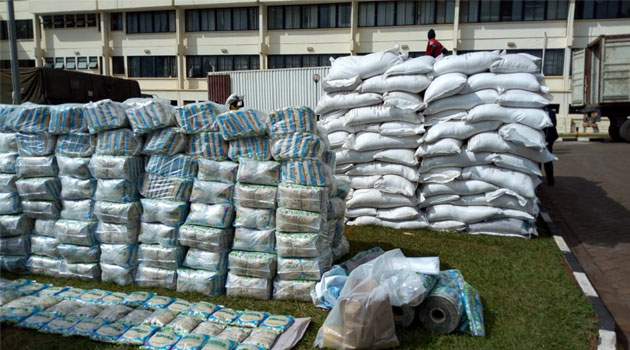





















NAIROBI, Kenya, Sept 10 — Kenya is losing up to 40 percent of the food it produces each year—about nine million tons valued at Sh 72 billion (US$578 million)—even as one in four citizens struggles daily to secure enough to eat.
This is equivalent to filling 500 million 18-ton trucks, according to a new report by World Resources Institute (WRI) Africa titled Food Loss and Waste in Maize, Potato, Fresh Fruits, and Fish Value Chains in Kenya 2025.
The study is the most comprehensive analysis yet, mapping hotspots and drivers of food loss while highlighting solutions to strengthen food security, farmer incomes, and climate resilience.
The report shows that Kenya loses up to 36% of maize, 23% of potatoes, 34% of fish, and as much as 56% of fresh fruits before they reach consumers.
Among fruits, mangoes record the highest losses (17–56%), followed by avocados (15–35%) and bananas (7–11%).
WRI notes a critical data gap on food loss and waste in Kenya, stressing the need for standardized measurement systems.
Without reliable data, it warns, meaningful targets cannot be set, interventions remain ineffective, and progress goes untracked.
For ordinary Kenyans, the issue may seem distant. Yet its impact is deeply felt: losses of maize compromise national food security, inefficiencies in supply chains hurt businesses, and smallholder farmers see incomes vanish.
For consumers, reducing food losses could mean cheaper maize flour, fresher fruits and fish, more resilient markets, and stabilized prices.
If Kenya halves food loss and waste by 2030, the report estimates it could feed an additional seven million people annually, inject KES 36 billion into the economy, and cut seven million tonnes of carbon emissions—supporting both national food security and climate goals.
Globally, efforts to meet the UN Sustainable Development Goal (SDG) 12.3 of halving food waste and reducing food loss by 2030 are off track.
The report recommends three urgent actions: stronger data systems to identify hotspots, scaling up proven technologies like hermetic storage and cold chains, and faster implementation of national and county-level policies with better cross-sector coordination.
“By providing reliable data, strengthening policies, mobilizing finance, and fostering entrepreneurship, we are turning food loss and waste into food security, green jobs, and climate resilience,” said Dr. Susan Chomba, Director of Vital Landscapes at WRI Africa.
With just five years left to achieve SDG 12.3, the report stresses the urgency of consistent data collection, scaling proven solutions, and enforcing clear policies. Reducing food loss, it argues, offers a “triple dividend”: feeding millions, saving billions, and cutting emissions.
World Resources Institute is an independent research organization working to improve lives, protect and restore nature, and stabilize the climate.
It leverages data, expertise, and global networks to drive change across systems including food, land, water, energy, and cities.