











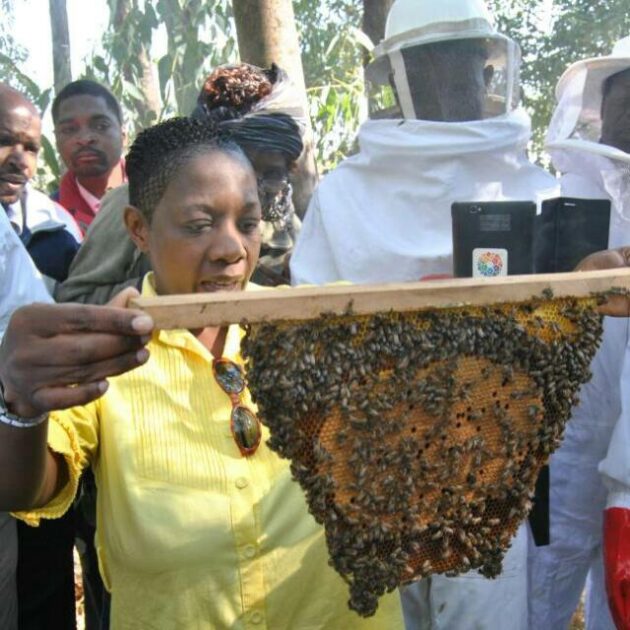

NAIVASHA, Kenya, Jul 27 – In her country Zimbabwe, Jacquie Gowe is nicknamed ‘Queen Bee’. A coincidence since she comes from a tribe that is known for loving “sweet and sophisticated things,” in Maungwe.
Her nickname, Queen Bee, was derived from her daily job; she keeps bees for a living, as well as training women on beekeeping. Through her beekeeping, she is a major contributor to the feed and fodder sector.
So far, through her organization Sweet Maungwe, Gowe has trained more than 5,000 women.
“I keep bees of honey production, process it and package it. My passion is to train women for honey production,” she said.
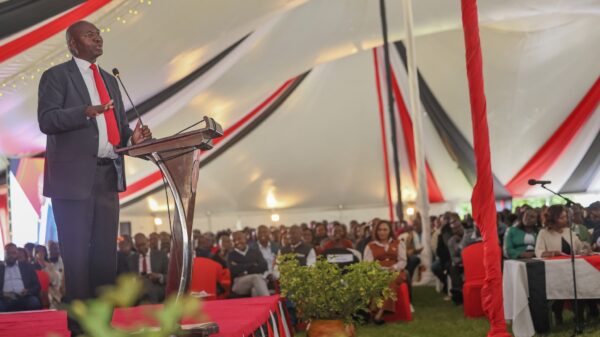
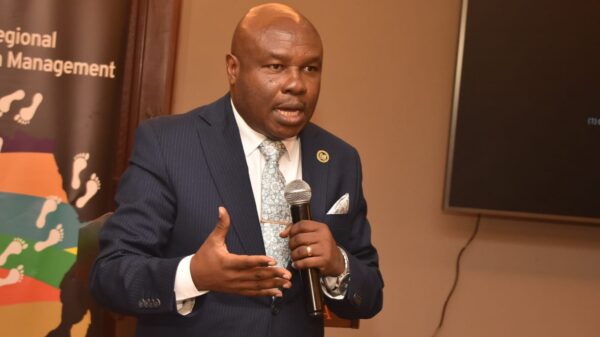
Gowe was speaking at the sidelines of the ongoing five-day workshop by the African Union-InterAfrican Bureau for Animal Resources (AU-IBAR) in Kenya, to discuss ways to overcome the current feed and fodder shortage.
Gowe also attended the Workshop as a member of the African Union’s Africa Women in Animal Resources Farming and Agribusiness Network (AWARFA-N).

Out of 12 provinces in Zimbabwe, Gowe has managed to reach at least 6, training women and encouraging them to join agribusiness. And she is marching towards covering the entire country.
“I am excited to see how we can unite with other countries and expand. In my travels, I have found other ladies who are doing bee keeping,” she said.
Already, she has joined a group of about 100 women to form a WhatsApp group, where they exchange ideas and opportunities about the sector.
Gowe is a beneficiary of the African Union–InterAfrican Bureau for Animal Resources (AU-IBAR) initiatives, which are geared towards empowering women across the continent.
In her role as a beekeeper, she is not only contributing in enhancing the feed and fodder sector, but also in empowering and improving livelihoods for thousands of women in Zimbabwe.
“I want this replicated across Africa. It is not labour intensive,” she said.
Bee farmers play a crucial role in the provision of animal feed and fodder, as livestock such as cows and goats heavily rely on crops like alfalfa and clover, which are pollinated by bees.
This symbiotic relationship between bees and livestock not only ensures food security and nutrition but also contributes to the preservation of biodiversity and the maintenance of vibrant ecosystems for plants, humans and bees alike.
A large proportion of agricultural yield in crop farming, gardening and fruit production depends on pollination by bees. The crop yield is significantly higher with pollination by bees.
Data from the Food and Agriculture Organization of the United Nations (FAO), indicate pollinators affect 35 percent of global agricultural land, contributing between $235 – $577 billion a year to global crops directly relying on pollinators.
To break the cycle of poverty and inequalities, AU-IBAR has been advocating for the development and implementation of policies and legal frameworks that create a wider array of opportunities for women in the feed and fodder sector- which will lead to their economic empowerment for the inclusive and sustainable development of the continent.
At the workshop, experts from 6 countries have been brainstorming on ways of addressing the current feed and fodder shortage that has been occasioned by climate change, COVID-19 pandemic and the ongoing Russia-Ukraine war.
AU-IBAR and representatives of different countries have all united in calling for the support of women venturing in the sector.
Many women seeking to venture into the feed and fodder sector have been derailed by poor access to appropriate and sustainable financing mechanisms that address women’s felt needs tailored to their capacities.
AU-IBAR seeks to address this shortcoming and alongside others, through its ambitious initiative dubbed Resilient African Feed and Fodder Systems (RAFFS) Project.
Overall, the Project is designed to help targeted African countries overcome the current feed and fodder shortage.
Gender Policy and Strategy Expert Dr at AU-IBAR said, “we will call the Project a success if we will have been able to increase the involvement of women in the sector since we have segmented the value chain”
She added that, “One of the indicators would be to measure the percentage of women who have been able to participate in the various segments of the value chain.”
The RAFFs project is designed to mobilize efforts that will bring the desired effect of addressing the immediate shortages in feed and fodder.
Further, the Project seeks to inform and attract short term increased investments to forestall future shortages of animal feeds and fodder.