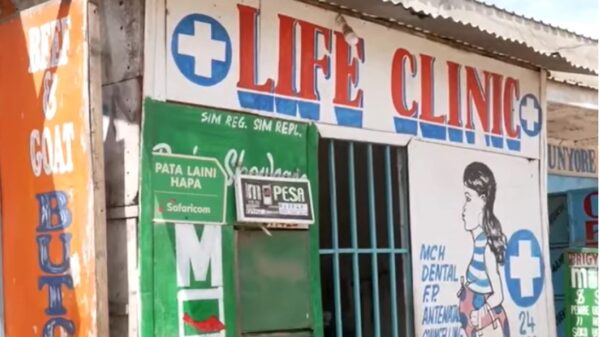














Most of our hospitals in rural Kenya are in the ICU. This reality hit home last week when my wife Susan and I drove my mother to the amenity facility of Kitui County Referral Hospital for urgent medical attention.
To our shock, the doctor gave us a tiny, reused piece of paper with four handwritten words “3 Copies lab request’. In short, the hospital was directing us to a nearby bureau to purchase treatment application forms before they could attend to us. They explained rather dismissively that they had run out of the forms. Unfortunately, the bureau was closed since it was a weekend. Inevitably, we sought a private hospital in the area as I deeply thought about the patients we had left at the county hospital, who sadly did not seem to have any alternative.
A while ago, Dorothy Lokomututo the mother of a dear friend Moses Banda had sought treatment at the same hospital after experiencing some pain in her chest. The hospital couldn’t attend to her because their diagnostic equipment had broken down. Instead, they referred her to Machakos where she was ‘diagnosed’ with cancer. Later, several X-rays in Nairobi revealed that she had no trace cancer in her body and was successfully treated. Can you imagine the trauma of this family?
Dreadfully, these two honorable mothers’ experiences are not isolated.
In 2020, the Kenya National Union of Medical Laboratory Officers (KNUMLO) revealed that three out of every 10 patients in Kenya, received the wrong diagnosis or treatment. Consequently, the health of millions has been severely compromised and many have prematurely lost their lives.
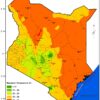
According to the recently released 2022 Kenya Demographic and Health Survey, 75% of Kenyans don’t have any health insurance. When they fall sick, they have to dig deep into their own pockets and seek treatment from private hospitals owing to the dysfunction in public hospitals. According to the survey, 80% of Kenyans in rural areas don’t have health insurance, compared to 60% in urban areas. In addition, 25% of pregnant women in rural areas give birth on their own, in the absence of a midwife or skilled health practitioner. The number is much lower in urban areas, at 3%. This bleak scenario continues after babies are born. In rural areas, one in five children undergoes stunted growth, double the number in urban areas. According to the World Health Organization, stunted children fall sick more often and are more likely to suffer from chronic diseases.
There is therefore an urgent need for decisive action to boost rural healthcare. Of course, the shortage in public hospital must be addressed, but we must focus on softer issues too.
Firstly, our health practitioners need to own the problem and be empathetic to the institution and those they serve. Currently, most of our practitioners are detached from their institutions and therefore treat patients as irritants. As such, we should consider a nationwide campaign and refresher courses to steer health workers back to their professional calling. That alone will change public perception of public hospitals.
Secondly, just like schools, there should be a clear boundary between public and private hospitals in the engagement of health practitioners. If a public doctor can concurrently operate a private clinic what would prevent a nurse from starting a side ‘hustle’ of a photocopy bureau next to a public hospital? Isn’t this a reason why our institutions are largely dysfunctional despite the resources at their disposal.
Isn’t this the beginning of the very corruption that we must uproot? Isn’t this the reason why local communities have been excluded from the governance of health facilities which is against the Health Act of 2017? Isn’t this one of the reasons why Kitui County with its 340 health facilities, for instance, has delayed the implementation of a vibrant Health bill.
The future of public health is in our own hands! Think act green!
DR. KALUA GREEN is the Founder and Chairperson of Green Africa Foundation, an organization that was founded in the year 2000 that champions Sustainable Development in Africa.