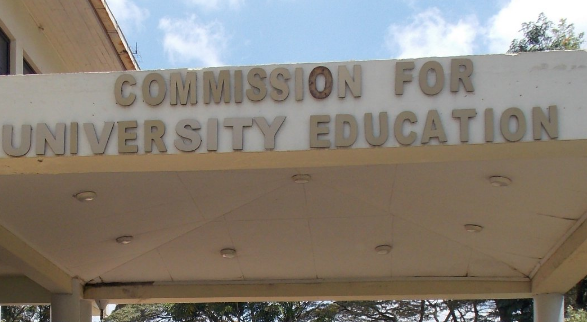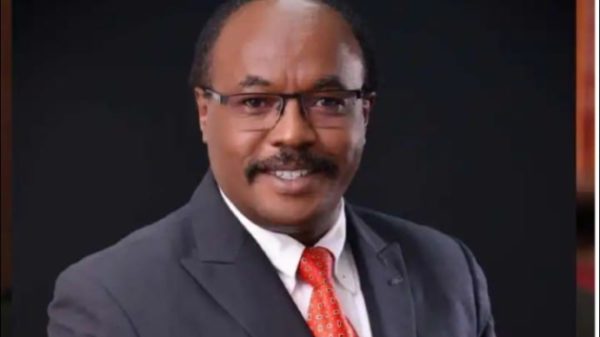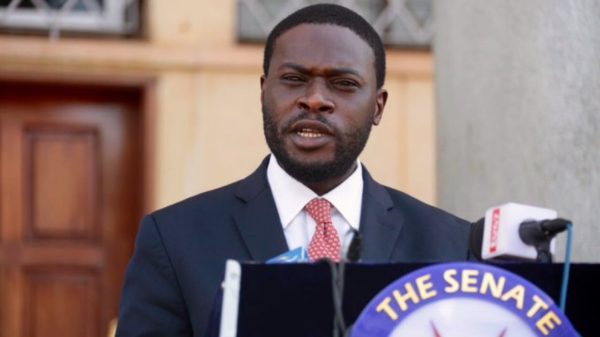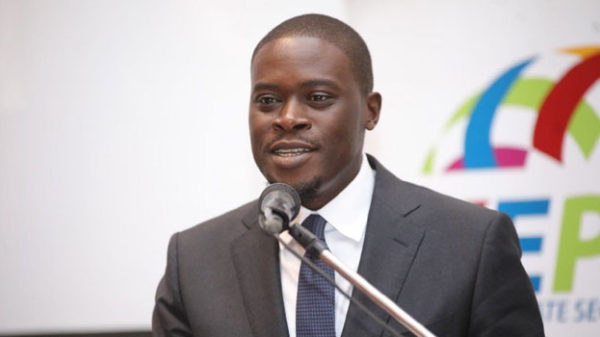















NAIROBI, Kenya, Oct 11 – Prof Mike Kuria, the new CEO for the Commission for University Education (CUE), has directed all university institutions to have proper data and take charge of their own quality of education.
Prof Kuria, who spoke on Tuesday after taking charge as the new chief executive challenged all institutions to institute measures that will ensure current and most reliable data of all its trainees is stored to enhance the quality of documentation of relevant records to counter the challenge of questionable papers going forward.
“The universities should have your data when they train you, so that the next time you ask whether your qualifications are valid and you go to an institution that information should be readily available,” he said.
He also reiterated the need to have a working relationship with the higher learning institutions from other countries to exploit mechanisms of having a uniform platform or data system that can account for any questionable or invalid diploma or degree qualifications.
“Universities should have data for currency and reliability. They should also take charge of their own quality. That means when they train you they have your data, the next time someone asks whether your information is valid, that data should be readily available,” he stated.
“We also need to relate with our neighbors so that there is better communication between us, and we have a working relationship so that even if someone has a qualification from another country, we have a mechanism to make sure that it happens quickly,” Prof Kuria added.
The commission noted that in spite of the great work the commission had done, some universities were still running unaccredited programs.
He vowed to enhance accreditation protocols to safeguard the quality of higher education.
The commission also vowed to work hand in hand with institutions of higher learning and build the capacity of education in the entire country.
“We as a commission will come in to build the capacity and work together with the universities. Quality assurance should become a practice and not a discourse in the universities,” a statement from the commission’s board noted.
Currently there are 78 universities that have been authorized to operate in Kenya which include 44 public universities with 36 fully chartered and 6 registered as constituent colleges.
There are also 36 private universities, 25 fully chartered and another 8 having letters of interim authority and 3 constituent colleges formed before the University Act 2012.
Kuria’s predecessor urged him to keep on the watch and publicly disclose all universities that are not accredited other than the 78 fully authorized operational institutions.
“You will also find there are very many others (universities) that are giving honorary degrees, you need to keep your eyes and ears open and let the public know that some of them are not up to power,” the outgoing CEO Mwenda Ntarangwi noted.
The former CEO noted that there are 56 university compasses accredited but there are others that are illegally operating and uncredited by the Commission for University Education.
He pleaded with the new CEO to be vigilant and investigate the quality of education being offered across the country.
During the handover session, Kuria also stated that all universities are preparing to receive students under the competency-based curriculum.
He emphasized on the need to prepare the students for the labor market other than accumulating the information without applying it in real life.
“The changes that are taking place are so quick, and because of that, we need to be dynamic to learn differently and instead of accumulating information. We want them to think about what to do with the information. If we do that then we prepare the student for the labor market,” he affirmed.
Changes at the CUE come just months after the 2022 General Election in the build up to which the commission found itself on the receiving end form political actors for revoking its recognition of academic papers it considered questionable.
Among the contentious matters it handled was then Nairobi Senator, now Governor, Johnson Sakaja’s degree certificate whose recognition it revoked despite having endorsed it after concurrence from a sister organization in Uganda.
The High Court later dismissed the case challenging Johnson Sakaja’s governorship candidature over his academic qualifications, giving him a go ahead to vie for the gubernatorial position.