


















KISII, Kenya, Feb 16 – The government has intensified efforts to reintegrate teenage mothers into the education system, with at least 200 young mothers in Bobasi Constituency, Kisii County, benefiting from an empowerment programme aimed at supporting their return to school.
Speaking during the empowerment forum in Kisii, Basic Education Principal Secretary Julius Bitok reaffirmed the government’s commitment to fully implementing Kenya’s School Re-Entry Policy, which allows girls who drop out due to pregnancy to resume learning after childbirth.
“Teen mothers should not consider pregnancy as the end of their education. As a government, we are committed to ensuring that no girl is locked out of school because she became a mother. We are here to fully implement the government’s return-to-school directive,” said Bitok.
While Kenya’s re-entry guidelines provide a clear framework for the return of teen mothers to school, Bitok acknowledged that stigma, poverty, and lack of awareness continue to hinder many young mothers from resuming their studies.
He noted that the Ministry of Education is now working closely with county governments, chiefs, school administrators, and religious leaders to track affected learners and encourage families to support their daughters’ return to school.
“I am here in Kisii with education officials, and we have agreed that all children must be back in school, and teen mothers must be supported to resume learning,” he added.
The PS also urged school head teachers and principals to retain learners in line with the President’s directive allowing students without uniforms or school fees to remain in school. At the same time, he issued a stern warning to perpetrators of defilement, saying the law would take its course against those responsible for impregnating underage girls.
“It’s really sad that today we have 200 teen mothers in Kisii who face challenges in going back to school,” Bitok said.
Also present at the event was Stephen Isaboke, Principal Secretary for Broadcasting and Telecommunications, who encouraged those who had completed secondary school to apply for the NYOTA programme to access government capital and start income-generating ventures.
Isaboke described the initiative as part of the government’s bottom-up economic model aimed at empowering young women and securing their future.
“I am very committed to ensuring the digital superhighway cable spreads in Kisii, which is a center of excellence, and that standard digital hubs are established across constituencies to ensure the youth are not left behind in technology,” he said.
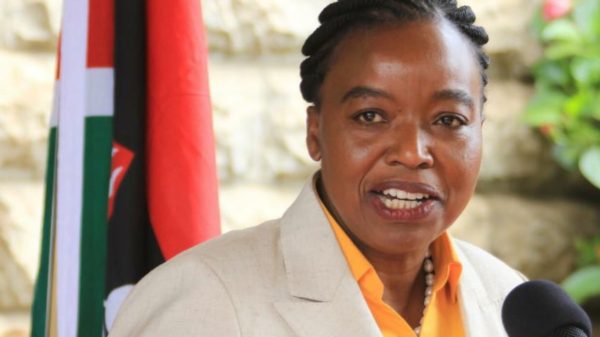
Kisii Woman Representative Doris Aburi emphasized that returning to school restores hope and dignity for young mothers.
“Going back to school gives these young mothers hope. It gives them a future,” Aburi said.
She strongly condemned rising cases of defilement in the region and called for tougher legal measures against perpetrators. Aburi urged the judicial system to handle defilement cases as matters between the state and the accused to minimize compromise and ensure justice for victims.
The empowerment of 200 teen mothers in Bobasi signals a renewed push by the government to enforce the school re-entry framework and safeguard girls’ right to education.
As stakeholders—from education officials to community leaders—rally behind the initiative, the message remains clear: motherhood should not mark the end of a girl’s academic journey. Instead, with support and protection, it can become a chapter in a broader story of resilience, opportunity, and transformation.