


















NAIROBI, Kenya, Jan 26 — Detectives have arrested two suspected wildlife traffickers and seized elephant tusks valued at approximately Sh11 million following a covert sting operation in Namanga, the Directorate of Criminal Investigations (DCI) said on Sunday.
DCI said a multi-agency team comprising officers from the National Police Service (NPS) and the Kenya Wildlife Service (KWS) acted on intelligence to disrupt a suspected illegal wildlife trade deal at Mufassa Hotel.
“Following a trail of intelligence leads, the team launched a covert operation at Mufassa Hotel, where the traffickers were believed to be closing in on a shadowy deal with a prospective buyer,” the DCI said.
Officers encountered three suspects at the hotel: Tanzanian nationals Imani Manasi Msumbwa and Justin Mwalima, and a Kenyan, Alton Jilaoneka.
However, one of the suspects, Justin Mwalima, managed to flee as officers moved in.
“In a twist of fate, Justin Mwalima made a daring escape at the first sign of trouble,” the DCI said.


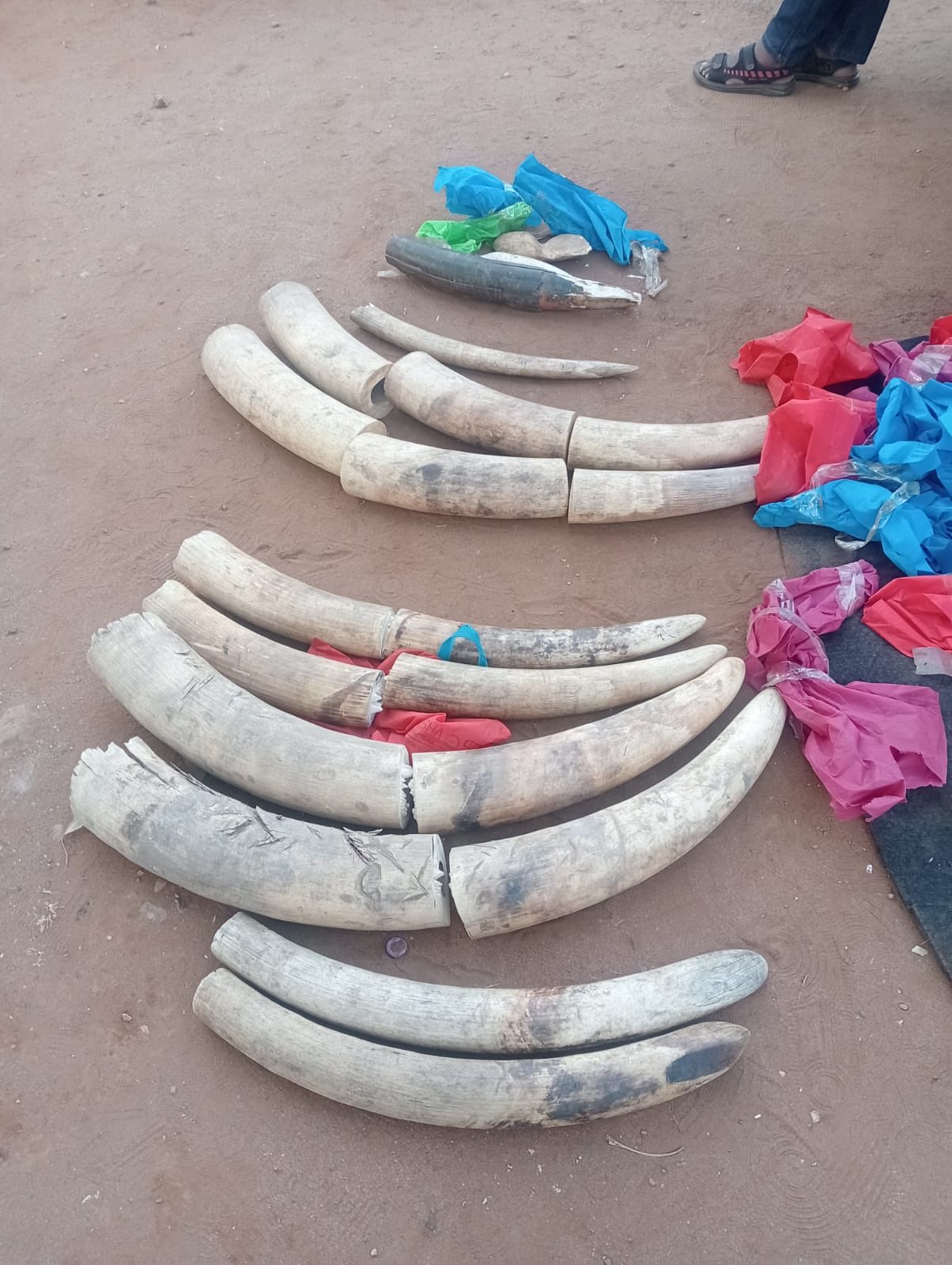
20 pieces
DCI arrested the remaining two suspects at the scene and later led detectives to their parked vehicles.
A search of a Toyota Mark X, registration number T476 DHS, uncovered 20 pieces of elephant tusks weighing a total of 110 kilograms concealed in the boot.
Further inspection of the vehicle revealed a weighing machine, suggesting a well-coordinated trafficking operation.
DCI agents escorted two suspects to Namanga Police Station alongside the impounded vehicles and recovered exhibits for processing ahead of their arraignment in court.
Police said efforts are ongoing to trace and arrest the suspect who escaped.
The DCI said the interception underscored the government’s commitment to combating wildlife trafficking through intelligence-led operations and close collaboration between security agencies.
“This interception serves as a powerful reminder of the Government’s commitment to combating wildlife trafficking through robust multi-agency collaboration and intelligence-led operations to protect our natural resources and endangered species,” the statement said.