












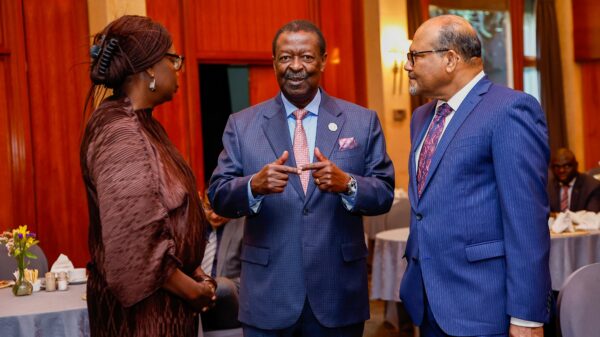




NAIROBI,Kenya Dec 24-Prime Cabinet Secretary Musalia Mudavadi has opened up about a stalled plan to overhaul the Port of Mombasa, blaming internal resistance and entrenched interests for derailing what he says could have transformed the main maritime gateway decades ago.
Mudavadi revealed that during his time as Finance Minister in the 1990s, the government pursued international expertise to modernize the port, identifying Singapore as a potential strategic partner due to its globally recognized efficiency in port operations.
“When we brought these people to partner with the Port of Mombasa, the cartels in Mombasa who did not want Mombasa to achieve international standards fought and chased away the team from Singapore and frustrated them,” he revealed.
According to the PCS, the idea was to benchmark Mombasa against Singapore’s port system, which is widely regarded as one of the most advanced and well-managed in the world.
“We were trying to get a partnership between the Port of Singapore and the Port of Mombasa because the Singapore people are extremely efficient in port management,” Mudavadi stated.
He said he personally led the engagement, travelling to Singapore to hold discussions that resulted in a technical team agreeing to visit Kenya and support improvements in port infrastructure and management.
“The Singapore ports are one of the most efficient ports globally. I went to Singapore, and I had time to negotiate with them. I came with those people to Kenya,” the PCS revealed.
However, the initiative soon ran into resistance at home. Mudavadi said powerful networks operating around the port opposed the proposed changes, fearing the loss of influence and illicit gains tied to inefficiencies at the facility.
“The opposition was relentless,” he noted, explaining that the foreign experts were subjected to sustained obstruction, eventually forcing them to withdraw and abandon the project altogether.
Mudavadi argued that Kenya’s development setbacks are often driven by internal sabotage rather than a lack of opportunity, warning that the country risks stagnation if it continues to reject external expertise and global best practices.
“Kenya will not grow if we continue as an inward-looking people. We must get ourselves to see the examples, the developments and the best practices that are taking place in other countries,” the CS reiterated.
His remarks come as the current administration pushes a development agenda inspired by Singapore’s rapid economic rise, with President William Ruto recently unveiling a Sh5 trillion infrastructure financing plan aimed at accelerating national growth an initiative that has sparked political debate.