












NAIROBI, Kenya, Dec 6 — Nairobi this week became the focal point of a major regional push to strengthen maritime security across the Red Sea, East Africa, Southern Africa, and the Western Indian Ocean, as the European Union concluded the inaugural EU Maritime Security Week.
Held from December 2 to 5, the gathering brought together 112 delegates from 16 countries and 12 regional and international organisations — marking one of the most significant maritime security coordination efforts in the region in recent years.
The week convened the steering committees of three flagship EU-funded initiatives — the Red Sea Programme, the Safe Seas Programme, and the Port Security and Safety of Navigation Programme — all united by a shared objective: enhancing maritime governance, operational capacity, and cross-border cooperation amid a growing range of maritime threats.
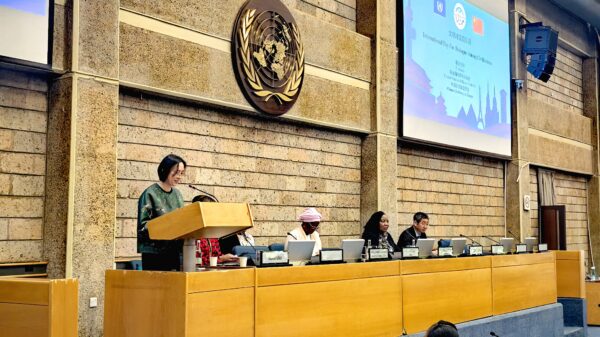
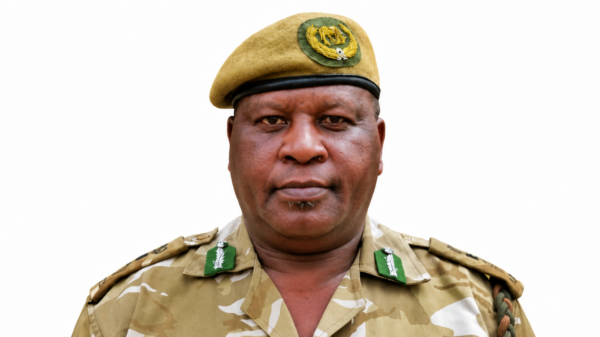
Speaking on behalf of Kenya’s Defence Cabinet Secretary Soipan Tuya, Brigadier Mohamed Shemote, Commander of the Kenya Navy Fleet, stressed the urgency of a harmonised regional response.
He said the forum offered a “unique opportunity to deepen partnerships and reaffirm that security at sea is a shared responsibility.”
“Our region continues to grapple with constantly evolving threats — piracy, illicit trafficking, illegal, unreported and unregulated (IUU) fishing, maritime terrorism, and the growing impacts of climate-induced instability,” Brig. Shemote noted.
“These threats do not respect national borders; neither can our responses be confined within them.”
Information sharing
The event culminated in a high-level session of the Regional Maritime Security Architecture (RMSA) Steering Committee, a mechanism designed to strengthen inter-regional information sharing and coordinated action.
Jointly organised by the European Union, the Government of Kenya, the Indian Ocean Commission (IOC), and the UN Office on Drugs and Crime (UNODC), with technical support from the International Maritime Organization (IMO) and INTERPOL, the conference provided a consolidated overview of EU-supported maritime efforts and their expanding impact.
Throughout the week, officials highlighted notable results achieved through collaboration with coastal states, including more than a dozen maritime operations; the seizure of 2.4 tonnes of narcotics and illicit cargo; nearly ten million cigarettes; seventeen stolen vehicles; and thirty tonnes of kratom.
The operations also led to the arrest of 36 suspected human traffickers and other criminals, as well as the rescue of fishermen and sailors in distress.
Regional simulation
Delegates reviewed regional simulation exercises that have strengthened crisis response capacities, with officials emphasising that these results underscore the importance of long-term, multi-agency partnerships extending beyond at-sea missions.
Ondrej Simek, Deputy Head of the EU Delegation to Kenya, noted that bringing the three EU maritime programmes together under one platform for the first time represented a major step forward.
“We believe that by uniting these initiatives — including the Regional Maritime Security Architecture — we can enhance cooperation and formulate joint solutions for threats that you are sharing across the region and that we are sharing with you,” he said.
He added that maritime threats in African waters increasingly mirror global trends, reinforcing the EU’s commitment to sustained collaboration.
Speakers throughout the week stressed that success at sea depends on extensive groundwork on land, underscoring the need for sustained information exchange, specialised training for naval, coast guard and port personnel, provision of equipment, development of joint operational procedures and legal frameworks, and stronger inter-agency coordination.
Participants also emphasised the importance of establishing national maritime security committees and fully functional operations centres capable of supporting cross-border and multi-agency missions.
EU Maritime Security Week aimed to advance a more harmonised and coherent approach to maritime security across Africa’s key coastal regions.
Delegates shared lessons learned, identified best practices, and mapped out pathways toward stronger regional and inter-regional cooperation.
The first edition concluded with renewed momentum, strengthened coordination among participating states, and a reinforced EU–Africa vision for maritime security.
Delegates agreed that the progress made in Nairobi should serve as a foundation for deeper collaboration and more integrated maritime governance in the years ahead.
The European Union hailed the outcomes as evidence that collective commitment remains essential to securing safer, more resilient seas.