



















NAIROBI, Kenya, Feb 10 — Kenya aims to plant 15 billion trees by 2032 as part of its ambitious 10-year climate restoration plan, but the number of seedlings actually established so far falls far short of this target.
The campaign, launched in December 2022 by President William Ruto, seeks to restore 10.6 million hectares of degraded landscapes and raise national tree cover to 30 per cent.
Systemic gaps in survival tracking and verification mean the real progress on the ground remains uncertain.
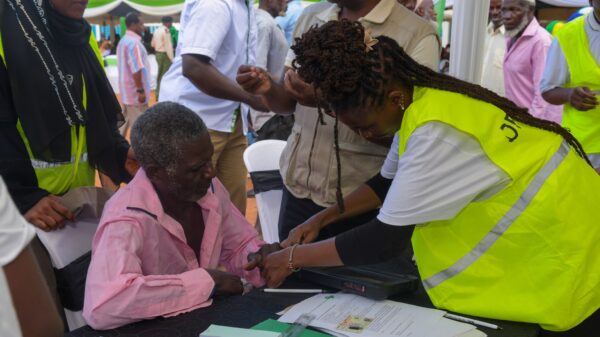
Data from the JazaMiti app—the official digital platform for recording tree planting—shows 738 million trees logged, compared with 1.06 billion reported by the Presidency in early 2025.
Experts warn these figures largely capture planting activity rather than whether seedlings survive to maturity.
“We may walk to 2032 with the statistics on paper or on the app. But when you go to the ground it [is] different,” said Ambrose Genga, Partnerships Officer at the Kenya Forest Service (KFS).
Tracking survival has proved especially challenging along highways and open public spaces, where seedlings are often trampled or fail due to neglect.

By contrast, trees planted in controlled environments—such as schools, churches, and chief camps—have much higher survival rates due to dedicated care.
Truphena Muthoni, 22-year-old Ambassador for the 15 Billion Tree Campaign, emphasizes that “emotional ownership” is crucial for long-term survival.
Her “Legacy Tree Nurseries” initiative, in partnership with the Manu Chandaria Foundation, aims to produce 100,000 seedlings annually, with a mix of 60 per cent indigenous, 30 per cent fruit, and 10 per cent exotic trees.
‘Blind spot’
Manual planting by citizens often bypasses app-based logging, creating a reporting blind spot.
“You can plant thousands, but if they [are] not recorded and not nurtured, they don’t count toward actual restoration,” Genga explained.
This highlights the critical distinction between tree planting and tree growing, the latter requiring sustained care to ensure survival to maturity.
The “National Landscape and Ecosystem Restoration Strategy 2023–2032” emphasizes targeted interventions in institutional and riparian zones, particularly in ASALs where moisture stress threatens seedlings.
The National Water Harvesting and Storage Authority (NWHSA), in partnership with Resources Oriented Development Initiatives (RODI) Kenya, has planted 6,000 trees around Kiserian Dam to mitigate siltation and ensure high survival rates.
Challenges remain, including funding gaps, logistical constraints, and limited human resources to monitor seedlings.
Planting and transporting seedlings requires vehicles, hands-on support, and sustained oversight, resources not always available.
The government has directed Ministries, Departments, and Agencies (MDAs) to redirect Corporate Social Responsibility (CSR) budgets toward the campaign to improve survival outcomes.
Experts caution that survival tracking must become scientifically rigorous.
Current app-based records capture numbers planted but not ongoing viability, leaving real survival rates uncertain.
Independent verification, ground-level audits, and longitudinal studies are needed to confirm whether Kenya is truly on track to meet the 2032 target.
For now, the campaign’s success hinges not on headline numbers but on the ability to translate planting activity into trees that live, grow, and contribute meaningfully to ecological restoration.
“We are still on track in enthusiasm, but the ultimate test is survival, not statistics,” Genga said.