















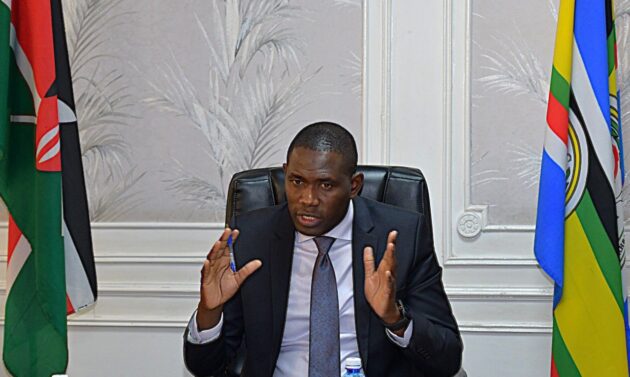

NAIROBI, Kenya, May 28 – Medical Services Principal Secretary Ouma Oluga has defended Kenya’s readiness to participate in global Ebola response efforts, saying the country will not retreat from its international health obligations even as public concern grows over reports that exposed foreign nationals could be handled in Kenya.
Speaking in a pre-recorded video released on Thursday, Oluga cited Kenya’s public health track record saying the country’s foremost duty remains protecting its citizens, but stressed that this responsibility does not conflict with contributing to global health security.
“The Kenyan government continues to protect Kenyans, but as we continue to protect Kenyans, we cannot abdicate our obligation and our duty in global health security,” he said.
“This is what we have been known for for decades. This is our expertise, so this is the time to show up.”
Oluga likened Kenya’s role in outbreak response to participation in global events where expertise is expected on an international stage, arguing that infectious diseases require cross-border collaboration rather than isolationist approaches.
“This is like a marathon has been called in London. Do you say that you’re not going to send Kenyans there?” he posed. “Outbreaks do not care about borders. They do not care about opinions.”
‘Trusted partner’
He added that Kenya’s experience in managing previous outbreaks positions it as a trusted regional partner in health emergencies, pointing to past deployments of Kenyan experts abroad during disease outbreaks.
“We are very confident as a country and as a government that number one responsibility is to protect the Kenyan, but as we protect the Kenyan, we can also extend this expertise,” Oluga said.
“We are ready to protect Kenyans, but we are also ready to assist the world tackle these global challenges.”
His remarks come amid heightened public debate following reports that the United States could send Ebola-exposed individuals to Kenya for observation or treatment.
The reports have triggered anxiety online, with many Kenyans questioning whether the country has sufficient containment capacity to safely manage such cases.
READ: LSK Opposes US Proposal to Set Up Ebola Treatment Centre in Kenya
Established procedures
In response, Health Cabinet Secretary Aden Duale has emphasized that any such arrangement must fully comply with Kenyan law and established public health procedures, including approvals from multiple state agencies.
Duale reiterated that Kenya’s sovereignty and health safeguards cannot be bypassed under any international agreement, noting that the country already has strict protocols for managing infectious diseases such as Ebola.
These include screening, quarantine systems, surveillance, and emergency response mechanisms designed to prevent outbreaks and ensure containment.
According to the Ministry of Health, any foreign nationals entering the country under health-related arrangements would be subject to legal and regulatory scrutiny involving health, immigration, and national security authorities.
Public concern has been fueled by the severity of Ebola, a highly infectious and often fatal disease transmitted through direct contact with bodily fluids or contaminated surfaces.
While Kenya has strengthened its surveillance systems at ports of entry and improved outbreak preparedness in recent years, fears persist over the risks associated with handling exposed individuals from abroad.
Oluga, however, insisted that Kenya’s participation in global health responses is not a matter of risk-taking but of professional responsibility grounded in experience.
“This is the time for Kenya to stand up,” he said, adding that the country’s contribution to regional and global outbreak responses reflects long-standing expertise in public health emergency management.
The Ministry of Health maintains that Kenya’s approach will remain guided by science, legal frameworks, and strict public health safeguards, even as it balances international cooperation with domestic safety concerns.