


















NAIROBI, Kenya, Feb 13 – An overnight NACADA intelligence-led multi-agency operation has dealt a decisive blow to drug trafficking networks operating around learning institutions, following the arrest of one of Nakuru County’s most notorious cannabis traffickers in Njoro.
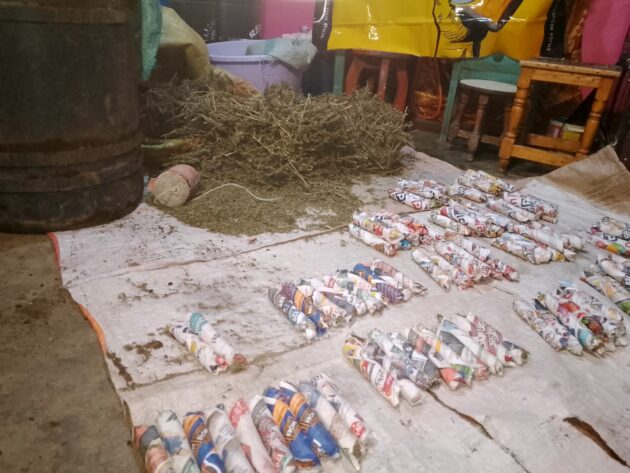
The deep-night raid, executed on Thursday, saw the Authority’s enforcement teams descend on the suspect’s residence after weeks of surveillance and intelligence gathering linked him to the supply of cannabis within the Egerton University belt and surrounding student settlements.
In a dramatic discovery that underscored the sophistication of local drug networks, officers recovered a large haul of cannabis concealed in underground bunkers meticulously dug within the homestead. Additional consignments were found stashed inside domestic animal pens, a calculated attempt, investigators say, was designed to camouflage the pungent smell of cannabis and evade detection during routine patrols.
The suspect, long on the radar of enforcement agencies, was arrested at the scene and is currently in custody as investigations expand to dismantle associated supply chains believed to stretch across multiple counties.
Speaking during the operation, NACADA Chief Executive Officer Dr. Anthony Omerikwa reaffirmed the Authority’s resolve to secure learning environments from the drug menace, describing the protection of academic spaces as one of the country’s most effective prevention strategies.
“We are deliberately targeting traffickers operating near schools, colleges, and universities because safe learning environments are central to prevention. When drugs infiltrate academic spaces, they destroy futures, compromise performance, and endanger lives,” he said.
Dr. Omerikwa linked the operation to findings from NACADA’s recently released national survey on the status of drug use among university students, which revealed that approximately 23%–26% of university students have used cannabis at least once in their lifetime.
He further noted that the survey established a worrying transition pattern in substance use behaviour.
“Many users report first experimenting with cannabis in late secondary school or early university years. This transition risk directly contributes to declining academic performance among users and exposes them to life-threatening health consequences that can permanently derail their aspirations,” he stated.
The CEO emphasized that the Authority has intensified both supply and demand reduction strategies in line with the Presidential proclamation on the renewed national fight against drugs, noting that enforcement crackdowns are being complemented by prevention programming, public education, and community partnerships.
Thursday night’s high-impact seizure comes on the very day NACADA officially launched the National Substance Use Prevention Week Summit in Nairobi, a convergence that Dr. Omerikwa said symbolically demonstrates the Authority’s dual approach of enforcement and prevention.
“While we convene stakeholders to strengthen prevention frameworks, our enforcement teams are simultaneously on the ground disrupting supply networks. This is a whole-of-government, whole-of-society war that we must win,” he added.
Authorities believe the underground bunker method signals an evolution in concealment tactics by traffickers seeking to evade law enforcement detection, and have warned that surveillance and intelligence mapping around learning institutions will be heightened.
As investigations continue, NACADA has reiterated its commitment to relentlessly pursue traffickers targeting students, warning that academic zones will remain high-priority protected spaces in the national campaign to safeguard Kenya’s youth from the devastating grip of drugs.