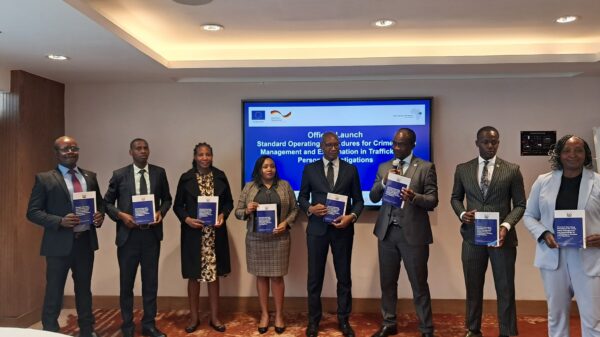















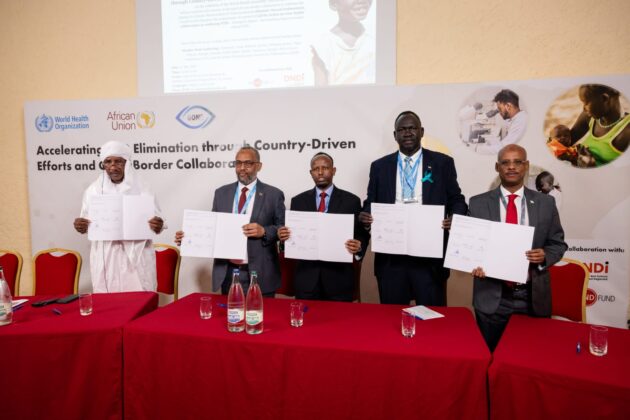

NAIROBI, Kenya May 22 – In a landmark move to combat one of the world’s deadliest neglected tropical diseases, six African countries Chad, Djibouti, Ethiopia, Somalia, South Sudan, and Sudan have signed a Memorandum of Understanding (MoU) to eliminate visceral leishmaniasis.
The signing took place during a ceremony held on the sidelines of the 78th World Health Assembly in Geneva, under the auspices of the African Union and the World Health Organization (WHO).
Also known as kala-azar, visceral leishmaniasis is a life-threatening parasitic disease that causes prolonged fever, extreme fatigue, weight loss, and enlargement of the spleen and liver.
Without treatment, it is almost always fatal. Over 70 percent of the global burden is found in Eastern Africa, where nearly half of those affected are children under the age of 15.
The six signatory countries were joined by Cameroon, Niger, Nigeria, Senegal, and Tanzania in calling for stronger cross-border cooperation and coordinated action against neglected tropical diseases (NTDs).
These diseases affect over one billion people annually, disproportionately impacting vulnerable and impoverished communities.
“Visceral leishmaniasis patients and their communities urgently need new, improved oral treatments. To reach elimination, we need more medical innovation. The recent successes of countries like Bangladesh in eliminating kala-azar show that global eradication is within reach,” said Dr Luis Pizarro, Executive Director of the Drugs for Neglected Diseases initiative (DNDi).
“I commend the inspiring leadership, unity, and commitment shown today by our African partners.”
The signatories committed to invest resources, develop regional strategies, and collaborate closely to meet the targets outlined in the visceral leishmaniasis elimination framework, which was launched by Eastern African countries in June 2024.
Dr Ibrahima Socé Fall, Director of WHO’s Global Neglected Tropical Diseases Programme, highlighted the importance of country-led efforts and regional collaboration.
“As we reach the halfway point toward the 2030 roadmap targets and nearly a year after launching the strategic framework for elimination, the critical role of cross-border cooperation cannot be overstated,” he said in his opening remarks.
During the Geneva event, Ministers of Health from Cameroon, Niger, and Nigeria also issued a joint Call for Action urging countries to intensify efforts against all NTDs. They were joined by counterparts from other participating nations.
“We know diseases do not stop at borders—and neither should our response,” said Dr Jean Kaseya, Director General of the Africa CDC, in a statement read on his behalf by Dr Landry Tsague Dongmo, Director of Africa CDC’s Center for Primary Health Care.
“More than 600 million people on our continent remain at risk of at least one neglected tropical disease.”
Dr Kaseya emphasized the need for enhanced surveillance systems, citing Africa CDC’s Integrated Disease Surveillance and Response framework as a key tool, developed in collaboration with WHO.
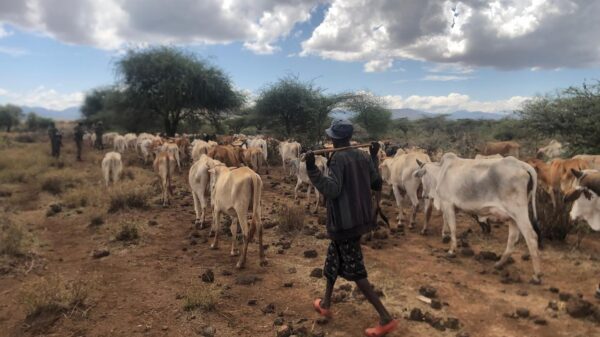
Many NTDs are zoonotic transmitted between animals and humans and are exacerbated by climate change, migration, and poor health infrastructure, making cross-border cooperation essential.
The event was convened by the African Union Commission, the WHO, and the Global Onchocerciasis Network for Elimination (GONE), with support from the END Fund and DNDi.
Globally, momentum to eliminate NTDs is growing. As of May 2025, 56 countries have eliminated at least one NTD.
In Africa, countries such as Togo (four NTDs), Benin, Ghana, and India (three NTDs each) have recorded significant progress. Recently, Mauritania, Chad, Guinea, and Niger were recognized by WHO for eliminating at least one neglected disease.