








by Rick O’Shea
BEIJING, March 4 (Xinhua) — It is China’s annual “two sessions” time again. In the following week or so, for anyone interested in observing and understanding China, the political event is something they don’t want to miss.
I am an American who has been living in China for four decades. From my point of view, the “two sessions” is an important window to learn about China’s current development, understand China’s political system and forecast its future path. During this period, foreigners can find out what hot topics are being discussed on the ground, which issues concern Chinese leaders the most, what development objectives have been set, how China interacts with other countries, etc.
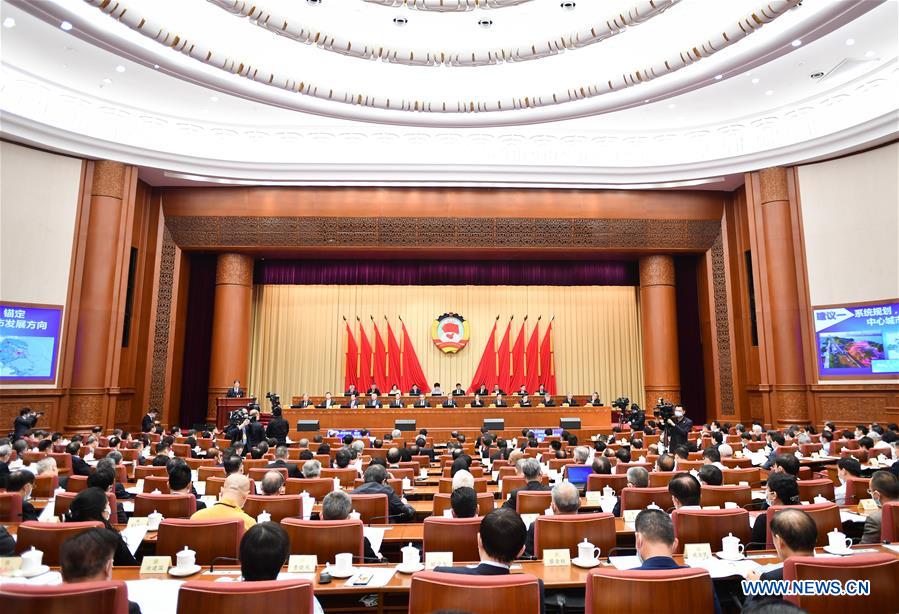
The “two sessions” refers to the annual sessions of China’s National People’s Congress and the National Committee of the Chinese People’s Political Consultative Conference. They are known as the country’s top legislature and national political advisory body, respectively.
A PLATFORM SOLVING PRACTICAL PROBLEMS
The “two sessions” is a platform on which different regions and groups voice their opinions and reach a consensus. Lawmakers submit motions and suggestions, while political advisors offer proposals and insights.
The origins of many significant laws, regulations and policies that concern various sectors and groups — such as those in the areas from environmental protection to poverty alleviation, from education to health care, from urban issues to rural issues — were in the motions and proposals handed by lawmakers and political advisors to the “two sessions.” The “two sessions” also works as a platform that facilitates the resolution of practical problems faced by ordinary Chinese, such as building roads in the countryside, easing extracurricular burdens on students, and protecting the rights of deliverymen, among others.
DECOUPLING FROM CHINA COMES AT A GREAT COST
China is the world’s second largest economy after the United States. To some extent, to observe China’s “two sessions” is actually to observe Chinese economy. One of the major tasks of the “two sessions” is to map out China’s annual economic development, set the growth target, and announce macroeconomic policies. And a document called the government work report gives answers to all of them.
Although the prospects for the global economy may not look bright this year, China has expressed its confidence by saying that the country’s economy will “expect an upturn on the whole, and there is a high probability that the growth rate will hit its normal level.” Many of my foreign friends, including those living in the United States, are closely watching what economic target the Chinese government will set for 2023, and what policies and measures will be taken accordingly.
The Chinese economy has grown so titanic and so intertwined with the rest of the world that we can’t talk about the prospects of the world economy without talking about China. I’ve heard some Americans argue for decoupling from the Chinese economy, but I think it will come at a great cost. The fact is that China is the world’s most promising market, with a middle-income population of over 400 million. Some agencies predicted that this middle-income group will surpass 800 million in the next 15 years, which is definitely an astonishing figure.
Recently I noticed that the IMF lifted its forecast of China’s economic growth rate for 2023 to 5.2 percent. IMF Managing Director Kristalina Georgieva said it is highly likely that China’s development will be the most important factor in driving global growth in 2023. You would agree with this point if you have seen Beijing’s packed restaurants, shopping malls and cinemas.
CHINESE MODERNIZATION MATTERS TO WORLD
The 20th National Congress of the Communist Party of China, the country’s ruling political party, was convened in October last year. The key congress stressed “to advance the rejuvenation of the Chinese nation on all fronts through a Chinese path to modernization.” As this year marks the first year of this new journey, the new measures that will be unveiled at the “two sessions” not only matter to China, but to other countries as well.
I am also attracted to topics on China’s rural areas. I have been to China’s countryside many times. After China announced that it eliminated absolute poverty in 2021, I am eager to find out what on earth has happened in the countryside and how it will get better in the future. That is, how will China push forward its rural revitalization? In the past decades, especially in the past ten years, great transformations have happened in China’s rural areas, which may shed light on the path of narrowing the rich-poor gap for other countries.
After living in China for such a long time, one thing that I can’t ignore is the bluer sky and clearer water. Green development is transforming China. China has been striving to develop new energy industries such as photovoltaics and wind energy after it announced ambitious plans to peak carbon dioxide emissions by 2030 and achieve carbon neutrality by 2060. Since China has become a world leader in tackling climate change, its future efforts to support new energy development are without doubt under the world’s spotlight.
U.S.-CHINA COOPERATION INDISPENSABLE IN MANY SECTORS
In fact, any changes that happen in China will affect other countries directly or indirectly. It is no exaggeration to say that for many American multinational corporations, they have to take Chinese consumers and policies into consideration before making any big decisions. And the “two sessions” is a key opportunity to find out valuable information.
During the “two sessions,” Foreign Minister Qin Gang, former ambassador of China to the United States, will answer questions from the media. U.S.-China relations are no doubt the most important bilateral relationship in the current world, and one of the topics that I personally care most about. I am eager to see how China’s foreign minister will describe this relationship.
To me, and I believe it’s true to many Americans as well, if the two leading countries were to lock themselves in confrontation and conflict, it would be a disaster for the world. I believe despite the twists and turns that happened in their bilateral relations in the past several years, there is still a need for cooperation. After all, people of the two countries share the same vision, which is a safe and prosperous world, and a better future for our children.