











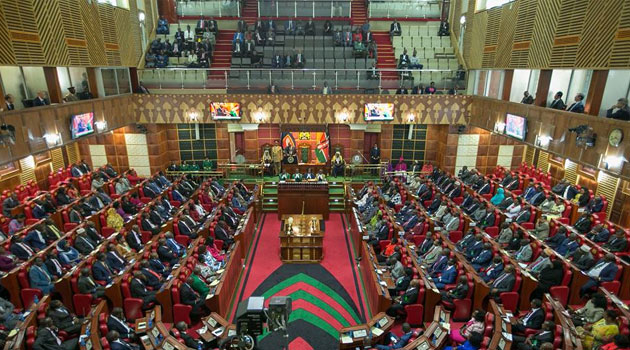

NAIROBI, Kenya, Feb 13 — A showdown looming in Parliament as Azimio lawmakers stage a fight to de-whip allies who have switched to the rival Kenya Kwanza Alliance.
Opposition lawmakers are facing tough odds as Parliament resumes its sittings following a month long recess after their number in the House and Senate thinned further handing Kenya Kwanza a super majority.
The long break by the bicameral Parliament has seen President William Ruto raid Azimio leader Raila Odinga’s Parliamentary Group, whisking away dozens of lawmakers.
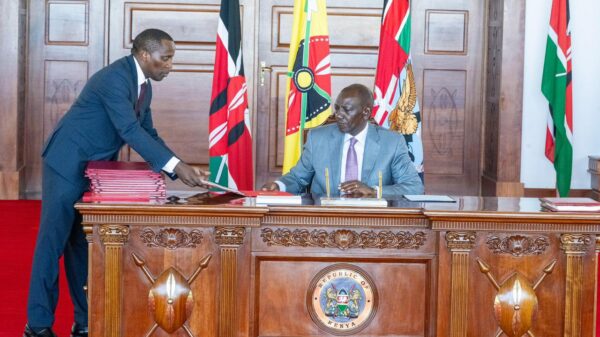
If the State House visits by the several leaders from Azimio legislators are anything to go by, President Ruto’s majority in Parliament has snowballed giving him absolute control on the legislative agenda.
President Ruto has expanded his number to 231 MPs in the aftermath of his raid on Odinga’s political bastion which saw over thirty MPs defect.
Constitutional review
Among key issues that Parliament is set to consider include the memorandum by the President to review the Constitution (2010).
In a memorandum dated December 9, 2022, addressed to the Speakers of the Bicameral Parliament, President Ruto proposed the creation of an office of the official leader of opposition.
This, he said, would cure what he termed as a constitutional shortfall on the post-election fate of the minority side.
The President argued the recognition of the overall leader of the minority party will deepen democracy and institutionalize governance.
“The Transition to the Presidential System, coupled with the exclusion of Presidential Candidates from simultaneously contesting parliamentary seats created a novel paradigm”
“The consequence is that the overall leader of the minority side is excluded from meaningful political participation.” says President Ruto.
2/3 Gender Rule
The memorandum to be considered by Parliament also proposed amendments to allow the nomination of more women to the Senate and National Assembly to resolve the quagmire on the two third gender rule.
Ruto proposed to amend Article 97(3) of the Constitution to resolve the elusive two third gender rule.
According to the President, the formula should be based only on the number of members elected in the National Assembly from the constituencies and counties.
Ruto’s proposed formula, based on the current numbers in the House, would have 97 MPs as a third of the 290 elected MPs, adding on to the 47 affirmative seats, popularly known as the Woman Representatives.
With 26 elected female MPs in single member constituencies, the deficit of 24 woman MPs would be bridged through nomination
Standing Orders
To enhance accountability in his administration, President Ruto is also seeking amendments to the standing orders to allow Cabinet Secretaries in plenary to answer questions in plenary.
“It has not been possible for Cabinet Secretaries to be interrogated by the legislators. Some MPs have been answering questions in Parliament. We do not think that is the right thing to do,” President said in his memorandum.
NG-CDF Entrenchment
On the Kenya Kwanza legislative agenda is the NG-CDF which has battled legal conundrums stifling its implementation.
A bench of five judges led by Chief Justice Martha Koome ruled that the CDF Act (2013) violates the principle of separation of powers, hence was unconstitutional.
While overturning the Court of Appeal decision that upheld the CDF Act, the Supreme Court said it was unconstitutional to the extent that it sought to extend the national government’s mandate to counties.
The President has requested the MPs to find ways to align NG-CDF, which he says is an important tool in leveraging development across the country, to the Constitution.
Already, a bill co-sponsored by Matungulu Member of Parliament Stephen Mule and his Gichungu counterpart Robert Gichumu has been tabled in Parliament and is now being considered by a joint committee of both houses.
The bill proposes the reestablishment of the Fund and its anchoring in law to avert disruptions on technicalities of the law.
In the Constitution Amendment Bill 2022, the duo is also seeking the establishment of the National Government Affirmative Fund, Senate Oversight Fund and Economic Stimulus and Empowerment Fund.
Supplementary Budget
The National Assembly will also consider President Ruto’s first supplementary budget for Financial Year 2022/23 with a proposed increase in the spending plan from Sh3.36 trillion to Sh3.72 trillion.
Ruto’s Cabinet has approved Supplementary Estimates aimed at cutting government spending by Sh300 billion as a measure of containing the fiscal deficit.
The Cabinet noted that the proposed fiscal consolidation will be key to rationalizing our national debt and making it more sustainable.
“First on our legislative road map is consideration of budget policy statement for the year 2023.We shall be considering supplementary budget estimates which were sent to the House following the approval by Cabinet,” House Majority Leader Kimani Ichung’wa stated.
“Committees are already working on supplementary budget estimates and within a week or two they should have finalized,” he added.
Since his inauguration in September 2022, President Ruto has focused on bringing the recurrent expenditure down further next year by an undisclosed amount, in a bid to achieve a recurrent budget surplus by the third year.
Recurrent expenditure includes civil servant salaries, domestic and foreign interest payments, pensions, and fuel costs for the government vehicles.
Cabinet also considered the 2023 Budget Policy Statement as well as the Medium Term Debt Management Strategy.
The 2023 Budget anchors the economic recovery agenda of the government through a growth-friendly fiscal consolidation plan designed to slow down the annual growth in public debt and implement an effective liability management strategy.