



















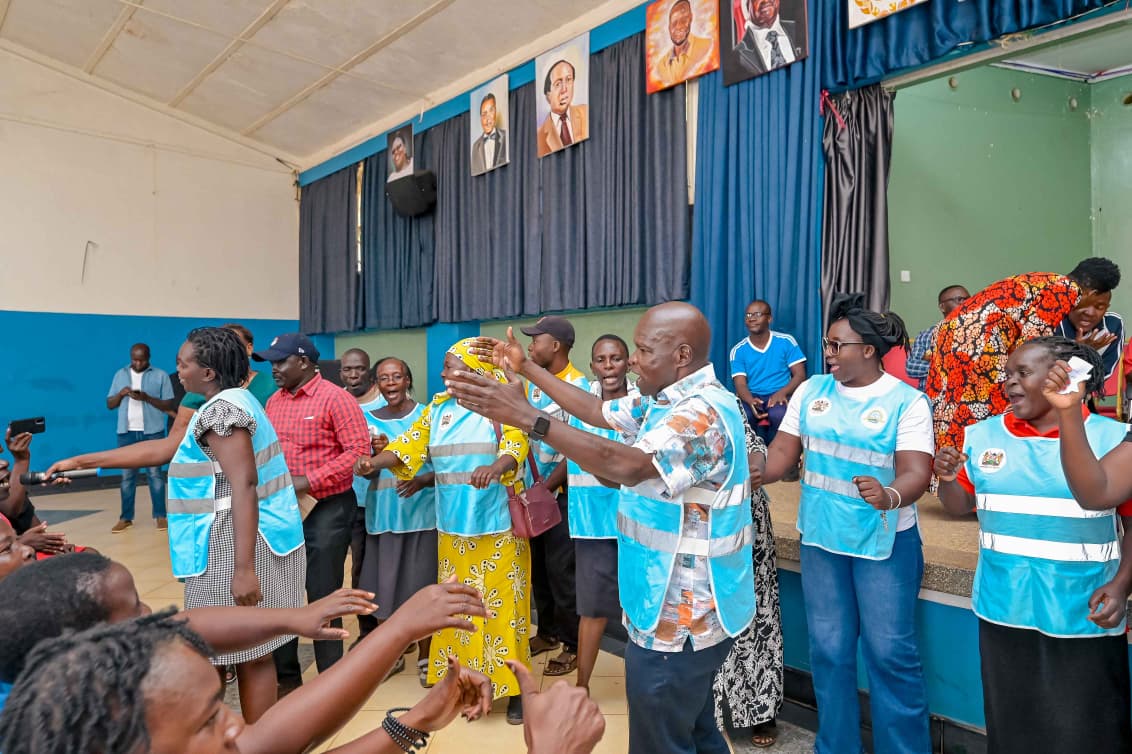

NAIROBI, Kenya, June 12 — Leaders in Kisumu have intensified efforts to tackle rising cases of new HIV infections, teenage pregnancies and gender-based violence among young people, with Community Health Promoters (CHPs) identified as critical frontline agents in the campaign.
Speaking during a sensitization forum for CHPs at Grace Onyango Social Hall in Kisumu on Friday, Kisumu Central MP Joshua Oron said the three issues—collectively known as the “Triple Threat”—continue to threaten the health, education and future prospects of young people across the county.
Oron noted that Kisumu remains disproportionately affected by the three challenges and called for a coordinated response involving government agencies, healthcare workers, community leaders, religious institutions and families.
“New HIV infections remain significantly higher in Kisumu and the wider region compared to many other parts of the country,” he said.
“Gender-based violence continues to affect communities, while teenage pregnancies are disrupting the lives and futures of many young people.”
The forum was organized in partnership with the National Syndemic Diseases Control Council (NSDCC), which is leading interventions aimed at reducing new HIV infections, teenage pregnancies and sexual and gender-based violence among adolescents and young people.
High prevalence
NSDCC officer Stephen Oyugi said the government was working closely with county administrations, religious leaders, opinion leaders and community gatekeepers to address what he described as a growing social and public health challenge.
“The triple threat interferes with the education of our young people and undermines government efforts to achieve full transition and retention within the education system,” Oyugi said.
According to Oyugi, Kisumu continues to record one of the highest HIV prevalence rates in the country, at slightly above 11 percent.
He added that the county’s youthful population, estimated at 61 percent, makes adolescents and young adults particularly vulnerable.
“Kisumu remains among the counties most affected by HIV and AIDS. Young people bear the greatest burden of the triple threat, which is why our interventions are deliberately targeted at this demographic,” he said.
Central role
Oron emphasized the pivotal role of Community Health Promoters, describing them as the first line of engagement with households and communities.
“We are here today with the agents of change. Community health promoters work closely with families and are often the first to identify cases of violence, teenage pregnancies and other health risks, enabling timely intervention,” he said.
The legislator also pledged continued support for the health promoters, revealing that the Kisumu County Assembly had allocated resources to facilitate their health insurance coverage.
“I have been informed that funds have been appropriated to ensure community health promoters receive health insurance coverage. Their welfare is important because they are an integral part of our healthcare system,” Oron said.
He further disclosed that his office had provided CHPs with protective gear, including gumboots and umbrellas, to enhance their effectiveness while serving communities in villages and remote areas.
“The triple threat is a national challenge that requires urgent and sustained action. It is not something we can afford to ignore,” he said.
The sensitization programme is expected to strengthen grassroots efforts to reduce HIV infections, teenage pregnancies and gender-based violence through increased public awareness, early intervention and community engagement.