



















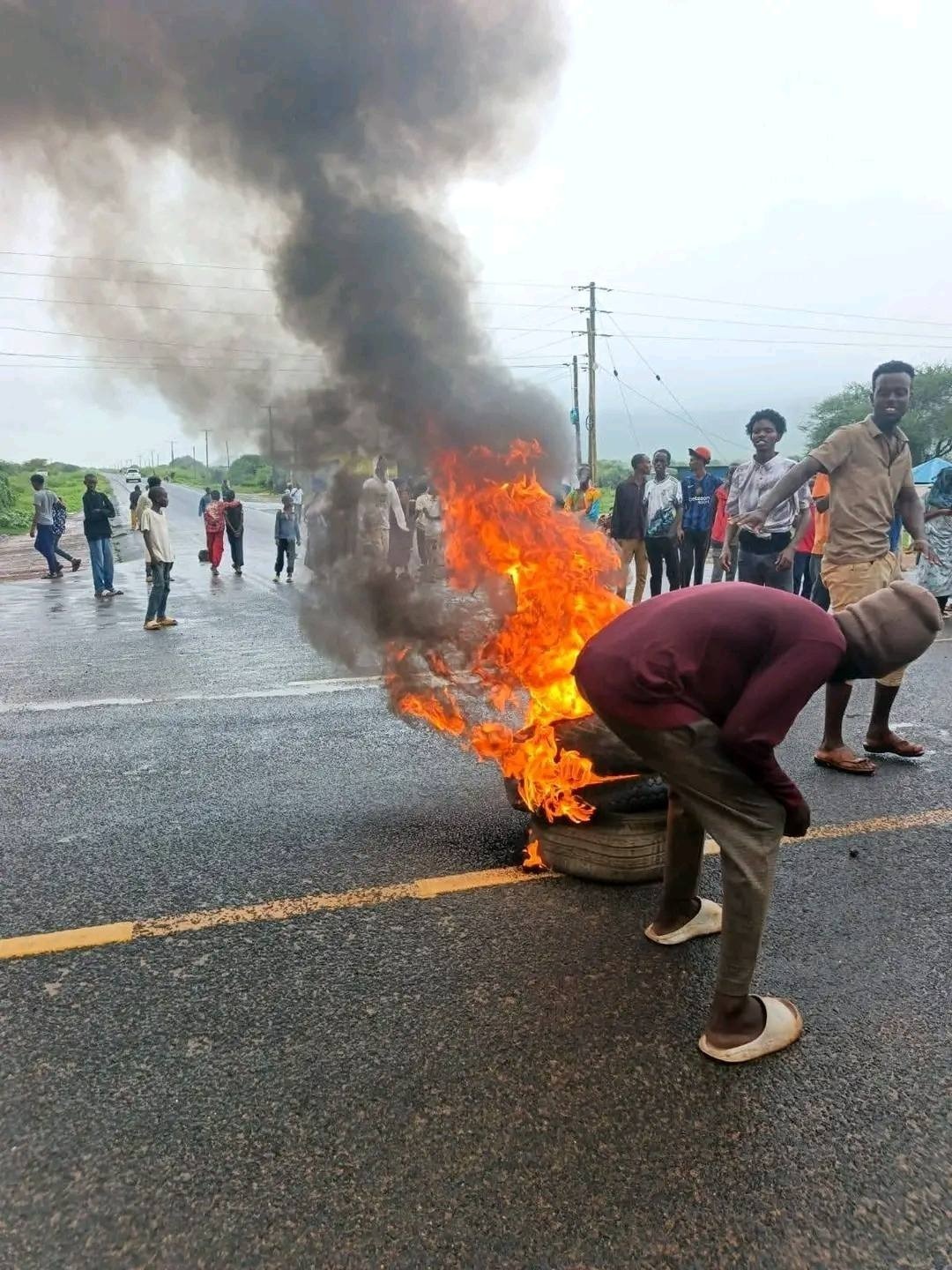

NAIROBI, Kenya, May 9 – Transport along the strategic Sololo-Moyale highway was brought to a standstill on Sunday after residents staged protests over the alleged abduction of two local elders, barricading sections of the road with stones and burning tyres.
The demonstrations erupted at Sololo junction early in the morning, with large crowds gathering along the highway and blocking movement on the busy route connecting northern Kenya to the Ethiopian border town of Moyale.
Residents claimed the missing men are respected community elders and former chiefs who currently serve as village elders in the area. According to locals, the two disappeared in separate incidents under unclear circumstances.
Demonstrators alleged that one of the elders was taken from his home on the night of Saturday, May 9, by unidentified individuals believed to have been masked. The second elder was reportedly abducted while travelling to Nairobi after unknown people intercepted his vehicle and allegedly forced him into an unmarked car before speeding off.
Thick black smoke filled the air as tyres burned across the road, forcing motorists and transporters to halt their journeys.
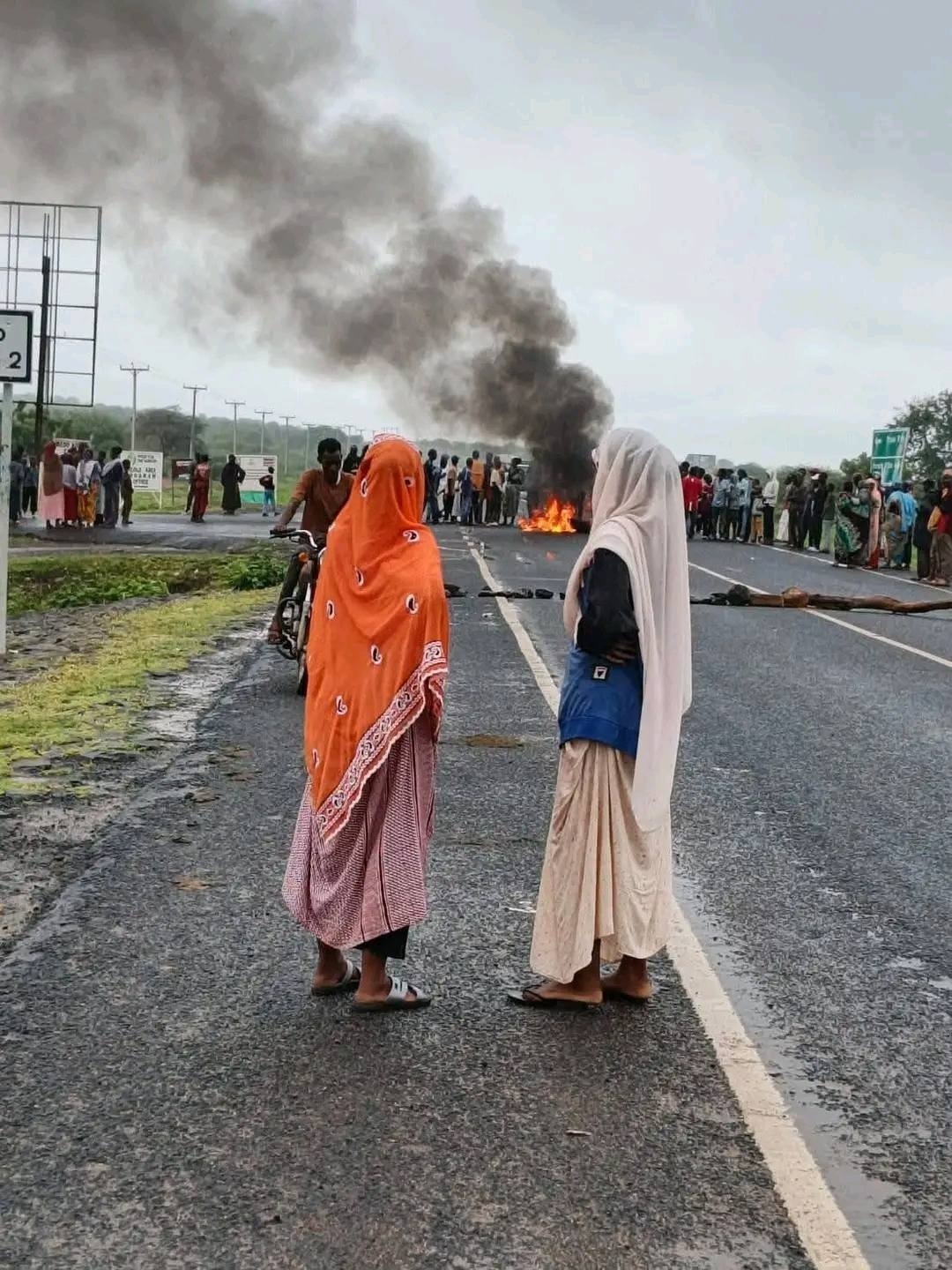
Videos and images from the scene showed angry protesters chanting and demanding the immediate release of the two men, whose whereabouts remained unknown by Sunday evening. The protests caused a massive traffic snarl-up, leaving buses, cargo trucks, and private motorists stranded for hours.
The protesters accused security agencies of failing to address what they termed as rising cases of abductions and enforced disappearances in the region. Some residents claimed fear and anxiety had gripped the community amid growing concerns over insecurity.
The disruption affected transport and business activities along the corridor, a critical route for movement of goods and passengers between Kenya and Ethiopia. Long-distance truck drivers and travellers were forced to remain stranded as the protests intensified.
Some residents further linked the disappearance of the two elders to ongoing disputes over administrative boundaries and local governance issues in parts of Marsabit County, alleging that the men had previously spoken publicly on the matter. However, authorities had not commented on the claims by the time of publication.