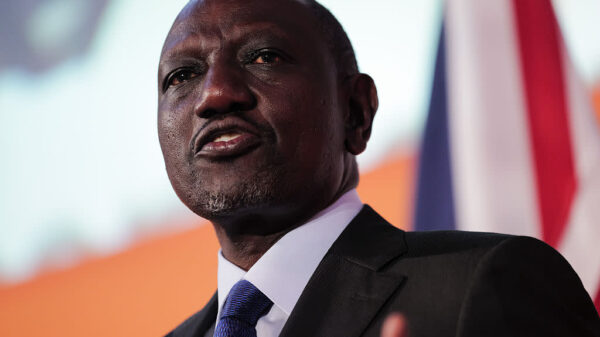














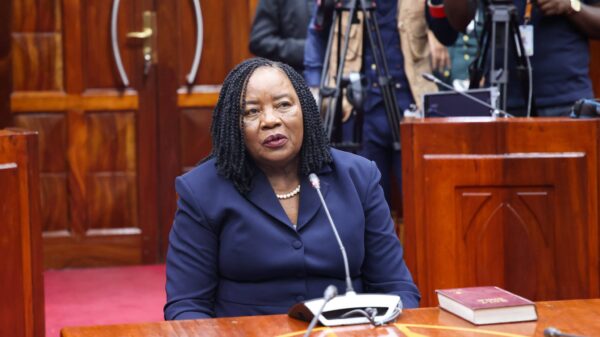




NAIROBI, Kenya Mar 2 – Chief Justice Martha Koome has revealed that 787 cases of causing death were among 62,932 traffic offences filed in courts during the 2024/2025 financial year, highlighting what she termed as a deepening road safety crisis that demands urgent, coordinated national action.
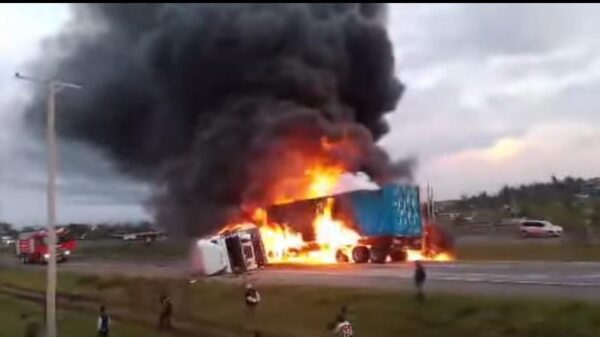
Presenting a traffic justice reform update under the National Council on the Administration of Justice (NCAJ), Koome said the Judiciary continues to grapple with a heavy caseload linked to road carnage, even as fatalities and accidents remain alarmingly high.
The 62,932 traffic cases filed comprised 704 careless driving cases, 787 causing death, 3,509 driving without insurance, 69 contraventions of traffic rules, 2,991 driving under the influence, 6,917 obstruction-related offences, 556 speeding violations and 47,400 other assorted traffic offences.
“A similar trend has been realised also in this current year where we have already registered 33,532 cases,” Koome said.
The Chief Justice noted that many of these offences could be handled administratively rather than through the criminal justice system.
Minor offences
Within the NCAJ reform agenda, Koome said traffic justice reforms remain central, driven by the need to address persistent road accidents, fatalities and congestion.
“The role of the justice sector in prevention, investigation, arrest, adjudication and enforcement is central to achieving this objective.We particularly focus on prevention” she said.
However, she acknowledged that despite multiple interventions, road traffic accidents and fatalities remain high.
Koome argued that a significant portion of minor traffic offences should be removed from the criminal justice process and handled administratively to ease court congestion and enhance efficiency.
“We realise many of these traffic offences can be dealt with administratively,” she said, adding that reforms are aimed at improving road safety, strengthening compliance and ensuring offender accountability.
Annual health burden
Beyond court statistics, the Chief Justice highlighted the immense financial strain road accidents place on the health system.
Citing data from the Ministry of Health, she said annual healthcare costs attributable to road traffic accidents are estimated at Sh48.5 billion. This includes emergency services, hospitalisation, surgery, rehabilitation and long-term care.
The average treatment cost stands at about Sh69,000 for moderate injuries and Sh147,000 for severe injuries, with patients admitted for between 10 and 24 days depending on severity.
“We have not even gone to look at the socio-economic costs of rehabilitating victims and the time they lose from engaging in gainful work,” Koome noted.
Rising fatalities
In 2025, a total of 5,000 road traffic deaths were reported compared to 4,448 in 2024 an increase of 261 fatalities.
During the 2025 festive season alone, 415 deaths were recorded between December 16, 2025 and January 10, 2026, compared to 338 deaths during the same period in 2024 representing a 23 per cent increase.
The rise in fatalities coincided with a sharp increase in vehicle registrations. New motor vehicle registrations rose from 81,000 in 2024 to 182,000 in 2025, while motorcycle registrations jumped from 58,000 to 150,000 within the same period.
“There has been exponential growth in registration of new motor vehicles on our roads in one year,” Koome said.
Festive season emergency response
During the 2025 festive period, the Judiciary established 20 court stations to handle traffic-related emergencies. A total of 1,978 traffic cases were filed and processed within 20 days.
To support enforcement, the Office of the Director of Public Prosecutions deployed 36 prosecutors, the Ethics and Anti-Corruption Commission deployed 70 officers, while the National Transport and Safety Authority assigned 121 officers to the operation.
Koome said the multi-agency model demonstrated the value of coordinated enforcement, prosecution and adjudication.
Call for whole-of-government approach
Against this backdrop, Koome urged sustained high-level political leadership and executive commitment in prioritising road safety as a governance, health and socio-economic development issue.
“We feel it is time to have coordinated enforcement, adjudication, transport and other service interventions across relevant government agencies,” she said.
She called for the establishment of an integrated and interoperable ICT-based traffic case management system linking law enforcement, the Judiciary and transport agencies to improve efficiency and accountability.
The Chief Justice also urged operationalisation and amendment of key statutory and regulatory instruments to strengthen investigation, prosecution, adjudication and, more importantly, prevention of traffic offences.
Among the key challenges identified are gaps in the legal framework, limited digital integration across institutions, and resource and capacity constraints within enforcement and justice systems.
“Security and sustainable financial support are necessary to strengthen law enforcement and adjudication capacity in the justice sector,” Koome said.