













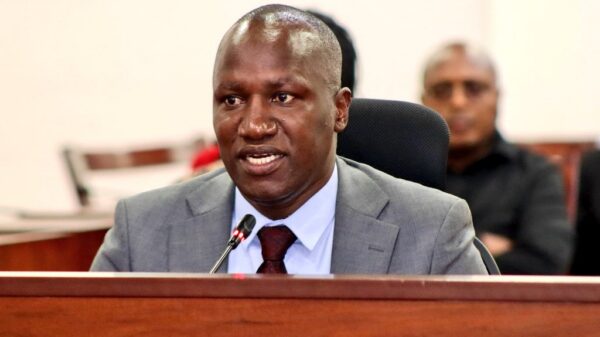


NAIROBI,Kenya Feb 9 – Deputy President Kithure Kindiki has assured Kenyans that the government is mobilising all necessary resources to address the severe drought affecting 23 counties across the country, with 3.3 million people in urgent need of food, water, medical supplies, and livestock support.
Speaking after a high-level meeting on drought response strategies, DP Kindiki said the October to December rains had performed poorly, leaving several regions critically dry and threatening the livelihoods of communities dependent on agriculture and pastoralism.
“Up to 23 counties are in need of support in terms of human food, livestock feed, and other drought mitigation interventions. We have 3.3 million people affected, and we also need food to reach our schools to make sure our learners are not disrupted by the ongoing drought situation,” he said.
Kindiki noted that ten counties have been classified as being in crisis, with fourMandera, Wajir, Kwale, and Kilifiparticularly hard hit.
The government has so far released 6 billion shillings between December 2025 and January 2026 to purchase food and non-food items. A further 4 billion shillings has been earmarked for immediate disbursement to cushion affected populations over the next month.
To enhance the impact of relief efforts, DP Kindiki said the government would upscale interventions and diversify the type of food provided to cater to vulnerable groups, including children, women, and the disabled.
He also directed that county steering committees be fully activated to ensure last mile deliveryof food, water, and medical supplies.
“We are taking a little long for the food to reach the population in their areas, and therefore we’ve directed that these teams be activated. We are going to work through a better supply chain and last mile delivery program,” he said.
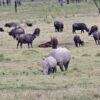
Kindiki further announced that interventions would extend to livestock, including provision of feed, water, and vaccinations, as well as water tracking for humans and animals to safeguard communities and wildlife in protected areas.
The government plans to spend 4 billion shillings every month on procurement of food, non-food items, livestock feed, and water for human, domestic, and wildlife consumption. Development partners have also been asked to complement this allocation with an additional 2 billion shillings to strengthen drought response efforts.
“This is a serious situation, but I want to assure Kenyans that we will not spare any resources to ensure that we do not lose human life and to mitigate the effects of this drought on livestock and the entire ecosystem, including our wildlife and protected areas,” Kindiki said.
The DP highlighted the worst-hit counties as Mandera, Wajir, Kwale, and Kilifi, while noting that relief efforts will continue across all affected regions.
This comes as the government seeks to bolster coordination and efficiency in food distribution, water provision, medical care, and livestock support to avert a humanitarian crisis across the arid and semi-arid counties.